
Free visual inspection and a written scope of work before any mitigation begins - photos, moisture readings, and drying logs go in your claim file
The scope we write is the scope we bill. Anything new gets shown to you, in writing, before we touch it.
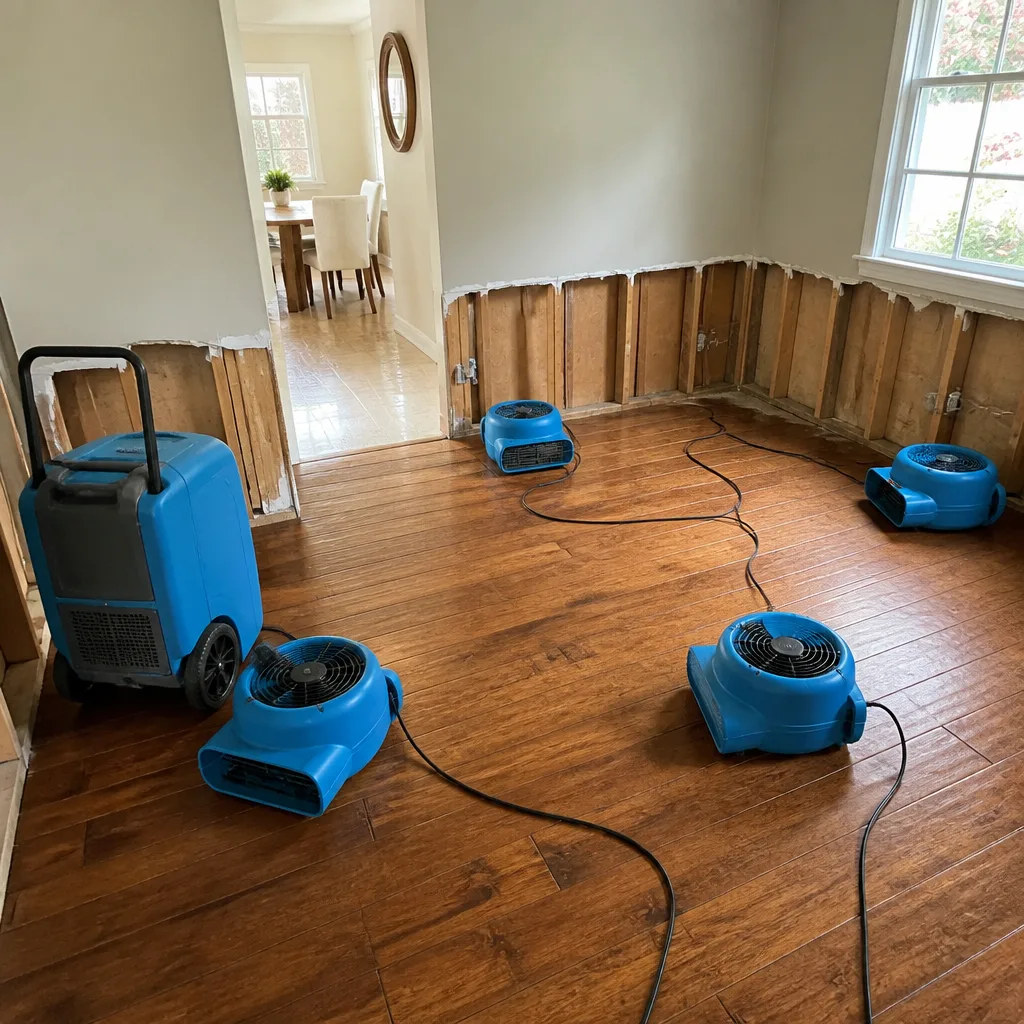
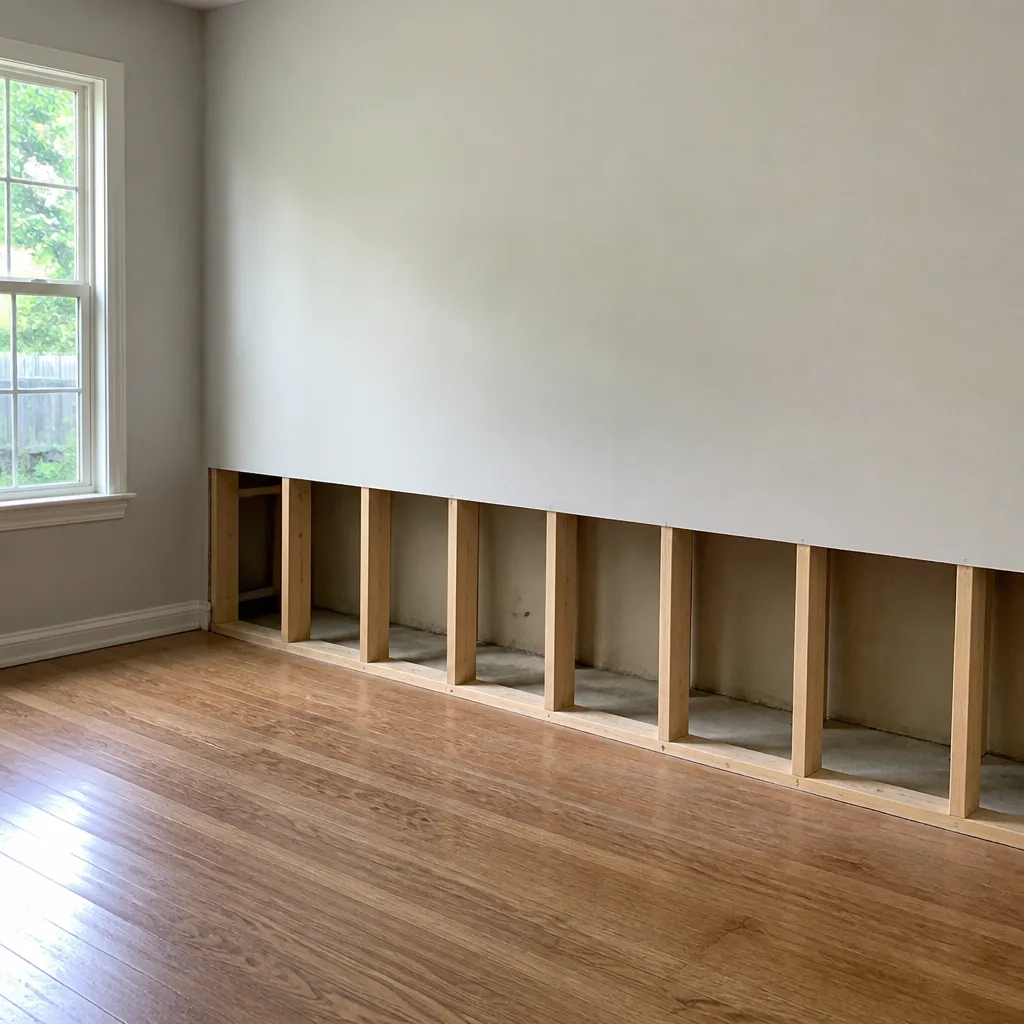
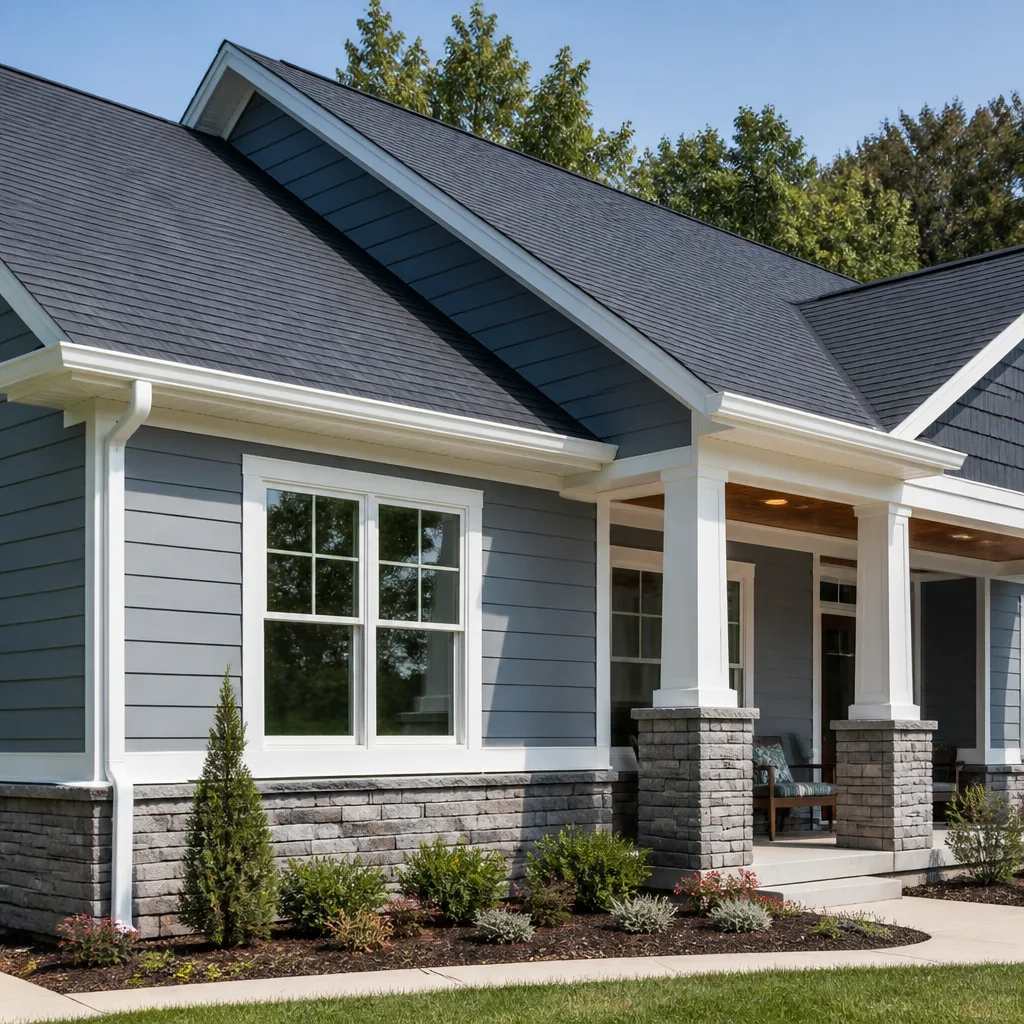
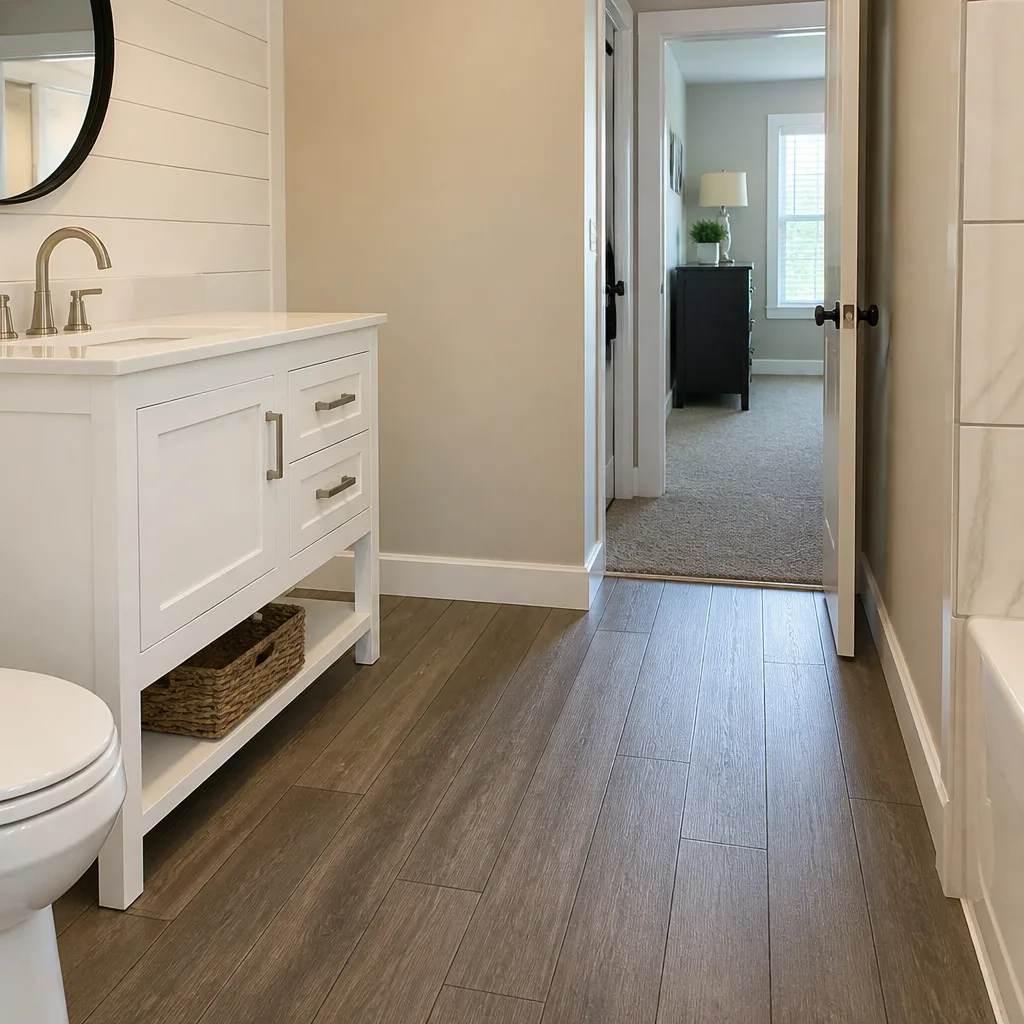
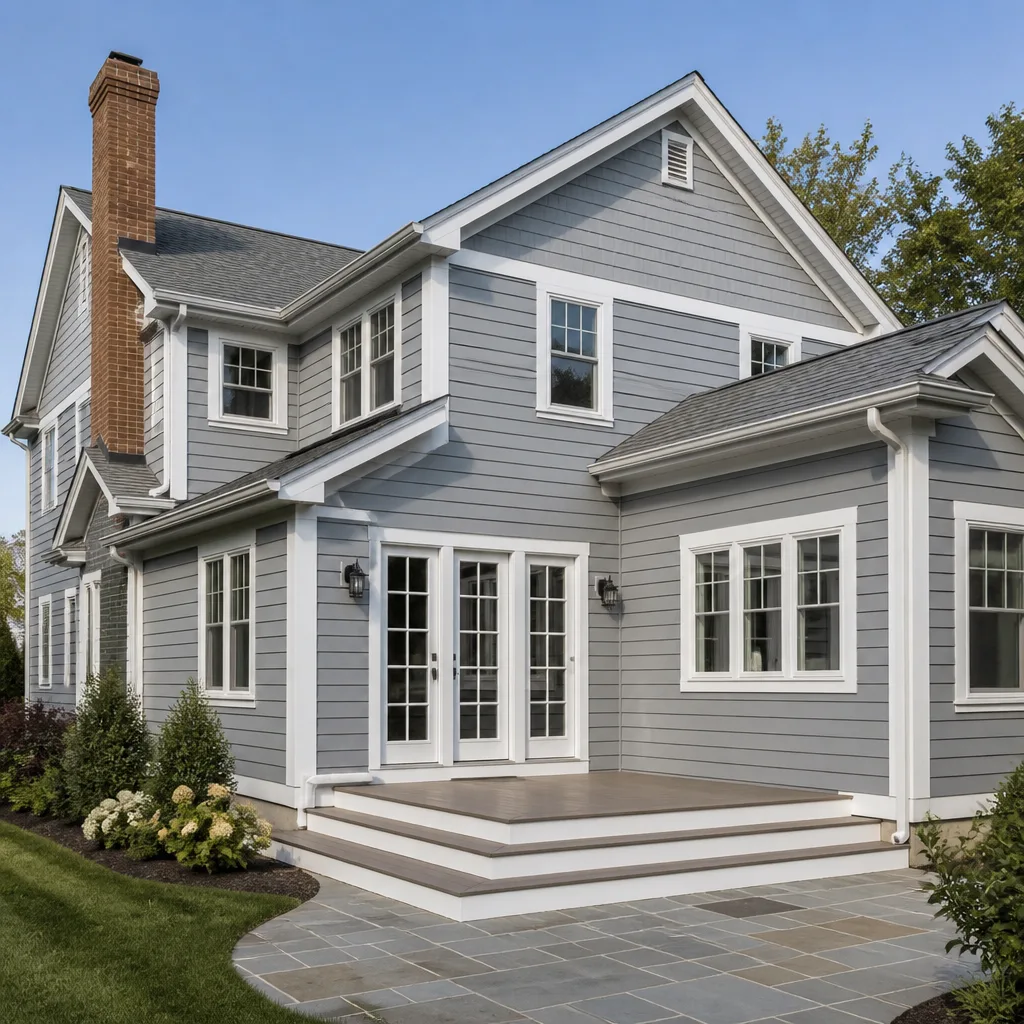
 Before
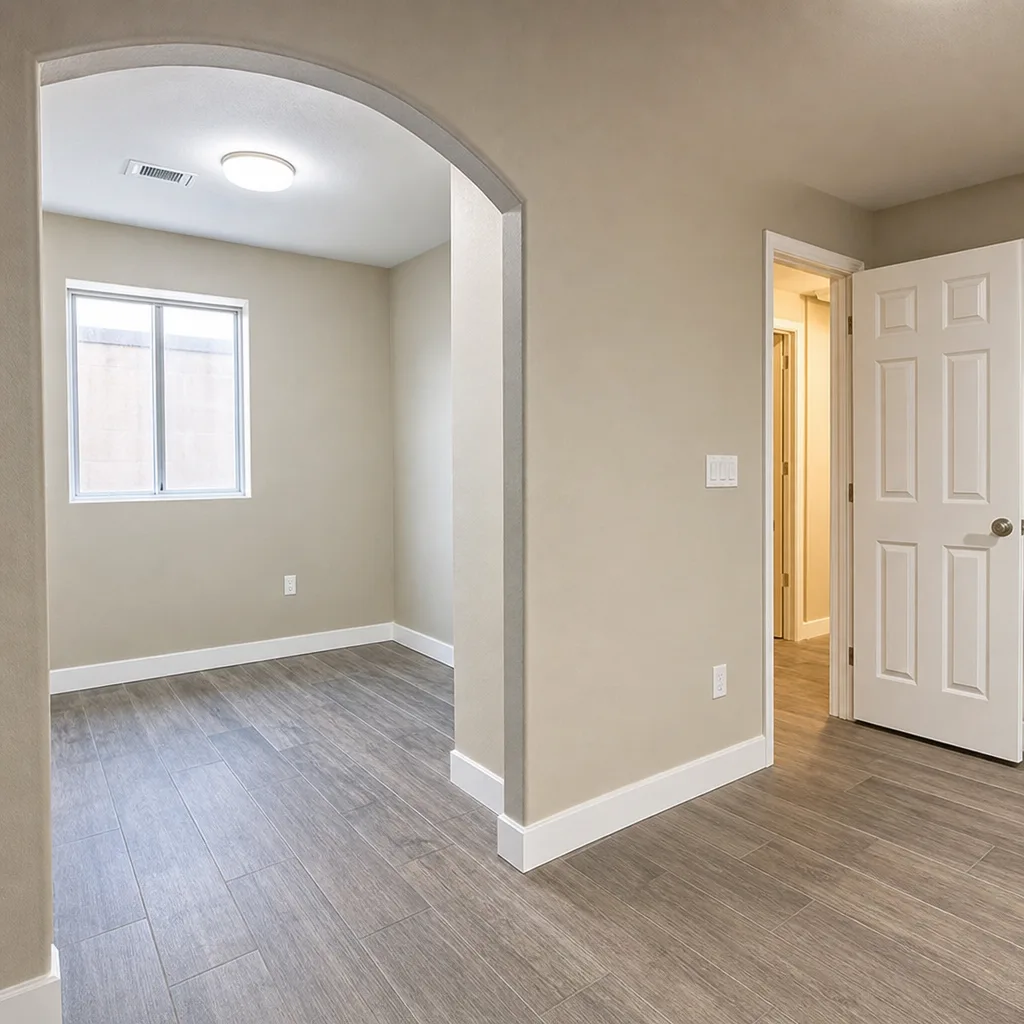 After
After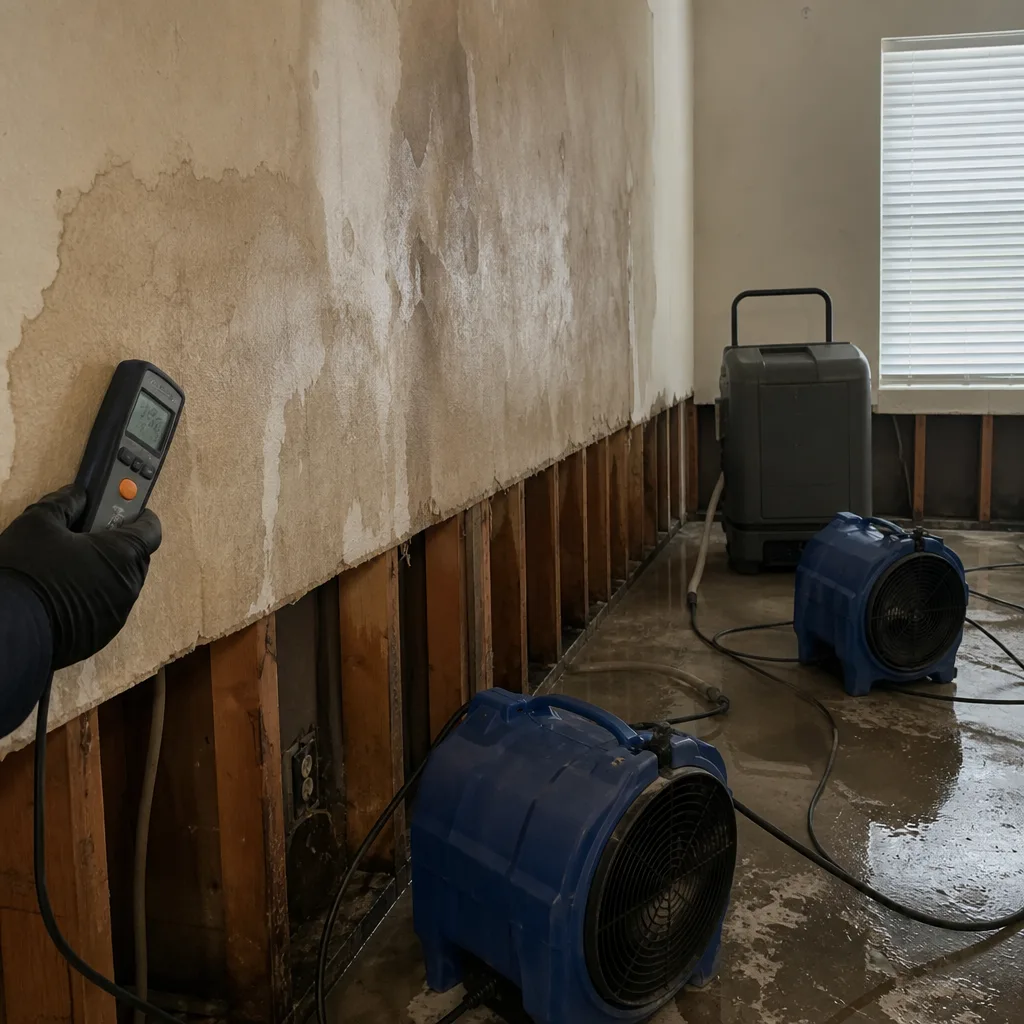 Before
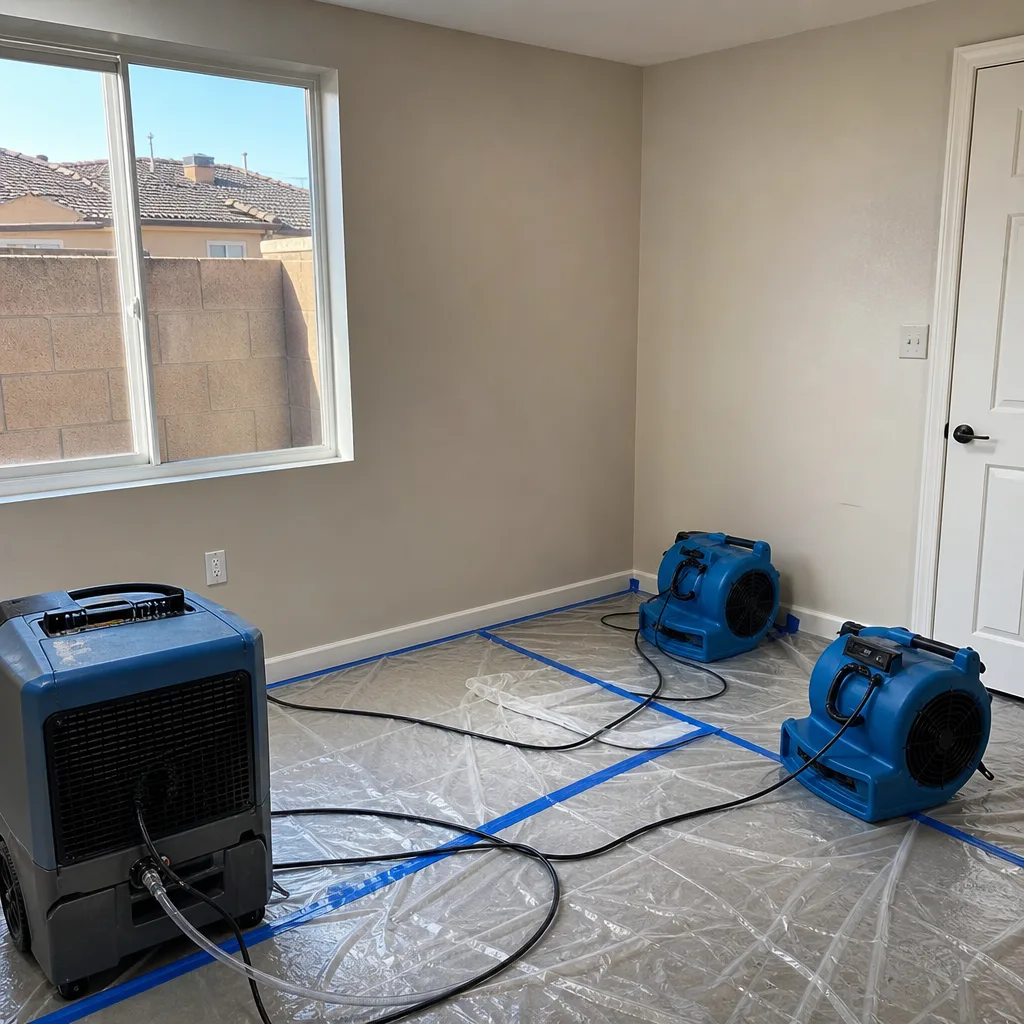 After
After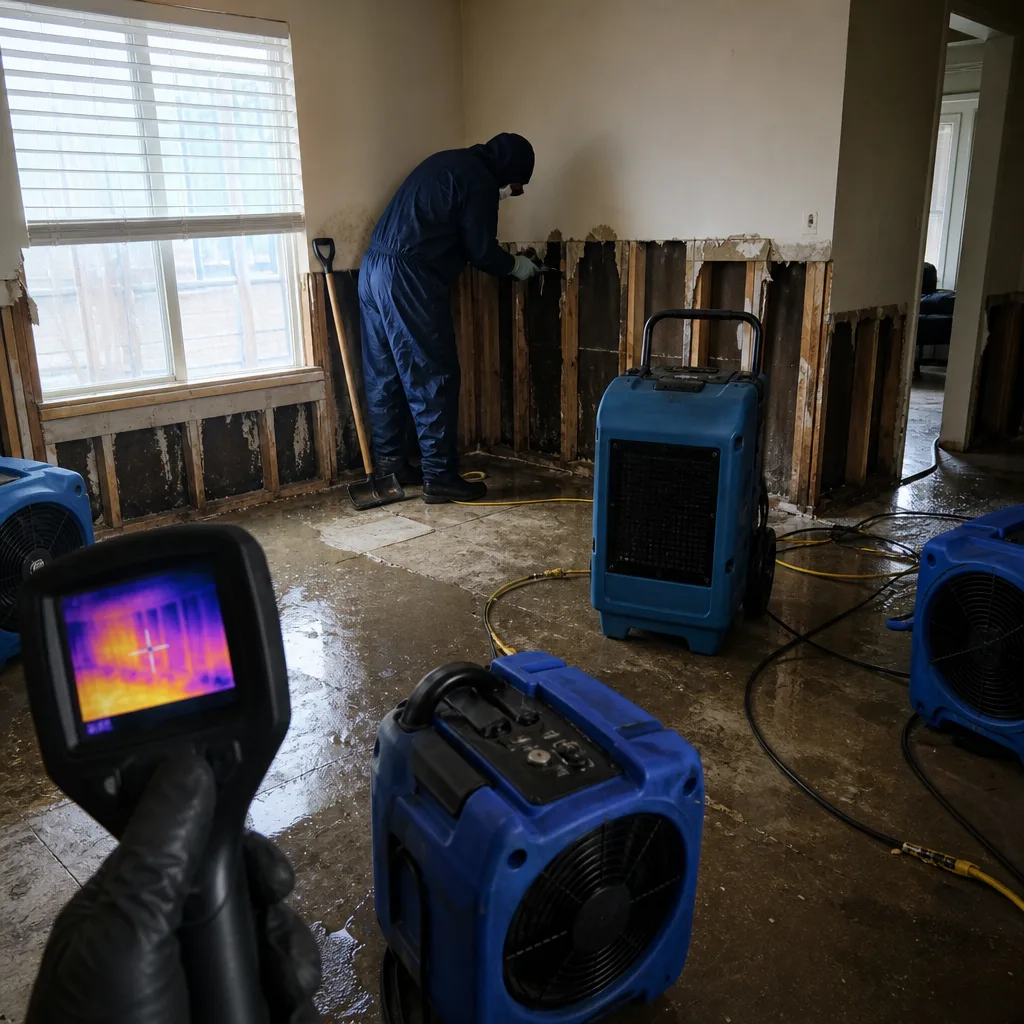 Before
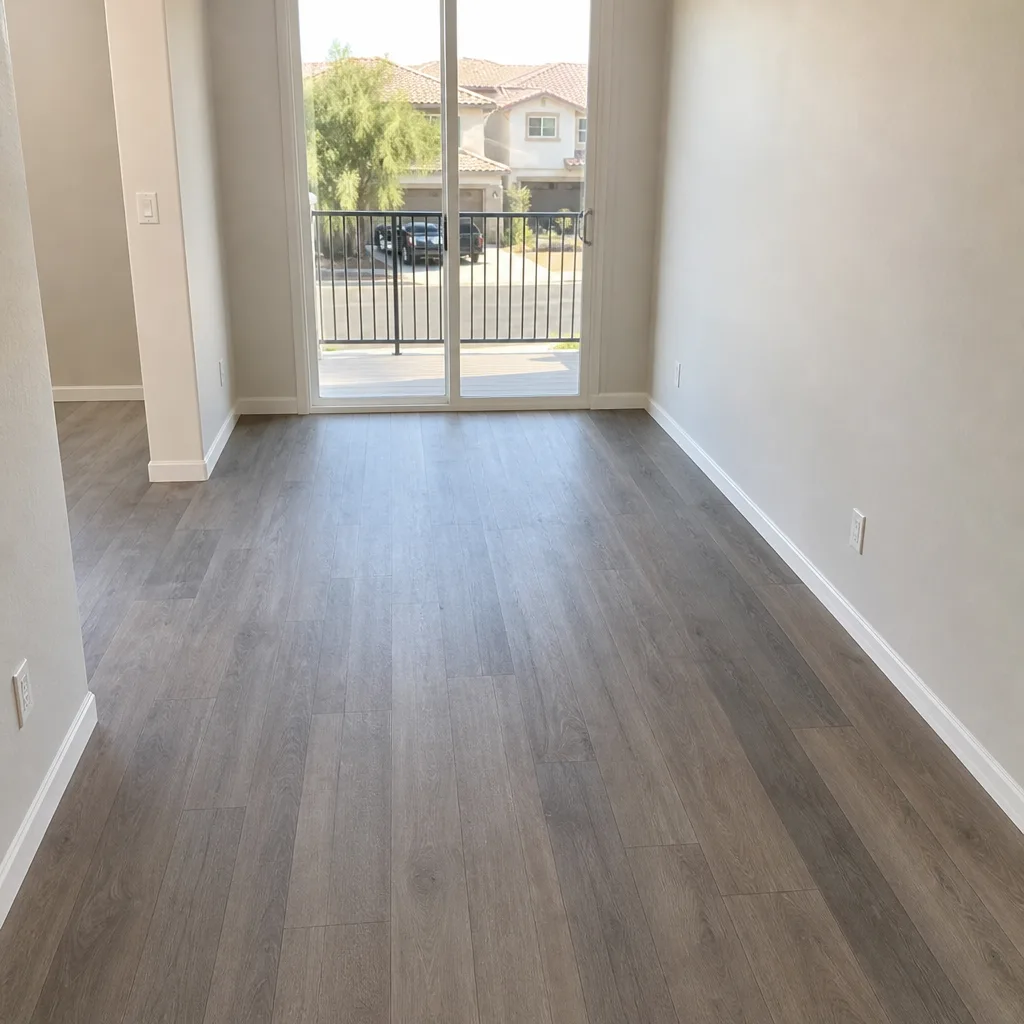 After
After24/7 Emergency Mold Remediation in Whitney
Mold remediation in Whitney, NV typically costs $1,200-$4,500 for contained residential jobs and $5,000-$15,000+ when hazmat protocols activate on pre-1990 homes. Most of our Mold Remediation crews can be on-site in Whitney within 45 minutes, and we answer live at (725) 726-3239 around the clock. The first hour determines whether mold stays a surface problem or colonizes wall cavities, subfloors, and HVAC systems. That’s why we dispatch with moisture meters, thermal imaging, and containment materials already loaded - not promised for later.
Whitney’s monsoon season turns small water intrusions into full mold jobs fast. Caliche hardpan under the soil pushes runoff sideways instead of down, and water that enters through foundation cracks or overwhelmed window wells often travels several feet inside walls before showing on drywall. By the time you smell it, mold has usually established behind the finish.
Understanding Mold Remediation Severity in Whitney Properties
We classify mold jobs by three factors: the water category that fed the growth, the square footage of visible and hidden colonization, and whether the affected structure contains hazardous materials requiring abatement before demolition.
Category 1 water - clean supply line breaks - can produce mold in 48-72 hours on organic surfaces. Category 2, gray water from appliances or sump failures, accelerates growth and demands antimicrobial treatment. Category 3, black water from sewage or ground flooding, is what we see most often in Whitney after monsoon events: water that entered through foundation cracks carrying soil bacteria, requiring full PPE, negative air containment, and IICRC-compliant sanitization before any rebuild.
Whitney’s housing stock intensifies every severity level. Those 1970s-1980s tract homes near the Whitney Recreation Center and along Boulder Highway? Original galvanized lines fail catastrophically. Flat roofs pool water. And once we open walls, we regularly find vermiculite insulation, asbestos floor tile, or lead-based paint that triggers Clark County hazmat protocols. A Category 1 job can become a multi-week project when abatement enters the scope. We identify these triggers during initial assessment, not mid-demolition.
Why Whitney Property Owners Choose DryMark Restoration North Las Vegas
- 45-minute response commitment to Whitney properties - our Las Vegas office coordinates dispatch, and crews are routed via Lake Mead Boulevard or Boulder Highway depending on traffic patterns.
- 24/7 live answer, every call: a real person, never an automated system or voicemail tree. Emergency lines ring to our operations center, not an answering service.
- IICRC-certified crews holding WRT (Water Damage Restoration Technician), AMRT (Applied Microbial Remediation Technician), and FSRT (Fire & Smoke Restoration Technician) credentials where dual certification applies to fire-water-mold sequences.
- Free visual inspection and moisture assessment - we document readings before proposing any work.
- Direct insurance billing with adjuster coordination from day one; we speak the same claim language because our founder worked in claims.
- One team from containment through reconstruction - no handoffs between mitigation and rebuild contractors that lose continuity on hazmat-flagged jobs.
 Before
 After
AfterOur Mold Remediation Process
1. Inspection & Assessment
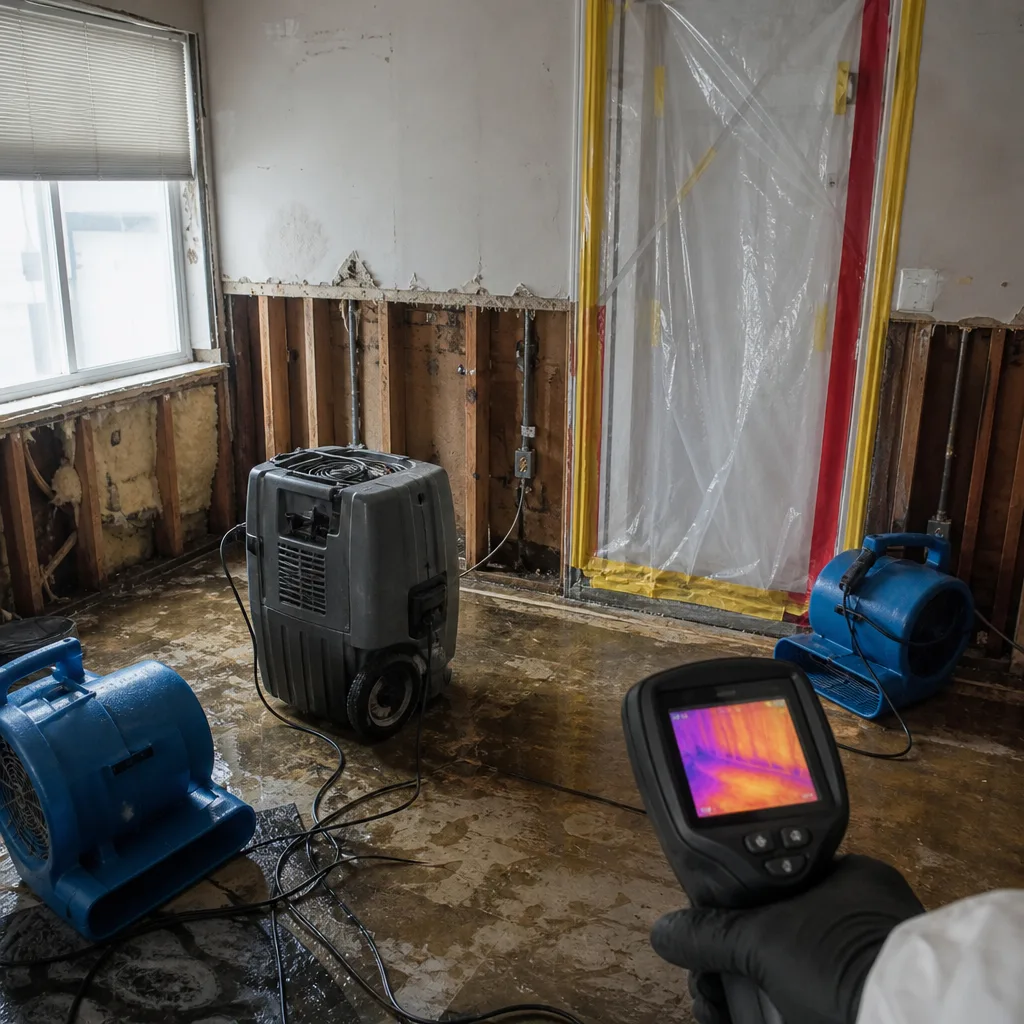
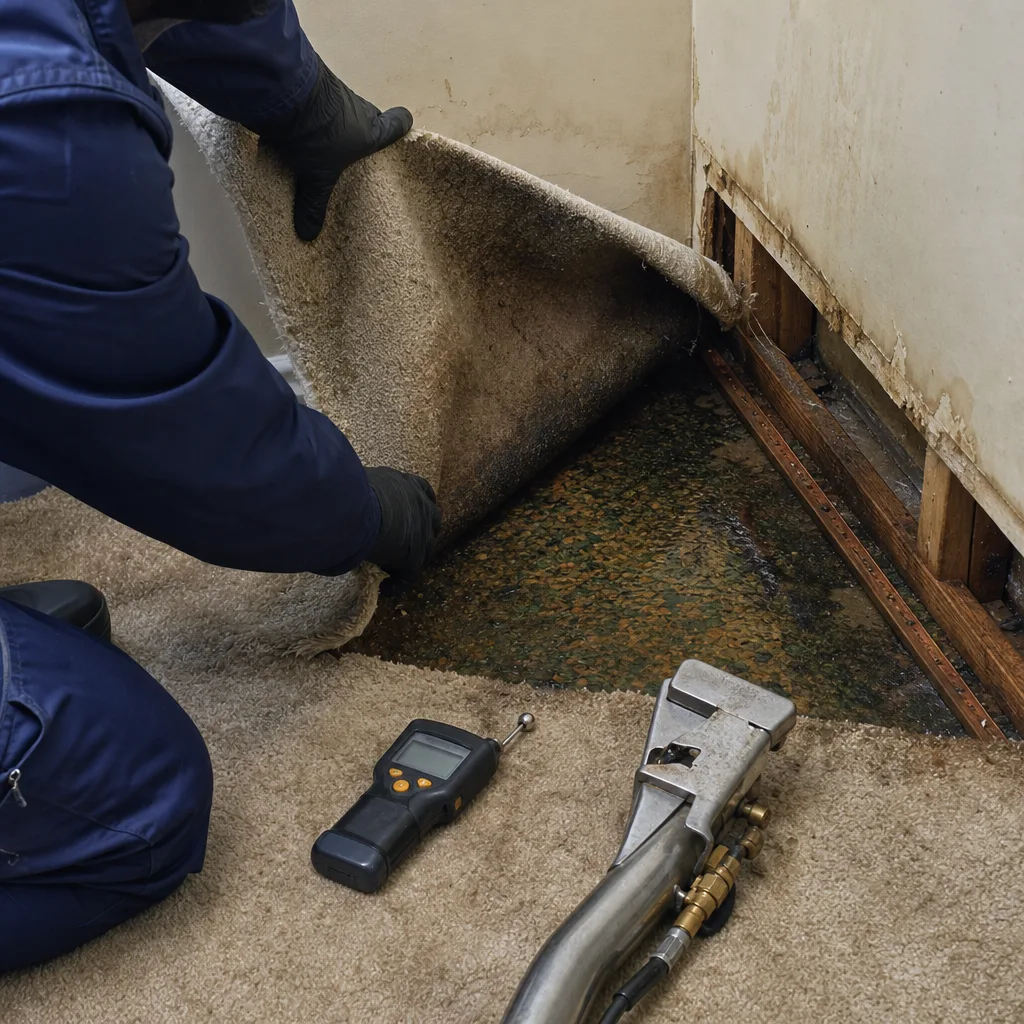
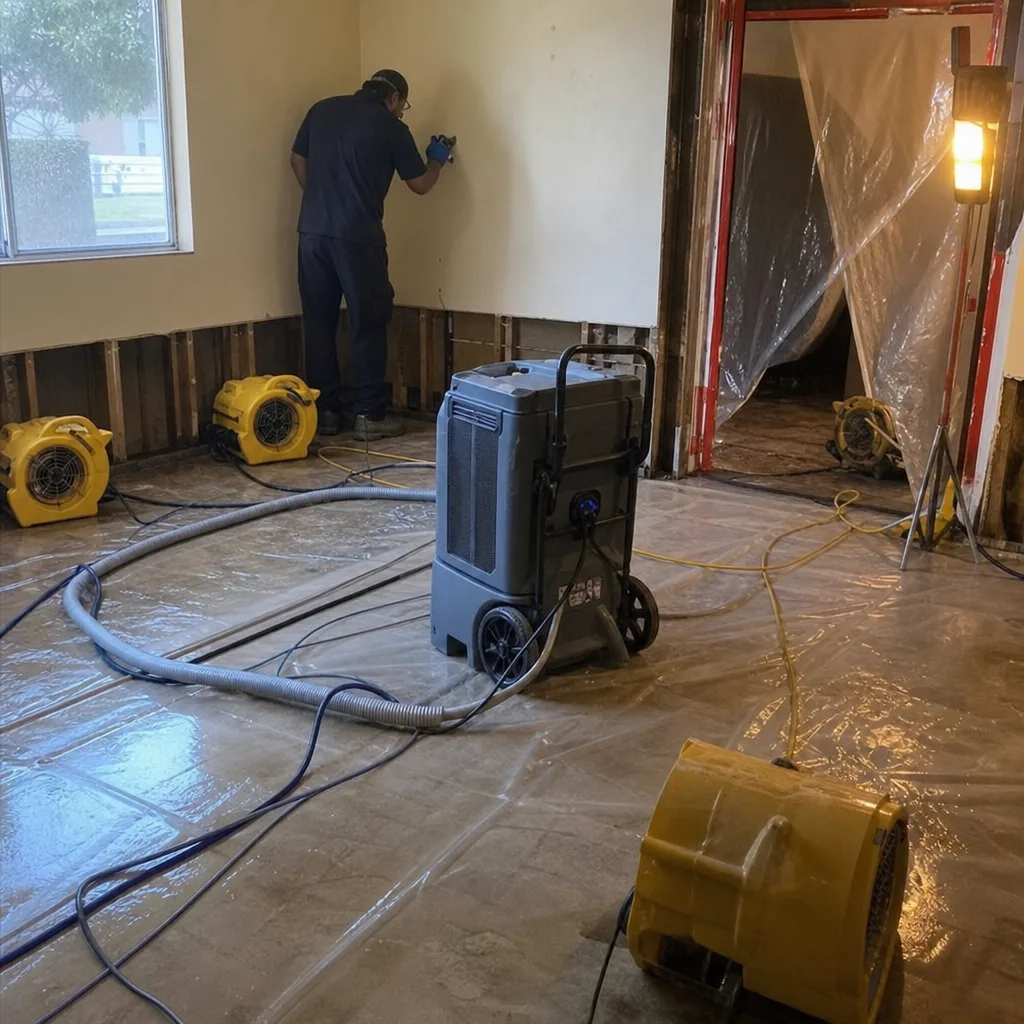
We arrive with FLIR thermal imaging, penetrating and non-penetrating moisture meters, and hygrometers to map the full moisture perimeter. In Whitney, we specifically check foundation edges and slab perimeters for lateral water migration from caliche-driven pooling - the hidden source most crews miss. We test suspect materials for asbestos and lead when the home was built before 1990.
2. Containment & Air Quality Control
We establish negative air containment with 6-mil poly barriers and HEPA-scrubbed airlocks to prevent cross-contamination. Air scrubbers run continuously, capturing 99.97% of particles 0.3 microns and larger. This protects occupants and creates the controlled environment required for IICRC-compliant remediation.
3. Moisture Source Elimination & Structural Drying
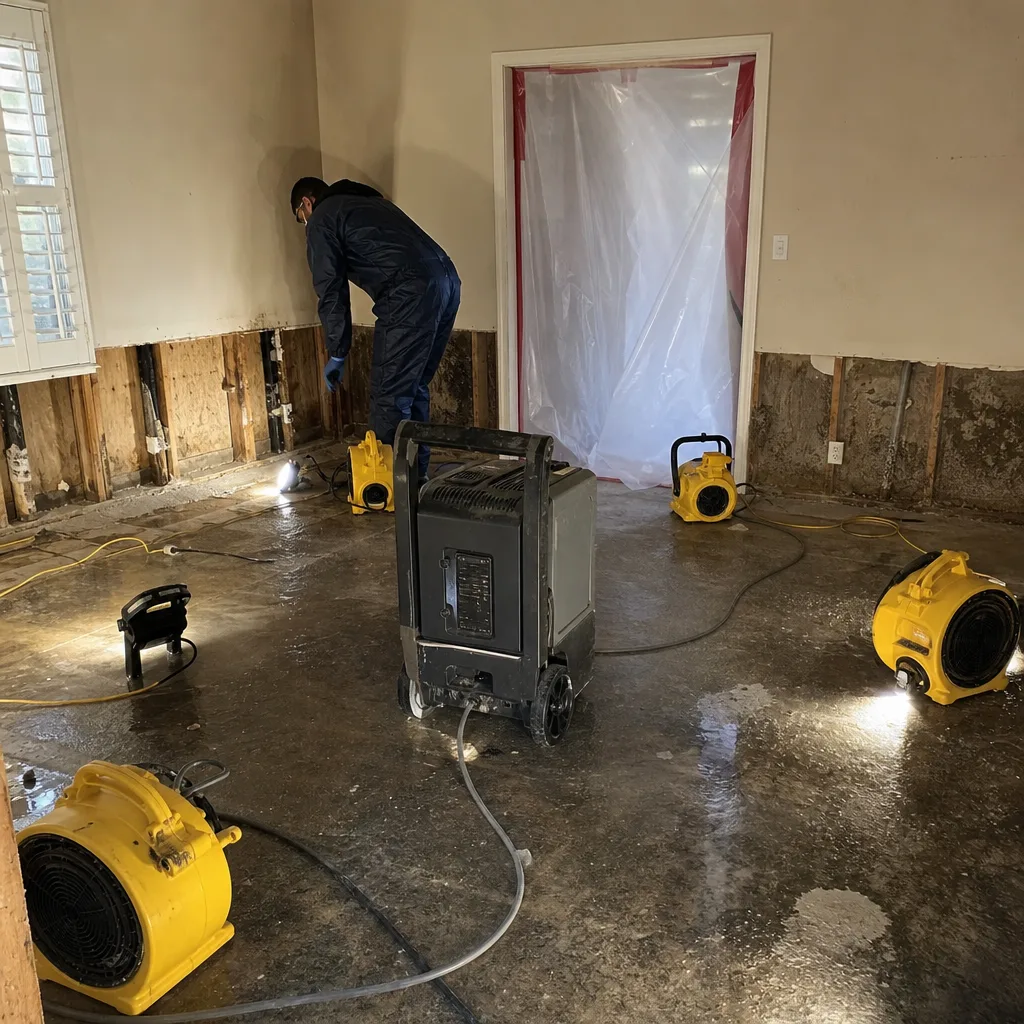
We stop the water before treating the mold. For slab-edge intrusion, we deploy Injectidry mat systems along foundation perimeters to draw moisture from concrete and subfloor assemblies. Dri-Eaz and Phoenix LGR dehumidifiers maintain vapor pressure differential - the measurable force that pulls moisture from materials into the air for extraction.
4. Mold Removal & Antimicrobial Treatment
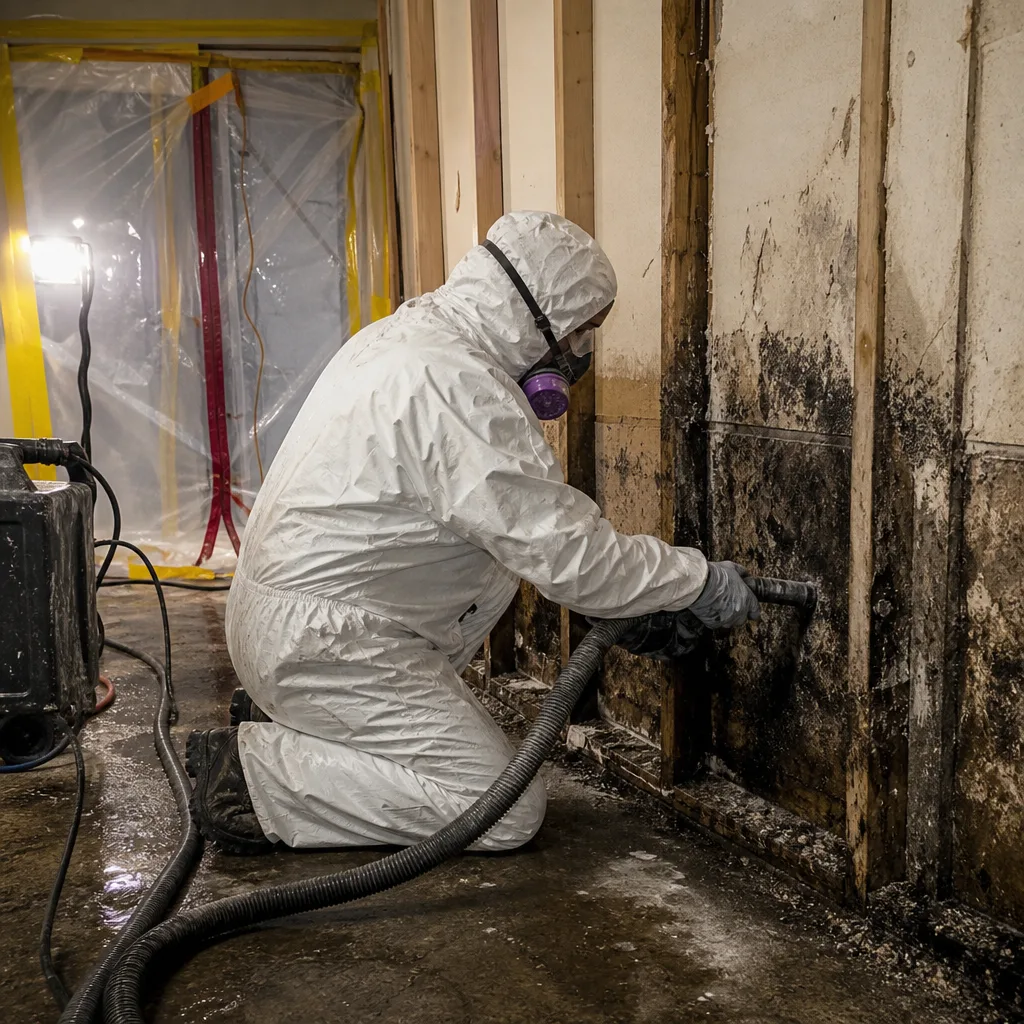
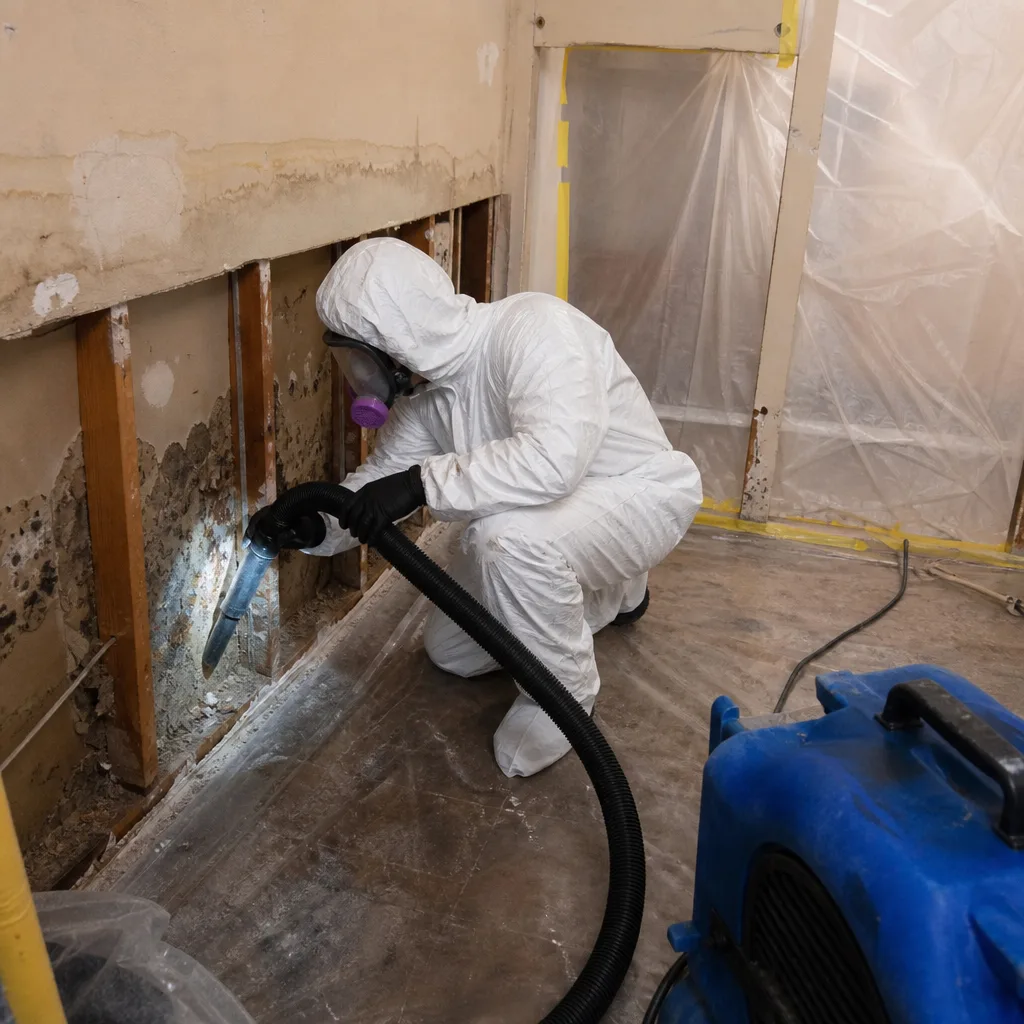
Non-salvageable porous materials - water-damaged drywall, insulation, carpet pad - are removed and disposed of per Clark County hazardous waste protocols when contamination warrants. Remaining structural elements receive HEPA vacuuming and EPA-registered antimicrobial application, with clearance-ready documentation at every stage.
5. Black Mold & Hazardous Material Protocols
When Stachybotrys or extensive colonization is present, or when pre-1990 materials test positive for asbestos or lead, we coordinate licensed abatement contractors and file permits through Clark County Building Department - not City of Las Vegas channels. We manage this timeline so mold doesn’t advance while paperwork clears.
6. Repairs, Rebuild & Documentation
Our reconstruction team replaces removed materials with moisture-resistant equivalents where code allows, restores finishes to match, and delivers your complete photo record, drying logs, and signed 365-Day Done Right Promise under The Haven Standard.
Need Emergency Mold Remediation in Whitney Now?
Crews minutes away, answering live 24 hours a day. The sooner we start, the less it costs.
Working With Your Insurance Company
Insurance coverage for mold in Whitney hinges on documentation proving the mold resulted from a covered sudden water loss, not long-term neglect or maintenance failure. We begin building that file the moment we arrive. Every moisture reading is logged with time, date, and location. Every affected room is photographed before any material is disturbed. Our estimates are compiled in industry-standard format that adjusters recognize immediately.
We coordinate directly with your carrier’s adjuster, provide supplemental documentation when hidden damage expands the scope, and never ask you to front costs for covered losses. Our founder’s background in claims means we understand what documentation turns a disputed invoice into a paid one.
What We Provide Your Insurer
- Thorough documentation of the loss origin and category
- Photos of all damage, room by room, with timestamps
- Moisture readings and daily drying logs to IICRC standards
- A detailed, line-item scope of work with unit pricing
- Direct coordination with your carrier’s adjuster, including supplement negotiation
Built for Whitney’s Loss Calendar
January through March brings the driest months, but aging HVAC systems working overtime produce condensate line clogs and overflow damage in attics and ceiling cavities. Homeowners rarely notice until brown spots appear - by then, mold has had weeks to establish.
July through September is monsoon season: short, violent storms onto caliche that cannot absorb rainfall. Streets flood. Window wells fill. And water that should drain vertically migrates laterally under slabs, wicking up through foundation cracks into wall cavities. We see our highest volume of Whitney calls in August, often from homeowners who dried visible water themselves and missed what moved under the house.
October through December, temperature swings stress older building envelopes. Caulk fails. Stucco cracks. And the first heating cycle disturbs dormant spores in ductwork that sat wet all summer. We schedule preventive inspections for Whitney homeowners with 1970s-1980s systems before heating season begins.
Mold Remediation Across Whitney’s Neighborhoods
Near the Whitney Recreation Center and the surrounding residential core, we work mostly in single-story stucco tract homes from the 1970s and 1980s. These properties share common failure modes: original galvanized water lines, flat roofs with inadequate drainage, and attics with vermiculite insulation that tests hot for asbestos. Our crews know to bring hazmat testing kits on every initial visit to this pocket of Whitney.
Along Boulder Highway corridor properties, commercial and mixed-use buildings present different challenges. Multi-tenant structures require coordinated containment that protects adjacent businesses, and HVAC systems often serve multiple units - meaning one mold source can distribute spores across several spaces. We design zone-specific negative air plans for these configurations.
The areas near Lake Mead Boulevard and toward the eastern edge of the Whitney CDP see more foundation-edge intrusion from stormwater runoff that pools against slabs on the caliche hardpan. Homeowners here often call with “roof leaks” that turn out to be lateral slab migration. Our moisture mapping protocol is designed to catch this misdiagnosis before demolition begins.
Closer to the North Las Vegas boundary, we see newer construction with better envelope sealing but more complex HVAC and smart-home humidity control systems. When these fail, the tight construction that prevents natural ventilation can accelerate mold growth dramatically. We bring specialized psychrometric analysis to these jobs - measuring dew point, grains per pound, and vapor pressure to identify the mechanical failure behind the moisture.
Specialized Mold Remediation Services We Offer in Whitney
Mold Inspection & Testing
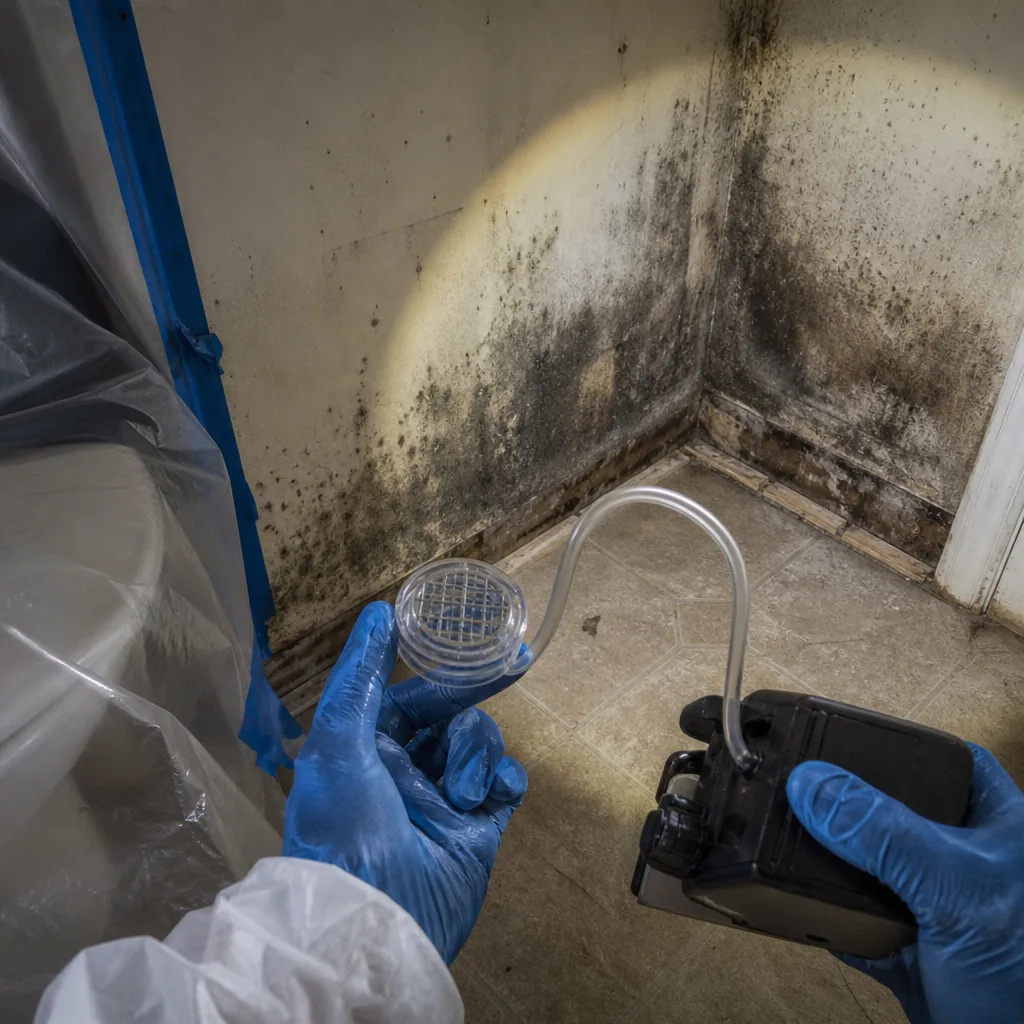
We don’t guess. Our Whitney inspections combine thermal imaging, moisture mapping, and air/surface sampling analyzed by independent laboratories. We specifically test foundation perimeters for hidden slab-edge moisture that visual inspection misses. Results guide scope, not sales pressure.
Mold Removal
Containment-first removal of colonized materials, with full documentation for insurance and Clark County compliance. In Whitney’s pre-1990 housing stock, we test for asbestos and lead before any demolition begins - the step that separates professional remediation from liability exposure.
Black Mold Remediation
Stachybotrys and other toxigenic species require enhanced PPE, strict containment, and specialized disposal. We coordinate with Clark County for hazardous waste manifesting when required, and we don’t clear containment until third-party air sampling confirms safe levels.
Air Quality Restoration
Post-remediation, we restore breathable air quality through HEPA filtration, duct cleaning where contamination has spread, and balanced humidity control. For Whitney homes with aging HVAC infrastructure, we assess whether the system itself has become a mold reservoir requiring replacement.
Crawl Space Treatment
Whitney’s limited crawl space construction still presents in some Boulder Highway-area properties and additions. We seal vapor barriers, install mechanical dehumidification, and treat structural wood with borate-based preservatives where fungal decay is present.
Moisture & Humidity Control
The long-term solution to recurring mold. We install and monitor permanent dehumidification, improve ventilation pathways, and correct grading or drainage that drives slab-edge moisture. For Whitney’s caliche conditions, this often means managing water at the perimeter, not just inside.
What happens when you call
- 1
A real person answersNo phone trees - you reach a local pro.
- 2
You get an upfront price rangeHonest numbers before anyone is dispatched.
- 3
A background-checked tech heads outLicensed & insured, dispatched right away.
- 4
You approve before work beginsNothing starts until you say go.
Mold Remediation Costs in Whitney, NV
Contained mold remediation on a single wall or small bathroom in Whitney typically runs $1,200-$2,800. Whole-room remediation with drywall removal and reconstruction lands at $3,500-$6,500. When hazmat protocols activate - asbestos abatement, lead-safe demolition, or extensive black mold containment - costs rise to $8,000-$15,000+ depending on square footage and permit timelines through Clark County Building Department.
What moves the price: the water category that caused the mold (Category 3 requires more intensive sanitization), whether hidden colonization extends beyond visible damage, and whether pre-1990 materials trigger abatement. Insurance typically covers mold resulting from sudden, documented water losses - not long-term humidity or maintenance neglect. We provide a written price before any work begins, every time, with no scope-creep additions once our crew is inside. Haven Standard, Clause 1.
Our free visual inspection gives you a firm scope and price, not a guess. Call (725) 726-3239 to schedule.
We Also Serve Cities Near Whitney
Our crews respond throughout the Las Vegas Valley from our Las Vegas office, with dedicated routing to Whitney and neighboring communities. We also serve North Las Vegas, Aliante, Nellis AFB, and Sunrise Manor with the same documentation-first standards and live-answer dispatch.
Serving Whitney, NV - Our Local Coverage Area
We’re based in the Whitney area and know this community well. Use the map below to see our service coverage - if you’re nearby, we can almost certainly help.
Whitney Mold Remediation Questions, Answered
Does Whitney fall under City of Las Vegas or Clark County for mold remediation permits?
Whitney is an unincorporated Clark County CDP, so all permits, inspections, and code compliance run through Clark County Building Department, not City of Las Vegas channels.
Out-of-area contractors routinely file through the wrong jurisdiction and stall projects while documentation gets rejected and resubmitted. We file correctly the first time because we know the distinction. If your job requires structural repairs or abatement permitting, that Clark County path adds time we build into our schedule so mold doesn’t keep spreading during the wait. Call (725) 726-3239 and we’ll confirm exactly what your property requires.
Why does mold keep coming back after a monsoon flood in Whitney even after we dry the room?
The water source is probably still active. Caliche hardpan under Whitney soil pushes stormwater laterally under slab foundations rather than allowing vertical drainage.
Water enters through foundation cracks or perimeter gaps, travels several feet inside the slab edge, then wicks up into wall cavities. Surface drying misses this hidden reservoir. Our moisture mapping protocol specifically tests slab perimeters and foundation edges to locate lateral migration before we quote any remediation. Without eliminating the source, mold returns within weeks. We find and stop the actual water path, not just the visible symptom. Call (725) 726-3239 for a free moisture assessment.
My Whitney home was built in 1978 - does mold remediation require asbestos or lead testing first?
Yes, if demolition will disturb suspect materials. Homes built in Whitney between 1970 and 1990 frequently contain asbestos-wrapped ductwork, asbestos floor tile, vermiculite insulation, and lead-based paint.
Clark County and federal EPA regulations require testing before disturbance; fines for improper abatement start at $5,000 and can reach homeowner liability if an unlicensed crew creates a release. We test as standard practice on every pre-1990 Whitney job, coordinate licensed abatement when positive, and never begin demolition without clearance. This protects your health, your claim, and your legal exposure. Call (725) 726-3239 to discuss your property’s specific requirements.
How fast can mold start growing after a Whitney flash flood or HVAC condensate overflow?
Mold can establish visible colonies within 48-72 hours on organic materials at moisture content above 16%.
In Whitney’s summer heat, evaporation from surface water can mask ongoing moisture in wall cavities and subfloors, creating ideal hidden growth conditions. HVAC condensate overflows are particularly deceptive - the water is clean (Category 1) but continuous, and the dark, warm plenum space accelerates colonization dramatically. We recommend inspection within 24 hours of any water event, even if surfaces appear dry. Our emergency line at (725) 726-3239 answers live to schedule immediate moisture mapping.
What does mold remediation actually involve in a Whitney home with Category 3 water?
Category 3 water, common in Whitney after monsoon ground flooding or sewage backup, requires full PPE, negative air containment, removal of all porous materials that contacted the water, HEPA vacuuming of remaining structural elements, and EPA-registered antimicrobial treatment before any rebuild.
Because Category 3 carries soil bacteria and potential pathogens, IICRC standards prohibit saving carpet, carpet pad, drywall, or insulation below the water line. We document every removed item for insurance, sanitize framing to clearance standards, and provide third-party verification before reconstruction begins. The process typically takes 3-7 days for contained areas, longer when hazmat materials are present. Call (725) 726-3239 for a written scope specific to your loss.
Can we stay in our Whitney home during mold remediation?
Sometimes, for small contained areas with no hazardous materials and intact HVAC isolation. Often, no - especially with Category 3 water, black mold species, or when abatement is required.
We make this determination during initial assessment based on containment feasibility, air scrubber capacity, and occupant health factors (asthma, immunocompromise, infant presence). For Whitney’s common pre-1990 homes with asbestos or lead triggers, temporary relocation is usually necessary during abatement. We discuss this frankly in our written scope - no surprises after work begins. Call (725) 726-3239 to review your situation.
Are your technicians certified for mold remediation specifically?
Yes. Our lead remediation technicians hold IICRC AMRT (Applied Microbial Remediation Technician) certification, with WRT (Water Damage Restoration Technician) as prerequisite.
We also maintain RIA and IFA documentation standards for all moisture logs, drying records, and clearance testing. Certification numbers and current status are available on request. For Whitney jobs requiring asbestos or lead abatement coordination, we partner with Nevada-licensed abatement contractors and manage the interface so you deal with one point of contact, not multiple vendors. Call (725) 726-3239 to verify credentials for your project.
What should I do in the first 30 minutes after discovering mold in my Whitney home?
Stop the water source if safe and accessible, turn off HVAC to prevent spore distribution, and call (725) 726-3239 for emergency dispatch.
Do not disturb visible mold - agitation releases spores into breathable air and can spread contamination to unaffected areas. Do not apply bleach; it discolors without killing root structures and can complicate professional treatment. Take photos for insurance documentation, note when you first observed the damage, and gather any recent water event history (storms, plumbing repairs, HVAC service) to share with our assessment team. Our 45-minute response commitment to Whitney means we’ll be there quickly with containment materials and testing equipment already loaded.
Written by Alicia Brennan, Owner at Back to Dry Restoration, serving Whitney since 2011 under The Haven Standard.
Mold Remediation in Nearby Areas