
Last updated September 23, 2026
Free visual inspection and a written scope of work before any mitigation begins - photos, moisture readings, and drying logs go in your claim file
The scope we write is the scope we bill. Anything new gets shown to you, in writing, before we touch it.
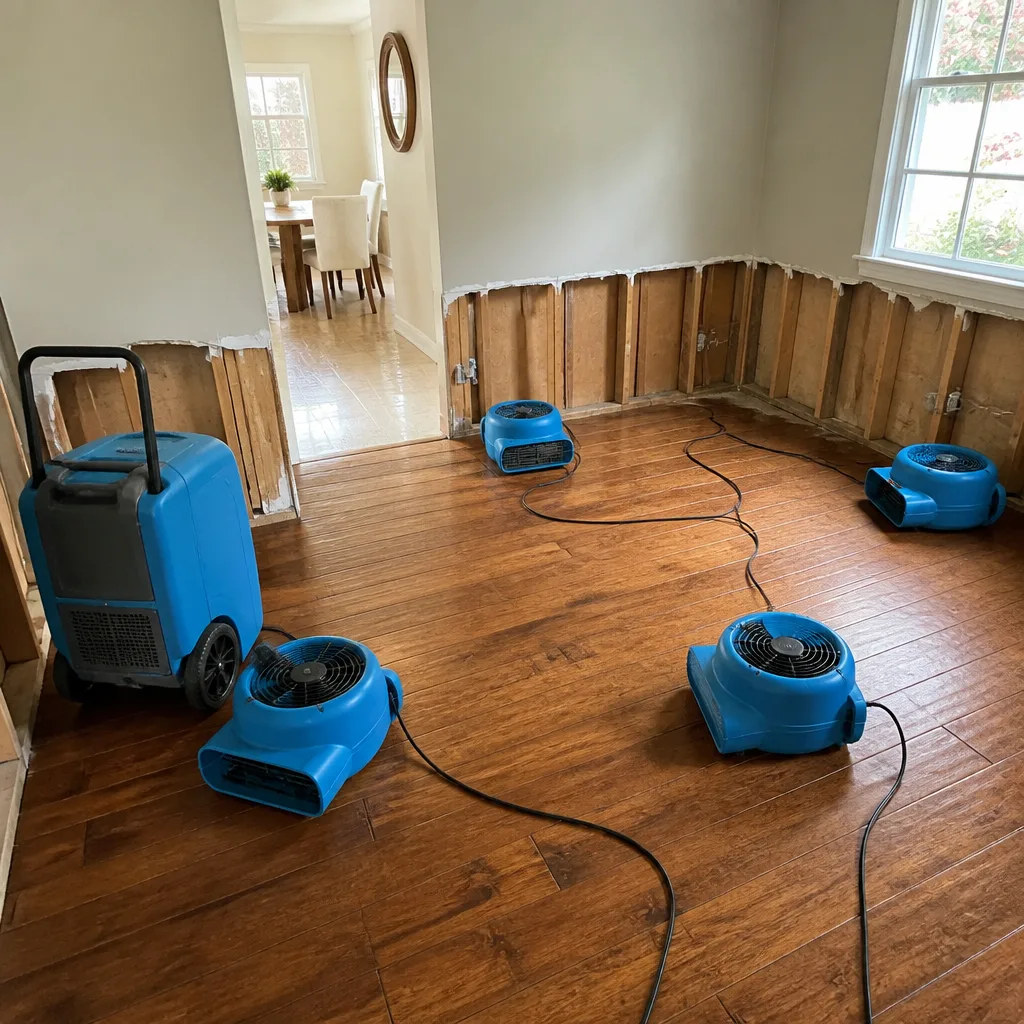
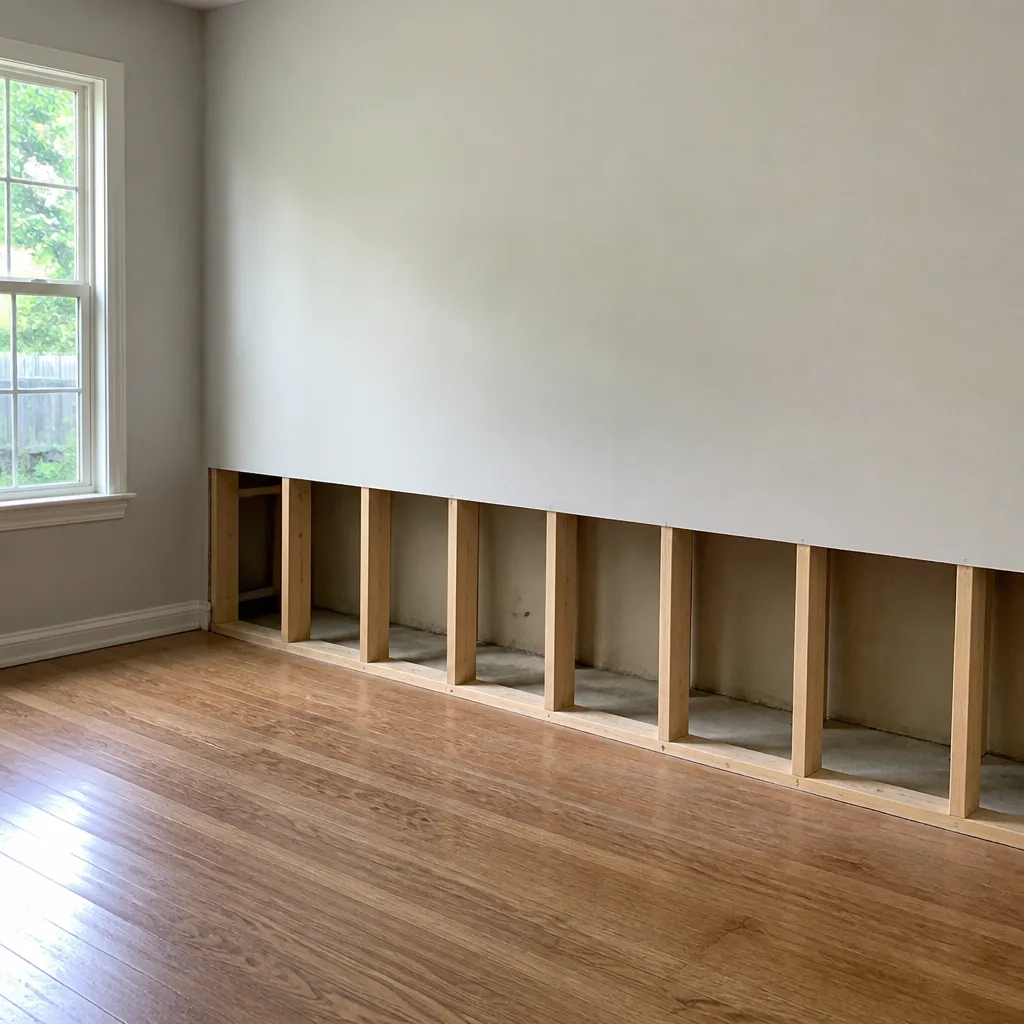

 Before
 After
After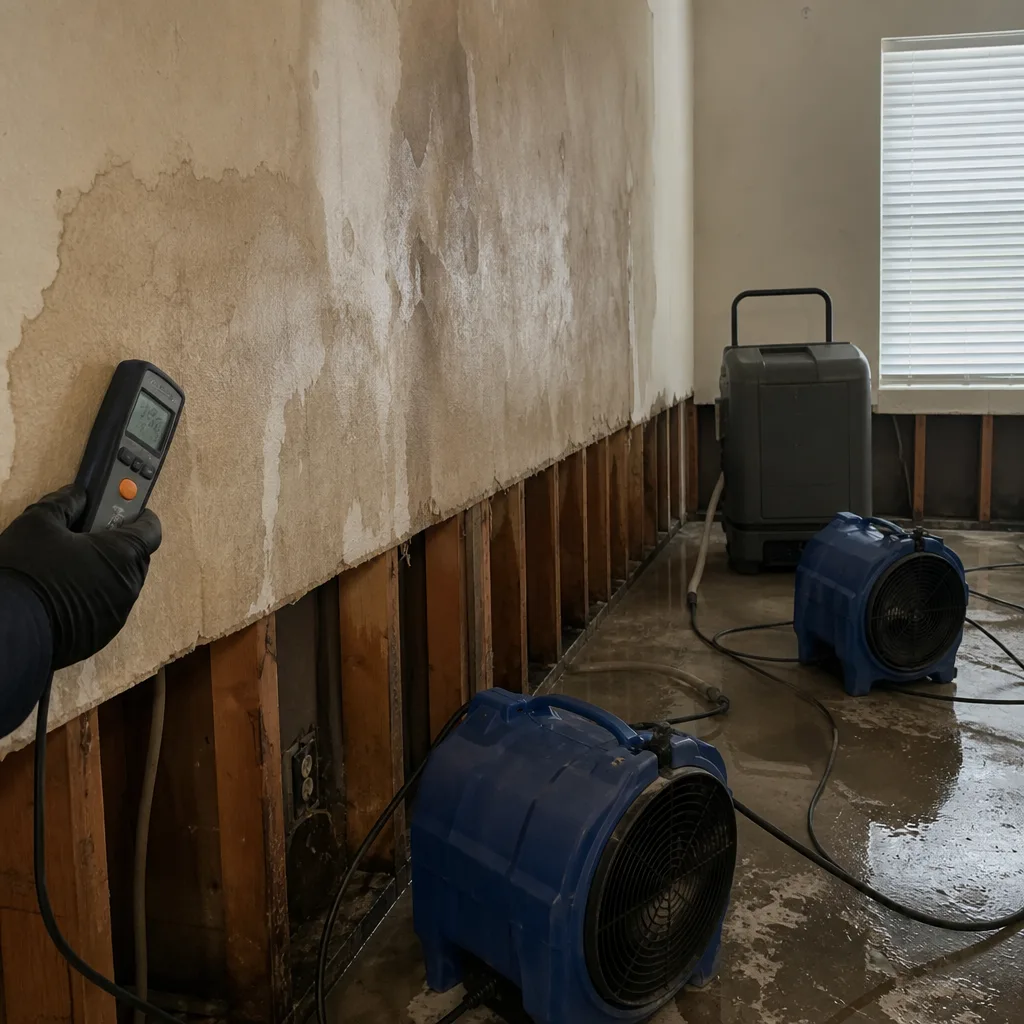 Before
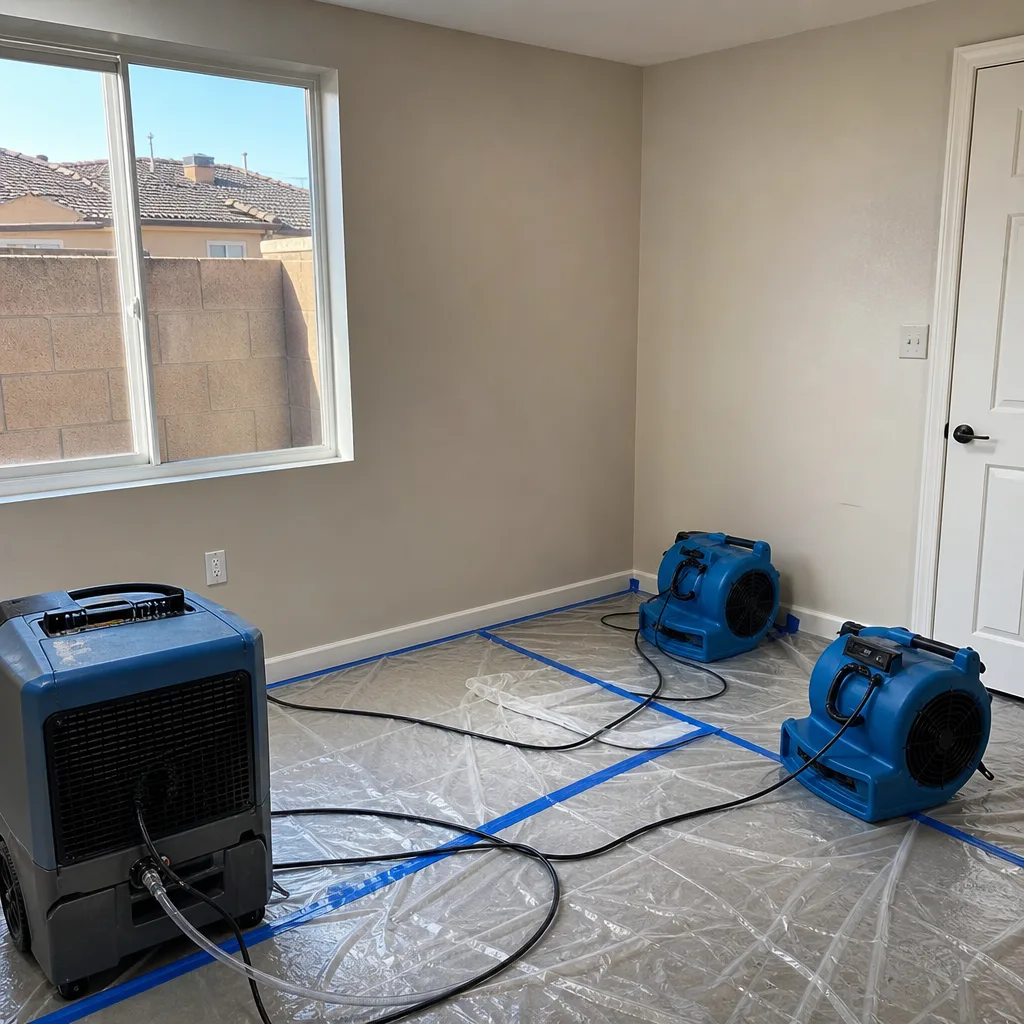 After
After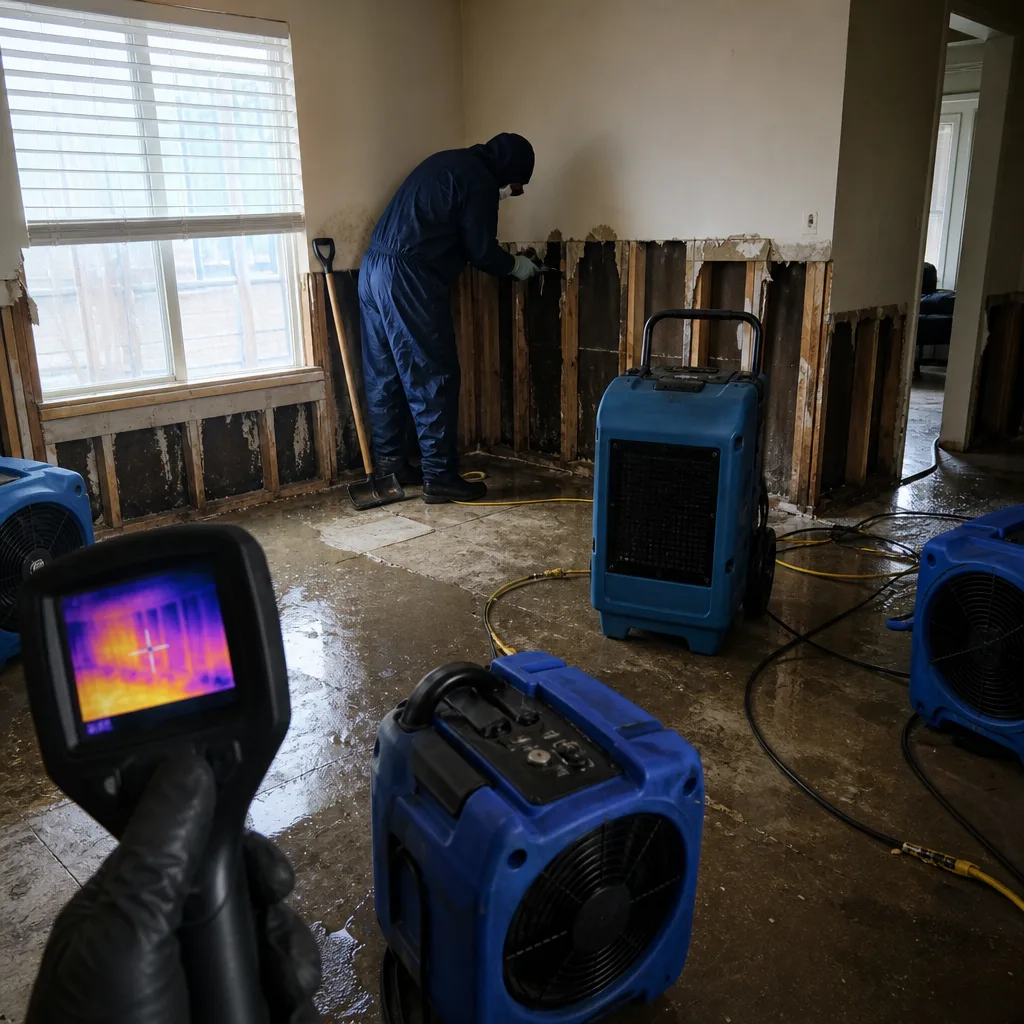 Before
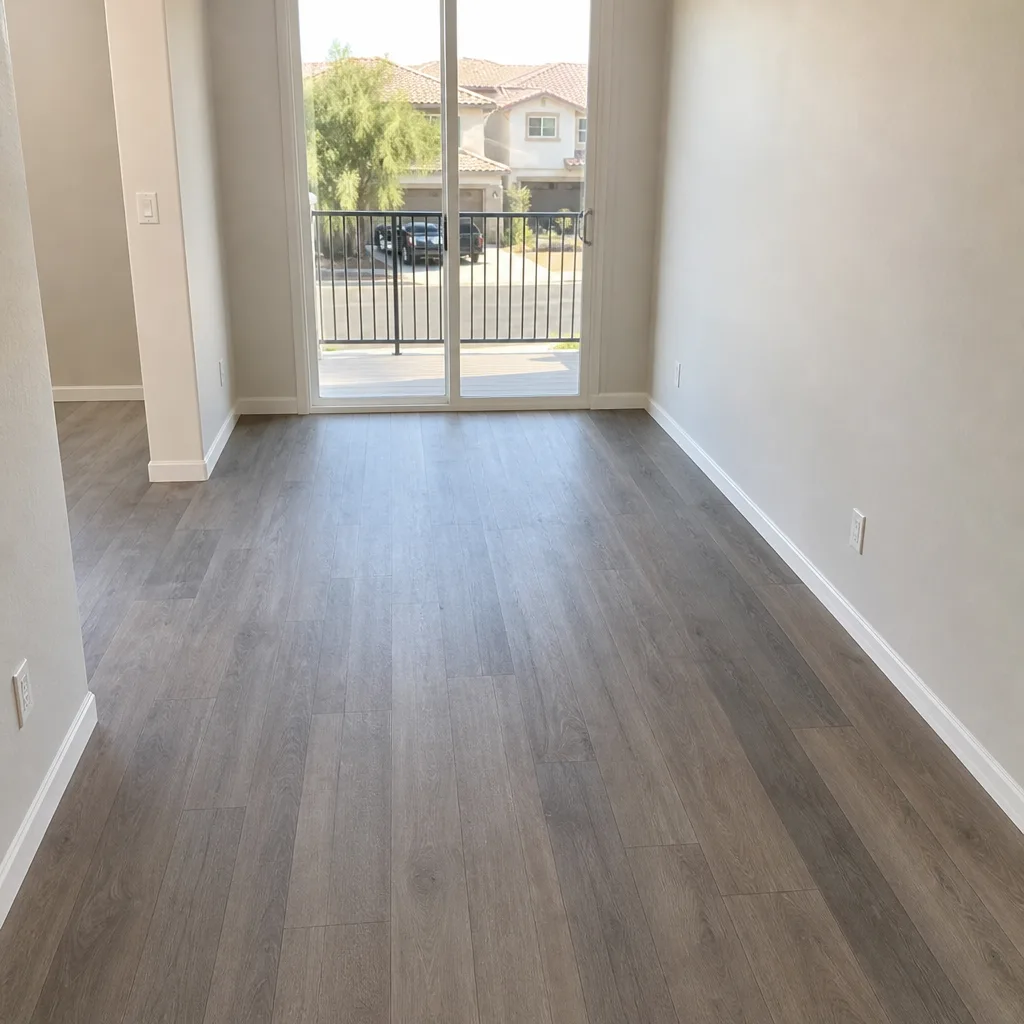 After
AfterDamage Restoration Warning Signs: A North Las Vegas Homeowner’s Reference Guide
A musty odor is a lagging indicator. By the time you smell it, mold has been colonizing for 72-plus hours in your North Las Vegas home. The readings that catch a problem at hour six look like a 19% WME pin meter reading on a base cabinet floor, not a smell. In our experience restoring more than 12,000 homes since 2011, the homeowners who avoid five-figure secondary damage are the ones who learn to read measurable signals - moisture percentages, temperature differentials, vapor pressure data - rather than waiting for stains, odors, or soft drywall. This guide teaches you to identify the early, objective warning signs of water damage, mold, fire and smoke residue, and storm intrusion before they become insurance disputes.
Quick Answer
The most reliable damage warning signs in a North Las Vegas home are measurable, not visible: moisture content above 16% in drywall, 12% in hardwood, or 19% in OSB subfloor indicates active intrusion; a 2°F or greater temperature differential on an interior wall detected with a non-contact IR thermometer signals evaporative cooling from a hidden leak; and efflorescence on block walls that turns dark when misted with water indicates active seepage rather than old mineral deposits. These readings allow intervention before mold colonization, structural compromise, or insurance coverage disputes develop.
Table of Contents
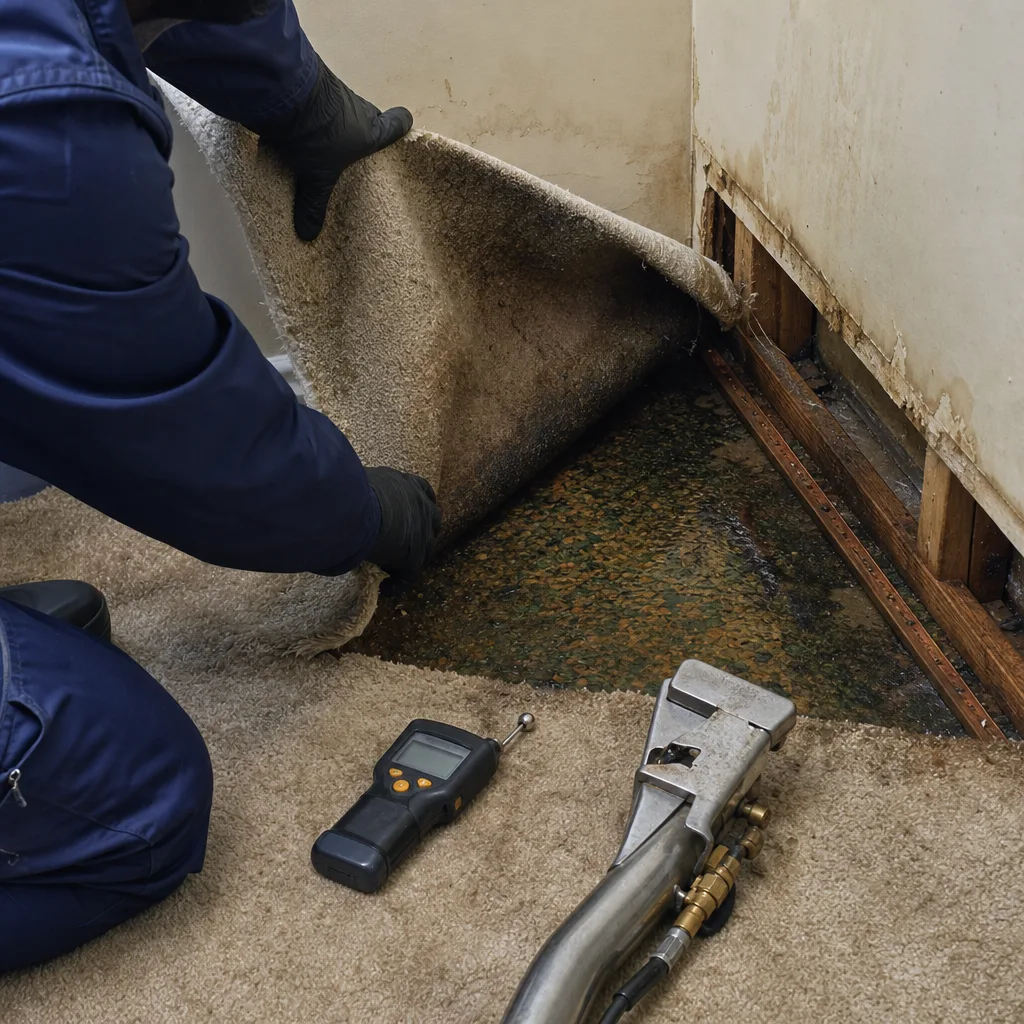
- Moisture Readings That Matter: Thresholds by Material
- Using an IR Thermometer to Find Hidden Leaks
- Stucco Exterior Warning Signs in North Las Vegas
- Efflorescence vs. Active Seepage: The Mist Test
- Building a Photographic Record for Claims Documentation
- Mold, Fire, and Storm Warning Signs
- Common Mistakes to Avoid
- When to Call a Professional
 Before
 After
AfterMoisture Readings That Matter: Thresholds by Material
Every material in your home has an equilibrium moisture content, or EMC - the percentage it stabilizes at given your local climate. In the Las Vegas valley, with annual relative humidity averaging 15-30%, normal EMC runs lower than most U.S. markets. This matters because a reading that looks acceptable in Houston or Miami indicates active water intrusion here.
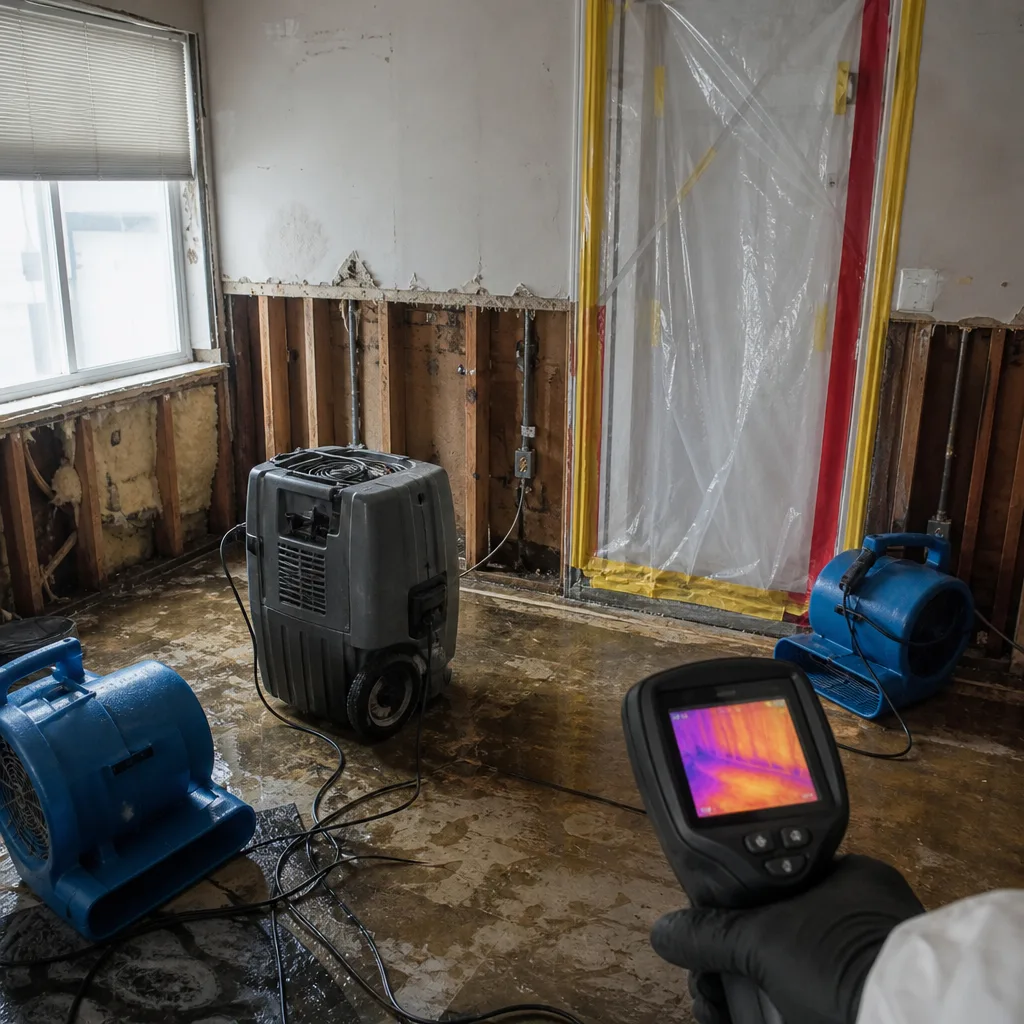
We document every water damage restoration in North Las Vegas with pin meter and thermo-hygrometer readings taken at arrival, daily during drying, and at completion. Here’s what those numbers mean for homeowners conducting their own inspections:
Drywall (Gypsum Wallboard)
Normal EMC in North Las Vegas: 5-8%. Active intrusion threshold: 16% or higher. At 16% WME (wood moisture equivalent, the standard pin meter scale for gypsum), paper facing begins to support mold growth within 48-72 hours at typical indoor temperatures. We flag drywall at 16% for removal or targeted drying; at 20%, we document it as Category 2 or 3 water loss material per IICRC S500 standards. A pin meter with insulated deep-wall probes costs $80-$150 and reaches past baseboards to detect cavity moisture that surface readings miss.
Hardwood Flooring
Normal EMC: 6-9%. Active intrusion threshold: 12%. Hardwood swells measurably at 12%, and at 16% cupping becomes permanent without sanding - which we avoid when possible, since sanding a moisture-compromised floor destroys documentation of the loss extent. Oak, maple, and hickory common in North Las Vegas homes built 2015-2025 behave similarly; engineered products with plywood cores show delamination at lower thresholds, sometimes 10-11%. If your pin meter reads 12% on hardwood, water is actively moving through or beneath it.
OSB Subfloor
Normal EMC: 7-10%. Active intrusion threshold: 19%. OSB is the dominant subfloor material in tract construction across North Las Vegas, and it’s hygroscopic - it absorbs moisture along strand edges and swells irreversibly. At 19%, strands begin to separate; at 25%, structural integrity is compromised and we document replacement rather than drying. The problem is that OSB subfloor is hidden beneath finished flooring, so homeowners typically detect it only when tile cracks, LVT bubbles, or hardwood gaps appear - all late-stage indicators. We find elevated OSB most often in slab-on-grade homes where irrigation lines or exterior grade slope toward the foundation.
Concrete Slab
Normal moisture vapor emission: 3-5 pounds per 1,000 square feet per 24 hours (per ASTM F1869 calcium chloride test). Elevated readings: 8+ lbs, or any reading with visible moisture on the slab surface. In North Las Vegas, slab moisture issues cluster in homes with broken irrigation lines, poor exterior drainage, or where the vapor barrier beneath the slab was compromised during 2015-2021 construction when concrete demand exceeded supply and quality control was variable.
Key takeaway: Buy a pin meter. Check suspect areas monthly. Document readings with date, location, and photo. A reading that jumps 4 percentage points month-to-month indicates an active leak, not seasonal variation.
Using an IR Thermometer to Find Hidden Leaks
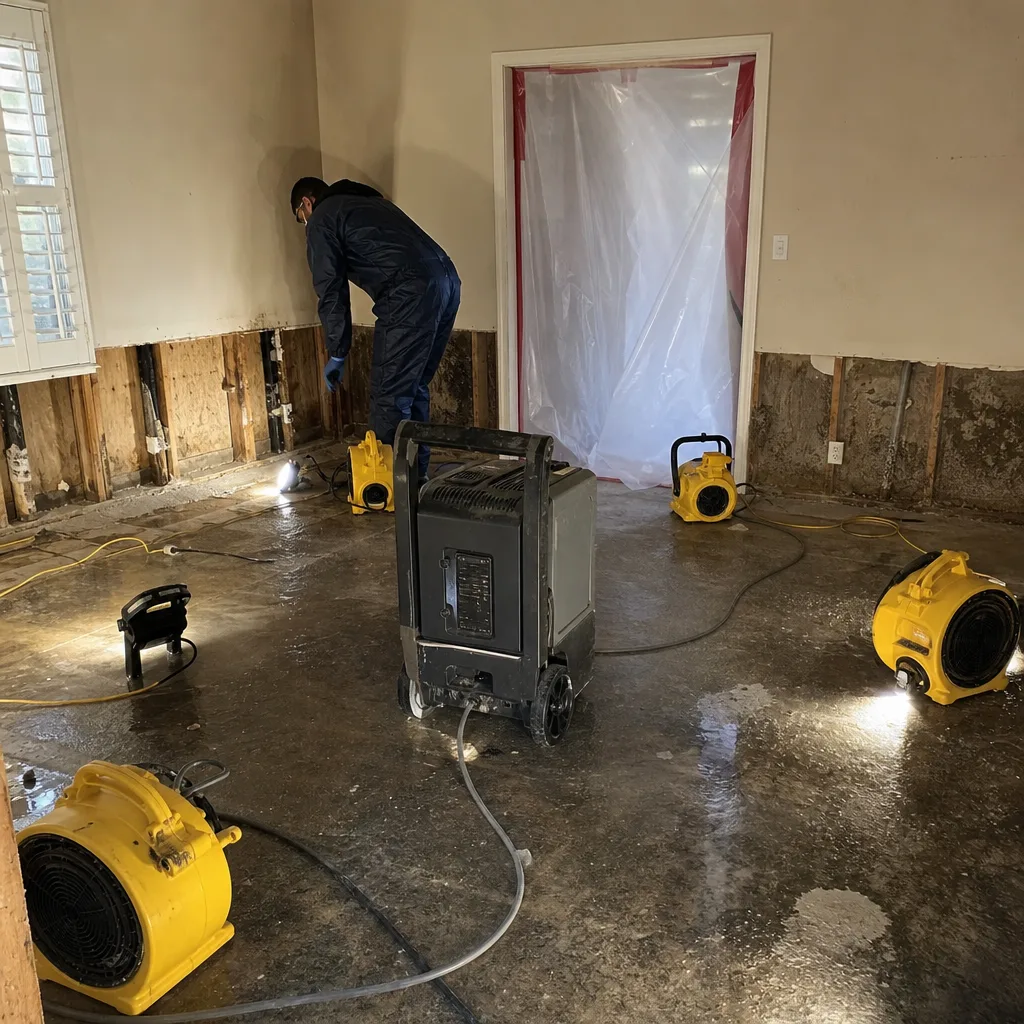
A non-contact infrared thermometer, available for $25-$60, detects surface temperature differentials that reveal evaporative cooling from moisture. When water evaporates from a surface, it absorbs latent heat of vaporization - approximately 970 BTU per pound of water. This cools the surface below ambient temperature. In a North Las Vegas home with typical indoor temperatures of 72-76°F, a 2°F or greater differential on an interior wall, ceiling, or floor indicates active moisture movement worth investigating.
How to Conduct an IR Survey
- Establish baseline: Scan multiple points on known-dry walls in the same room. Record the average. In most North Las Vegas homes, interior drywall reads within 1°F of room air temperature.
- Scan systematically: Hold the thermometer 12-18 inches from the surface. Move in a grid pattern, not randomly. Mark suspect spots with painter’s tape.
- Interpret differentials: 1-2°F may indicate thermal bridging through studs or insulation gaps - verify with pin meter. 2°F or greater strongly suggests moisture; confirm immediately with pin meter or moisture meter.
- Track over time: A cold spot that grows or moves indicates an active, worsening leak. Document with dated photos showing thermometer reading and location.
We use FLIR thermal imaging cameras on every DryMark Restoration North Las Vegas home assessment, but homeowner-grade IR thermometers catch problems early enough to prevent the secondary damage that turns a $2,400 drying job into a $18,000 reconstruction. The critical difference is frequency: our cameras see once, your monthly scans see change over time.
Common North Las Vegas applications: Scan the wall behind your washing machine supply valves monthly. Check the ceiling below second-floor bathrooms seasonally. Inspect the garage ceiling beneath water heaters annually - the hard water in the Las Vegas valley accelerates tank corrosion, and we’ve documented more tank failures in Aliante and Centennial Hills homes built 2016-2019 than any other five-year cohort.
Stucco Exterior Warning Signs in North Las Vegas
Stucco dominates exterior cladding in North Las Vegas residential construction, particularly in homes built 2015-2025. When properly installed with drainage planes and weep screeds, it performs well in our dry climate. When details are omitted or deteriorated - common in fast-track construction during the 2018-2021 building boom - stucco becomes a reservoir that traps moisture against sheathing and framing.
Visual Indicators of Stucco Moisture Intrusion
- Hairline cracking at horizontal joints: Stucco expands and contracts with temperature swings. North Las Vegas sees 40°F+ daily variation in summer. Cracks wider than 1/16 inch at control joints or at the interface with windows and doors allow bulk water penetration during our brief but intense monsoon season, typically July through September.
- Staining or discoloration below windows: Water entering at the head flashing runs down inside the wall and exits at the sill. The stain pattern - narrow at top, widening below - distinguishes it from splash staining. We document this pattern with raking light photography to show insurers the water path.
- Soft or spongy areas when tapped: Sound stucco returns a sharp rap. Delaminated stucco sounds hollow; saturated sheathing behind it produces a dull thud. Test with a coin or screwdriver handle, not your fist - you’re listening, not testing structural integrity.
- Efflorescence at the base of walls: White crystalline deposits indicate water moving through the stucco, dissolving salts, and evaporating at the surface. In North Las Vegas, this appears most often on north-facing walls with poor solar drying, or where irrigation systems spray the base of the wall.
- Missing or damaged weep screed: The weep screed at the base of stucco walls provides drainage and termite protection. In homes where landscaping has been raised against the wall - common in Desert Shores and Sun City Aliante properties - the weep screed may be buried, forcing water into the wall cavity instead of out.
The critical documentation step: photograph any of these indicators with the date, address, and cardinal direction visible. When we scope water damage restoration in North Las Vegas properties, the most disputed question is whether damage is from a sudden, covered event or long-term maintenance neglect. Your dated photos establish the timeline.
Efflorescence vs. Active Seepage: The Mist Test
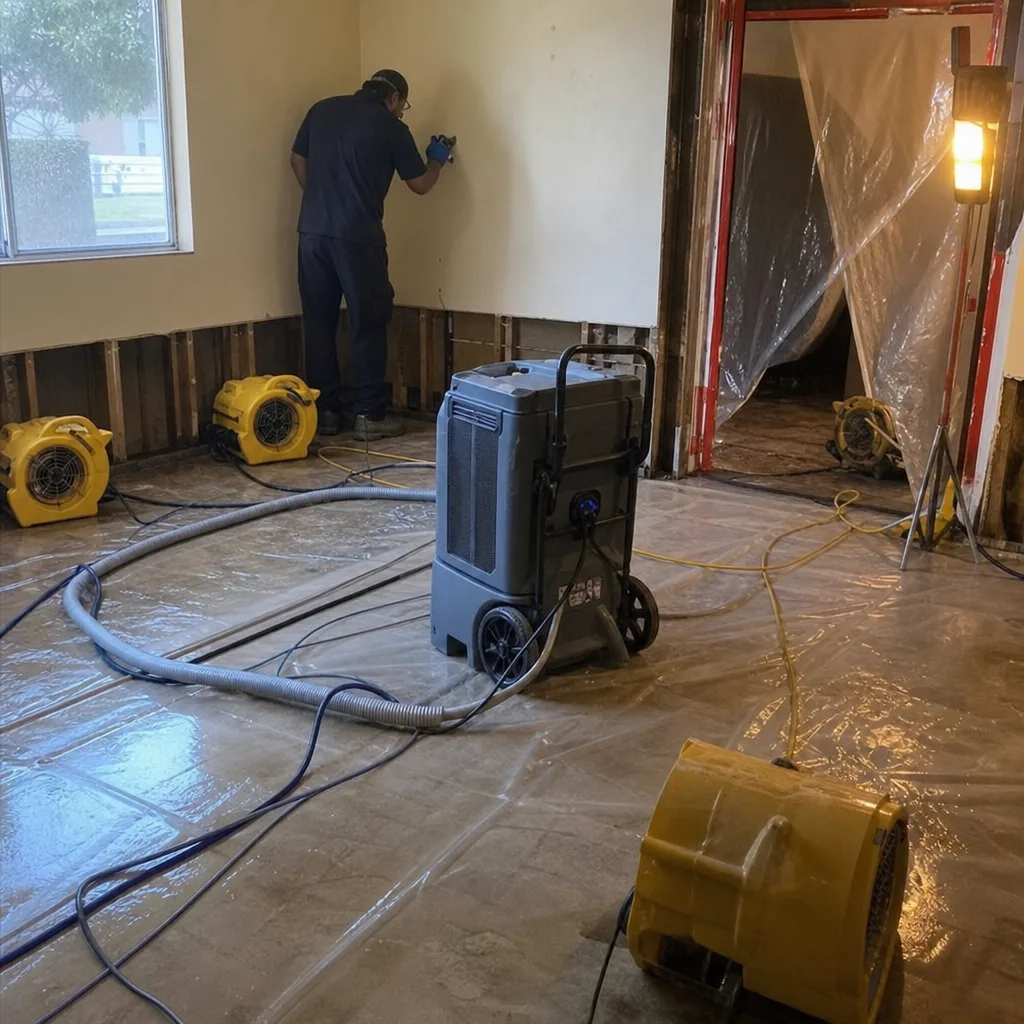
Not all white deposits on block or concrete walls indicate current water problems. Efflorescence - soluble salts deposited as water evaporates - can remain from a single past event, or indicate ongoing moisture movement. Distinguishing between them determines whether you’re documenting a maintenance issue or an active loss.
The Mist Test Procedure
- Photograph the deposit area in ambient light, with scale reference (ruler or coin).
- Lightly mist the deposit with clean water from a spray bottle - three to four pumps, enough to dampen but not saturate.
- Wait 60 seconds.
- Observe: If the deposit turns dark and the surrounding surface remains light, water is actively moving through the material and carrying fresh salts to the surface. This is active seepage. If the deposit lightens or shows no change, it is likely residual efflorescence from a past event.
- Document with second photograph showing result, time-stamped.
Active seepage in North Las Vegas block walls typically indicates one of three conditions: a compromised foundation waterproofing membrane (common in 2015-2018 construction with membrane shortages), negative grade directing water toward the foundation, or a broken irrigation line within 10 feet of the wall. All three worsen during monsoon season when clay soils expand and exert hydrostatic pressure.
We apply this test during initial documentation on every DryMark Restoration North Las Vegas home assessment involving block construction. The result - darkening or not - goes into the written scope with the photo, giving adjusters objective evidence to distinguish sudden damage from long-term conditions. Haven Standard, Clause 1: written price before work begins. Clause 4: documented photo record on every visit. The mist test produces both.
Building a Photographic Record for Claims Documentation
The single most expensive sentence in restoration is “That was already there.” Insurance adjusters deny coverage for pre-existing conditions. Homeowners without documentation lose. The photographic record you build before damage occurs - or in its earliest hours - determines whether your claim is paid, disputed, or denied.
Baseline Documentation Protocol
Complete this once, update annually, and after any maintenance or renovation:
- Exterior, all elevations: Stand at each corner; photograph toward the opposite corner. Capture roofline, windows, doors, stucco condition, grade relationship to foundation. Include date stamp and address in frame or metadata.
- Interior, room by room: From the doorway, photograph each wall, ceiling, and floor. Include baseboards, electrical outlets, and any existing stains or repairs. In North Las Vegas homes, pay special attention to rooms with plumbing on exterior walls - kitchen sinks, laundry rooms, exterior hose bibs - where freeze protection was often omitted in 2015-2019 construction.
- Mechanical spaces: Water heater, HVAC air handler, washing machine connections, main water shutoff. Photograph model numbers, installation dates, and any corrosion or staining.
- Attic and crawl space: If accessible, photograph insulation condition, sheathing stains, and ventilation. North Las Vegas attics reach 140°F+ in summer; inadequate ventilation accelerates shingle degradation and can create moisture condensation on ductwork in shoulder seasons.
- Utility readings: Photograph water meter at a known-no-use moment (all taps off, irrigation off). A moving dial indicates a leak. Repeat monthly; a trend of increasing minimum flow indicates worsening.
Post-Event Documentation
When you discover damage, before moving anything:
- Photograph the overall scene, then close-ups of damage with scale reference
- Photograph the source if identifiable (broken pipe, roof penetration, etc.)
- Photograph any contents damage before moving for mitigation
- Record moisture meter readings with location and date
- Photograph your IR thermometer readings on suspect surfaces
Store all images in cloud storage with automatic date stamping. We provide our customers with a shared folder containing every photo from every visit, organized by date, as a standard deliverable - never an upsell. This folder becomes evidence if an insurer questions the scope, and it satisfies the documentation requirement for our 365-Day Done Right Promise under The Haven Standard.
Mold, Fire, and Storm Warning Signs
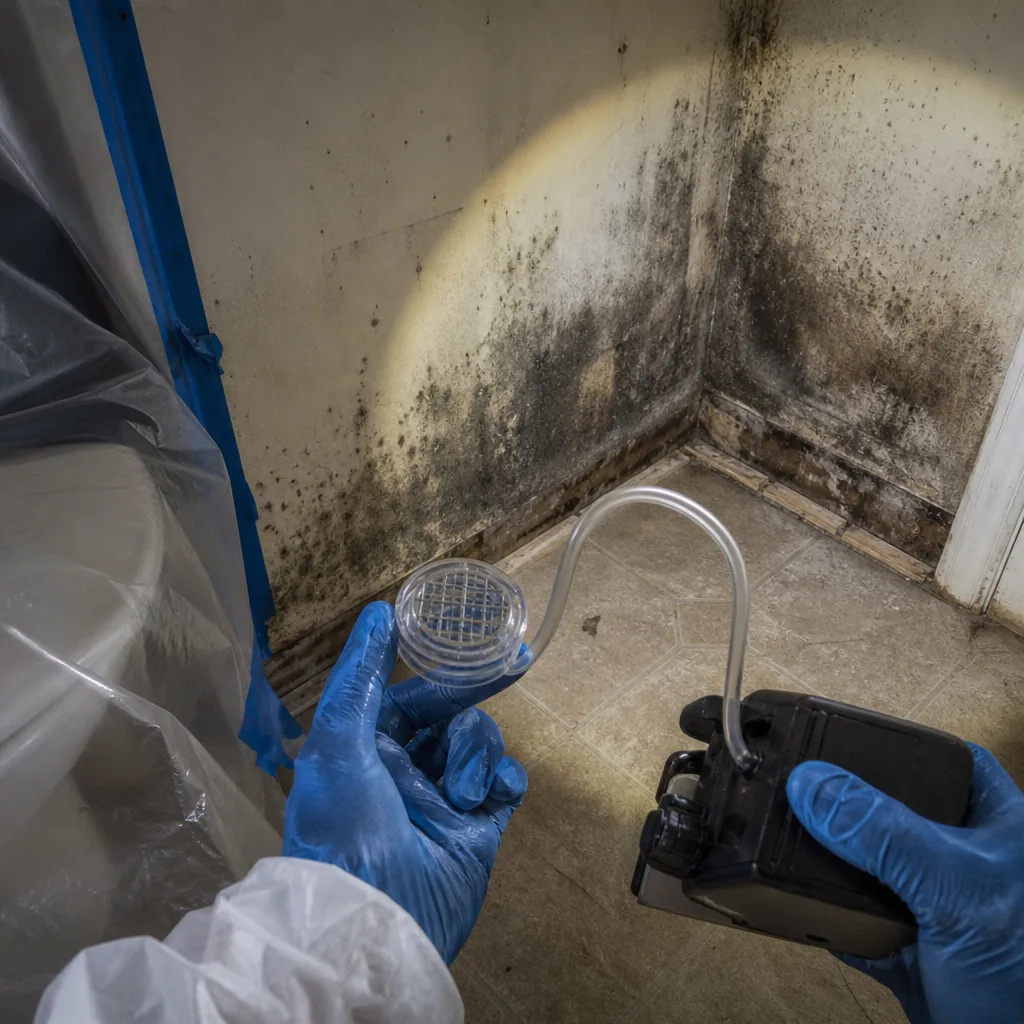
Mold: Beyond the Musty Smell
We’ve addressed mold olfactory lag: 72+ hours of colonization before odor detection. Earlier indicators include:
- Allergic symptoms that improve away from home: Not definitive, but suggestive when combined with other signs.
- Visible fuzz on organic surfaces: Any growth on drywall paper, cardboard, or wood in a North Las Vegas home is abnormal given our dry climate - it indicates sustained moisture above 16% WME.
- Paint or wallpaper that peels in sheets: Moisture behind the surface breaks the adhesive bond. In our experience, this appears first in bathrooms with exhaust fans vented into attics rather than outside - a code violation common in 2015-2019 construction.
- Corrosion on metal fasteners: Nails or screws showing rust in interior locations indicate humidity cycling that supports mold even if visible growth is absent.
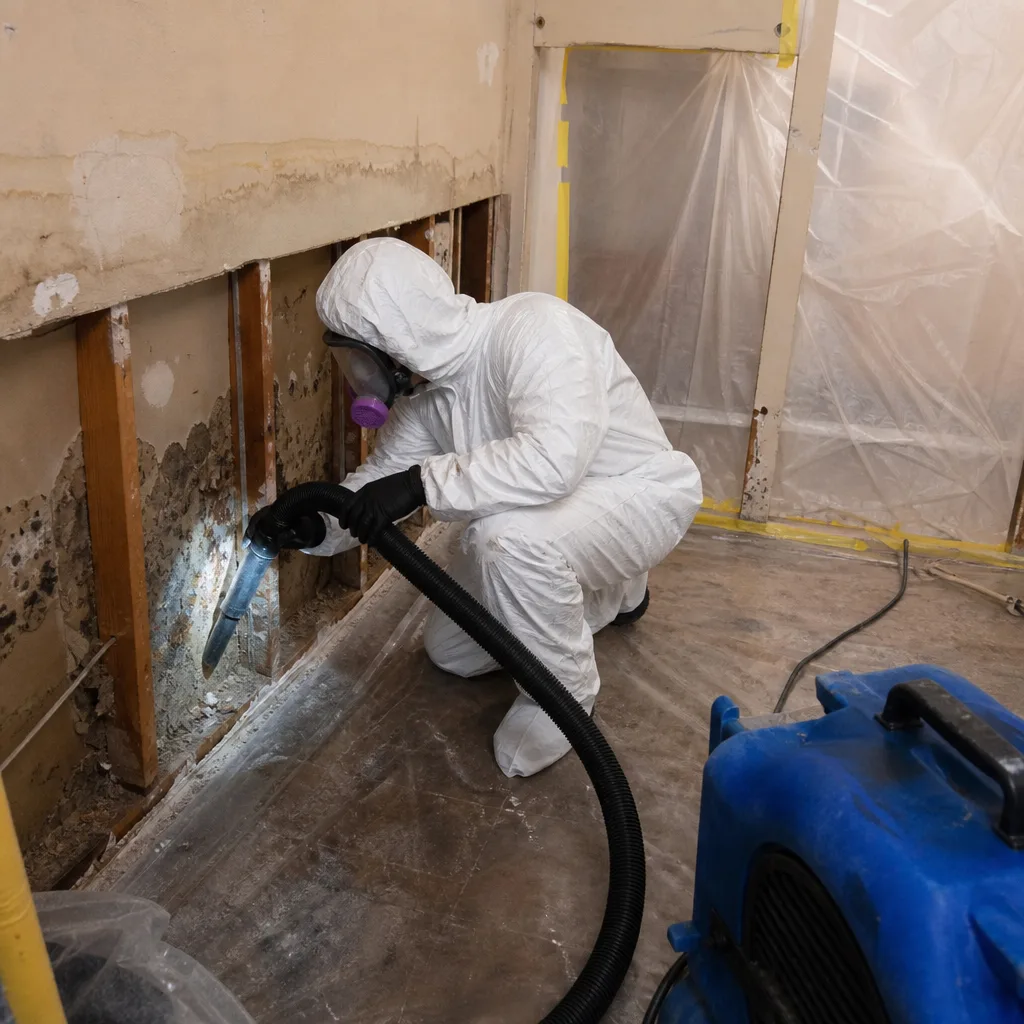
Mold remediation in North Las Vegas requires containment, negative air pressure, and HEPA filtration per IICRC S520 standards. We document spore counts before and after with third-party laboratory analysis, not visual judgment. The photo record includes containment setup, removal progress, and post-remediation verification - the documentation that turns a disputed claim into a paid invoice.
Fire and Smoke: Invisible Residue
Not all fire damage involves flames. Protein fires from kitchen incidents leave nearly invisible residue that corrodes metal and odors that persist for years. Warning signs:
- Persistent acrid odor after cooking incidents: Protein smoke deposits are amber-colored and difficult to see on light surfaces. The odor is the indicator.
- Discoloration on painted surfaces near the kitchen: Slight yellowing that doesn’t respond to cleaning suggests smoke residue.
- Corroded metal fixtures in proximity to fire origin: Smoke residue is acidic. We document pH readings on affected surfaces to establish cleaning protocol and replacement scope.
Fire and smoke damage restoration in North Las Vegas requires thermal fogging, ozone treatment, or hydroxyl generation depending on residue type - decisions we document in the written scope with the scientific rationale, not marketing language.
Storm and Disaster: Monsoon and Wind
North Las Vegas monsoons arrive July through September with brief, intense rainfall on hardened desert soils that shed water rather than absorb it. The result: flash flooding that overwhelms drainage systems and enters homes through window wells, door thresholds, and foundation penetrations.
Post-storm inspection checklist:
- Water in window wells or against foundation within 2 hours of rainfall
- Sediment deposits at door thresholds - indicates water depth reached that level
- Detached or damaged roof shingles, particularly at rake edges where wind uplift concentrates
- Displaced gravel or scouring patterns in landscaping showing water flow paths toward structure
Document immediately after the storm passes; sediment lines and moisture indicators change quickly in our low-humidity climate as surfaces dry. The photo you take at hour six proves the event; the photo at hour 48 shows only residual staining that an adjuster may attribute to maintenance.
Common Mistakes to Avoid
- Waiting for visible stains before acting: Drywall stains appear at 20%+ moisture content, well past the 16% threshold where mold colonization begins. By the time you see a stain, you’re documenting damage, not preventing it.
- Using hand-feel instead of meters: “It feels dry” is not documentation. In North Las Vegas ambient conditions, surfaces feel dry at 18% moisture content - 2 points above the mold threshold. Pin meters remove subjective judgment.
- Assuming desert climate prevents mold: Our low outdoor humidity is irrelevant when a supply line leaks inside a wall cavity. The cavity becomes a microclimate with humidity at 100% until drying occurs. We’ve documented mold in North Las Vegas homes within 48 hours of water loss.
- Cleaning efflorescence without testing: Scrubbing away white deposits destroys evidence of active seepage. Conduct the mist test first; document; then address the source, not the symptom.
- Failing to photograph pre-existing conditions: The most common coverage dispute we encounter involves whether damage existed before the claimed event. Your baseline photo record eliminates this dispute before it begins.
- Accepting verbal scope or pricing: Haven Standard, Clause 1 exists because we’ve seen homeowners sign blank work authorizations and receive invoices 400% above verbal estimates. A written price before work starts, with line-item scope, is non-negotiable.
- Ignoring irrigation system leaks: In North Las Vegas, pressurized irrigation lines run within 18 inches of foundation walls in most residential landscaping. A break can deliver 15+ gallons per minute against the foundation, creating slab moisture issues that mimic plumbing leaks. Check irrigation meter movement monthly.
When to Call a Professional
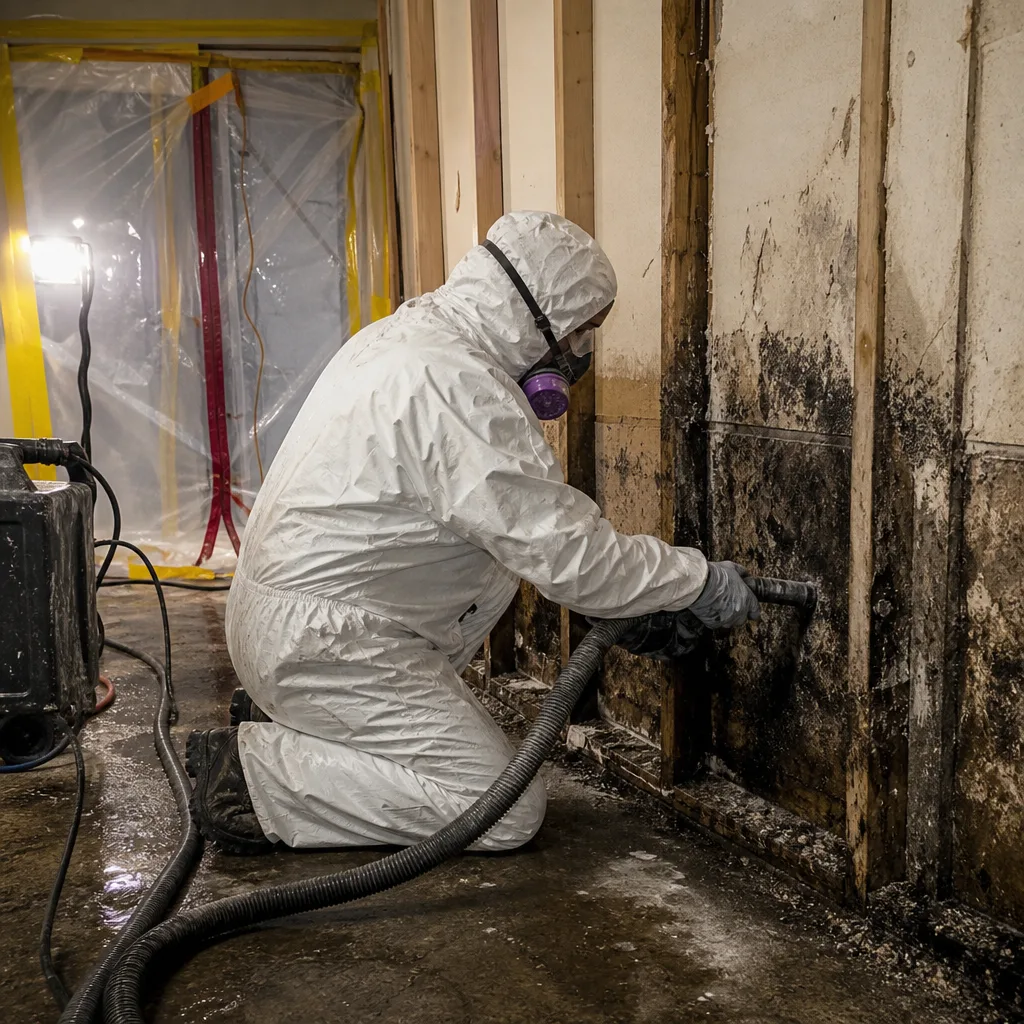
Call for professional assessment when: moisture readings exceed thresholds defined in this guide; you detect temperature differentials of 2°F or greater with an IR thermometer; you observe active efflorescence or stucco delamination; mold growth is visible on any surface; or any water loss affects more than 10 square feet of finished material. These conditions require documented moisture mapping, psychrometric drying calculations, and written scope development that homeowner equipment cannot provide - as covered in our step-by-step guide to hiring a damage restoration contractor in North Las Vegas.
We do not recommend DIY remediation for Category 2 or 3 water (gray or black water), any mold contamination exceeding 10 square feet, or fire damage involving structural compromise. These scenarios involve health hazards and insurance documentation requirements that professional intervention addresses, which we explore in our DIY vs Professional Damage Restoration guide for North Las Vegas homeowners.
DryMark Restoration North Las Vegas offers free estimates in North Las Vegas. Every assessment includes moisture readings, thermal imaging, a written scope, and a documented price before any work begins - Haven Standard, Clause 1. Call (725) 726-3239. We also provide free second opinions on any competitor’s written estimate; bring their scope and we’ll review it at no charge.
Frequently Asked Questions
Assessment and written estimate are free at DryMark Restoration North Las Vegas. We provide moisture readings, thermal imaging, photo documentation, and a line-item written scope at no charge. Call (725) 726-3239 to schedule - estimates are free.
Coverage depends on whether the damage resulted from a sudden, accidental event or long-term seepage. Most policies cover sudden events; few cover maintenance-related gradual damage. Your documented moisture readings, photos, and our written scope with dated drying logs establish the timeline that determines coverage. We coordinate directly with adjusters and provide the documentation package that supports covered claims.
Live phone coverage is available 24 hours a day, 7 days a week with no voicemail on emergency lines. For active water losses, we dispatch for assessment within hours, not days. For mold or reconstruction projects, we schedule assessment within one business day. The written scope follows within 24 hours of assessment - Haven Standard, Clause 1.
Visible mold on drywall, insulation, or structural materials requires professional remediation per IICRC S520 when the affected area exceeds 10 square feet or when HVAC systems are involved. DIY cleaning disturbs spores and spreads contamination without containment or negative air pressure. We document spore counts before and after with third-party verification - the evidence that protects health and satisfies insurer requirements.
Pin meters use electrical resistance between two probes inserted into the material, giving precise depth-specific readings in WME or actual moisture percentage. Pinless meters use electromagnetic fields to scan surface moisture to a depth of approximately 3/4 inch without penetration. We use both: pinless for rapid area scanning, pin meters for definitive readings at specific depths. For homeowner use, a pin meter with deep-wall probes is more versatile and costs $80-$150.
The distinction hinges on documentation of sudden damage versus gradual deterioration. Storm-related stucco damage typically shows impact patterns, wind-driven water paths, or damage correlated with a specific weather event. Gradual deterioration shows uniform cracking, widespread efflorescence, or patterns consistent with long-term moisture exposure. Our assessments include written opinions on causation with photo documentation, though final coverage determination rests with your insurer. We provide the evidence; we do not guarantee coverage decisions.
The Bottom Line
Damage in a North Las Vegas home announces itself first through measurable data - moisture percentages, temperature differentials, vapor pressure readings - and only later through visible stains, odors, or structural change. The homeowner who learns to read these early signals and document them with dated photos, meter readings, and written records controls the timeline, the scope, and the insurance outcome. The homeowner who waits for visible damage controls none of these. Buy a pin meter. Scan with an IR thermometer monthly. Photograph your baseline. When readings exceed thresholds, call for a written scope before work starts. The documentation you create is the claim you keep.
Written by Alicia Brennan, Owner at DryMark Restoration North Las Vegas, serving North Las Vegas since 2011.