
Last updated September 23, 2026
Free visual inspection and a written scope of work before any mitigation begins - photos, moisture readings, and drying logs go in your claim file
The scope we write is the scope we bill. Anything new gets shown to you, in writing, before we touch it.
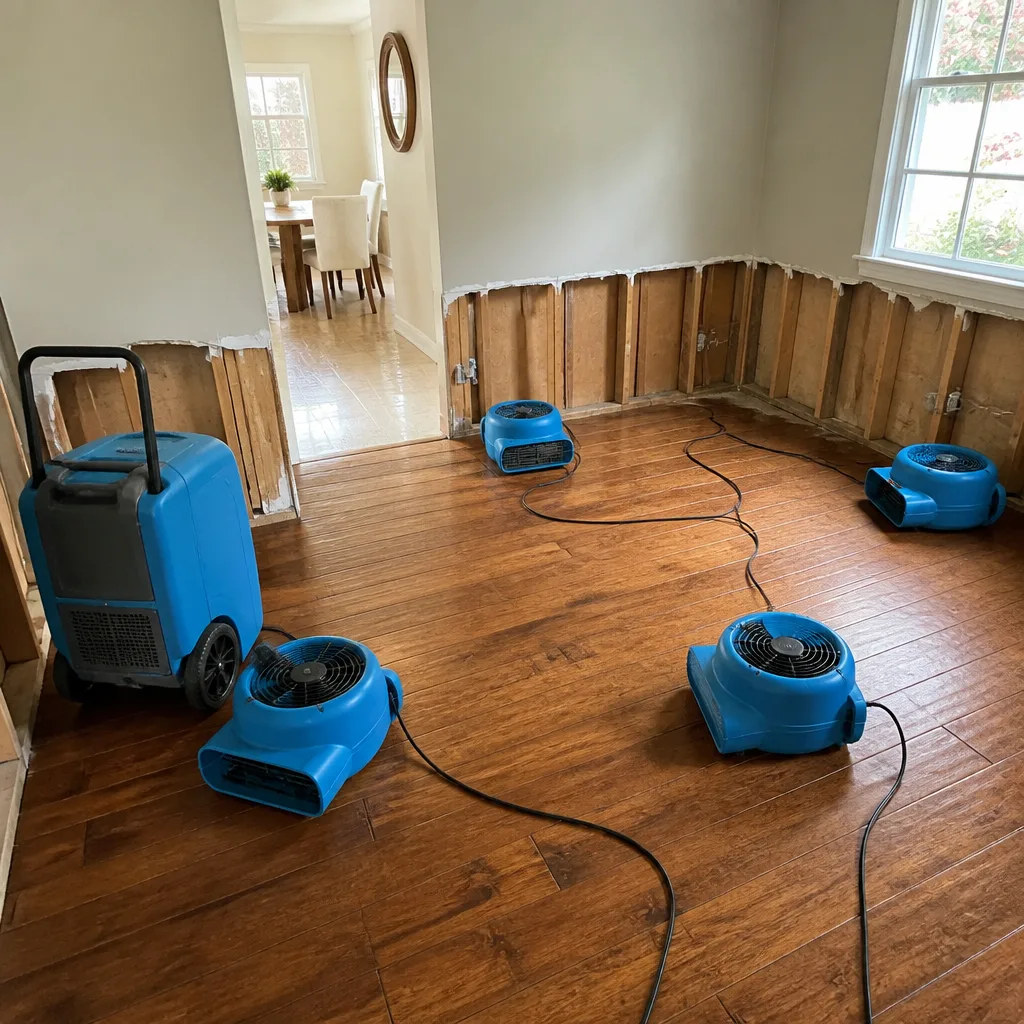
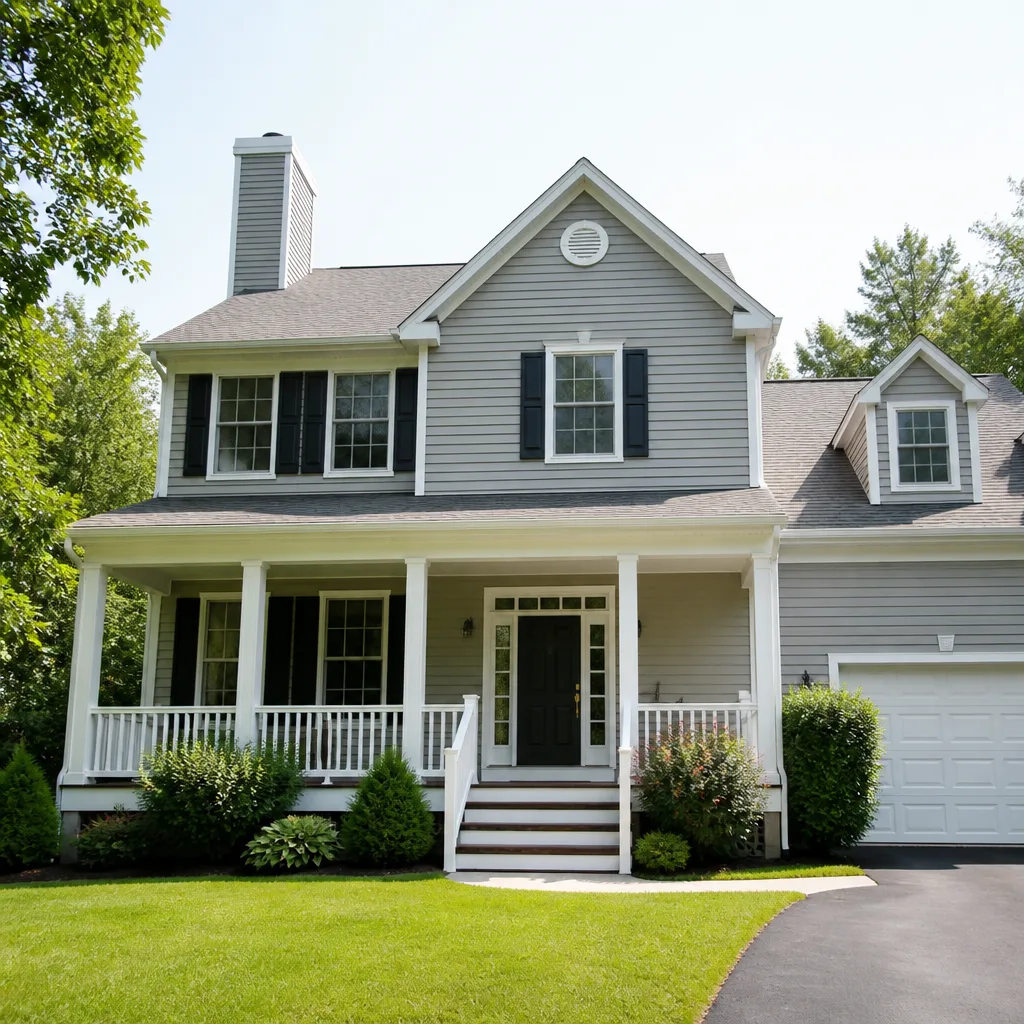
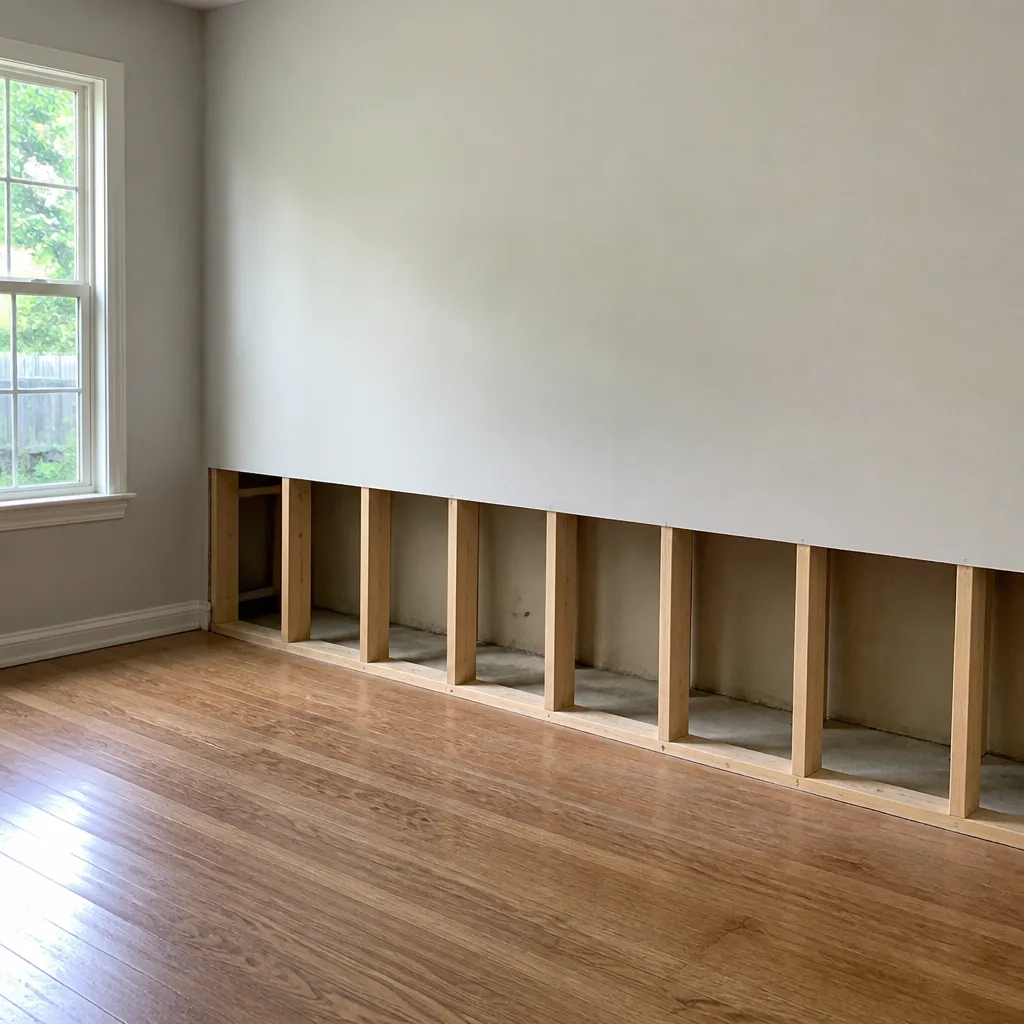

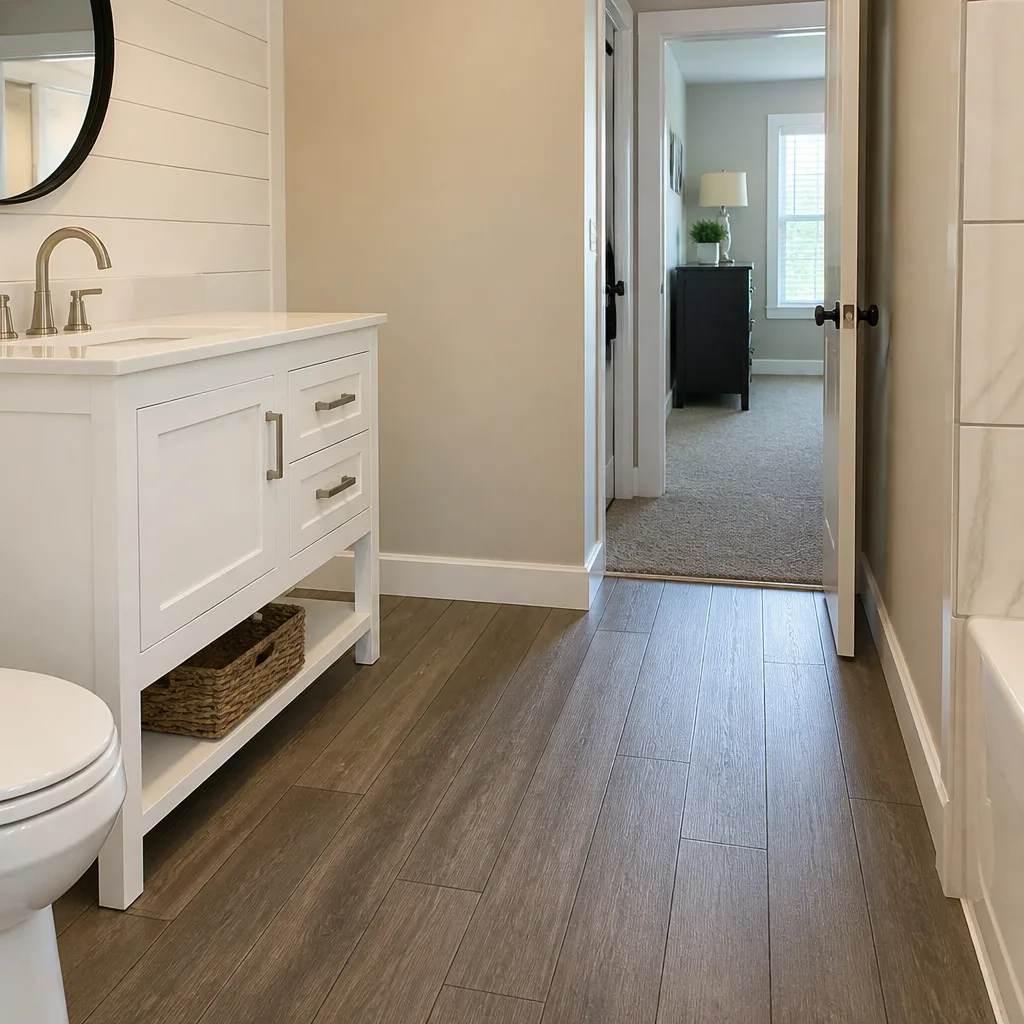
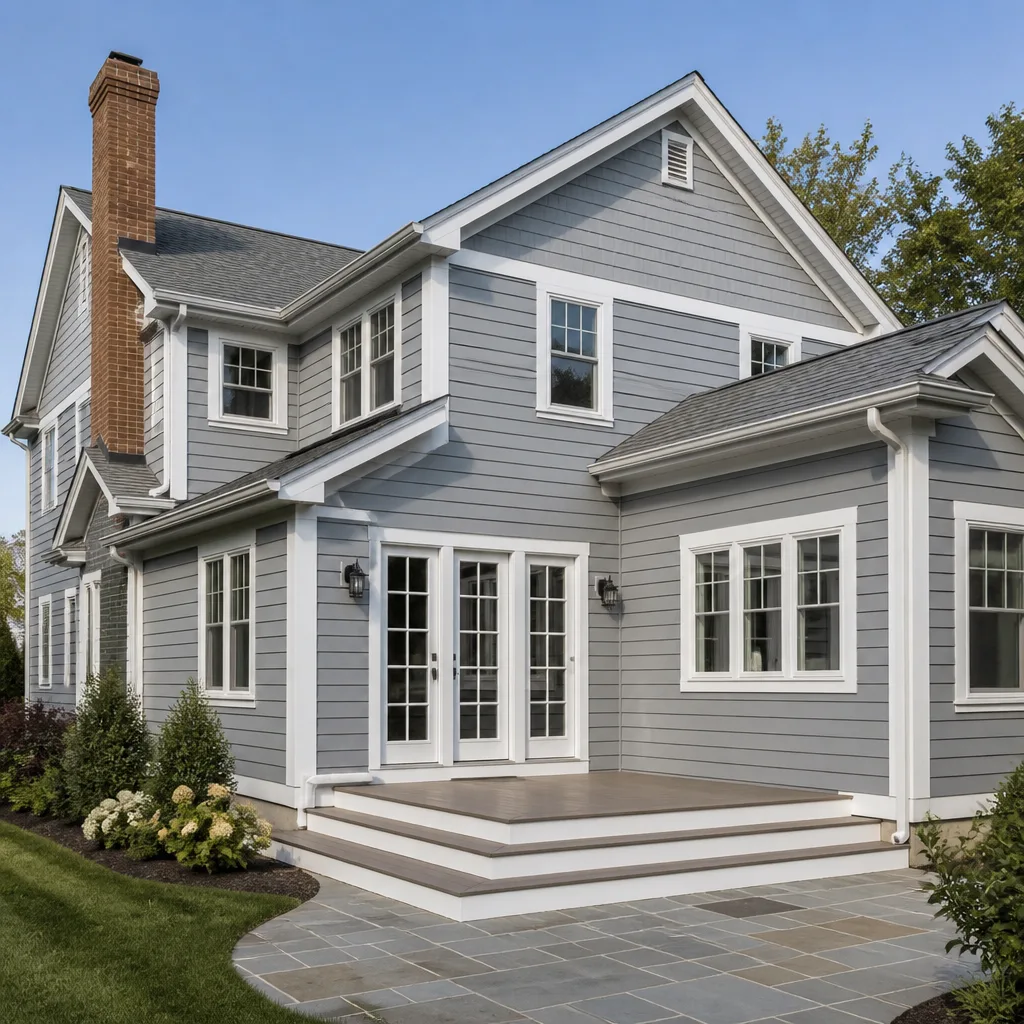
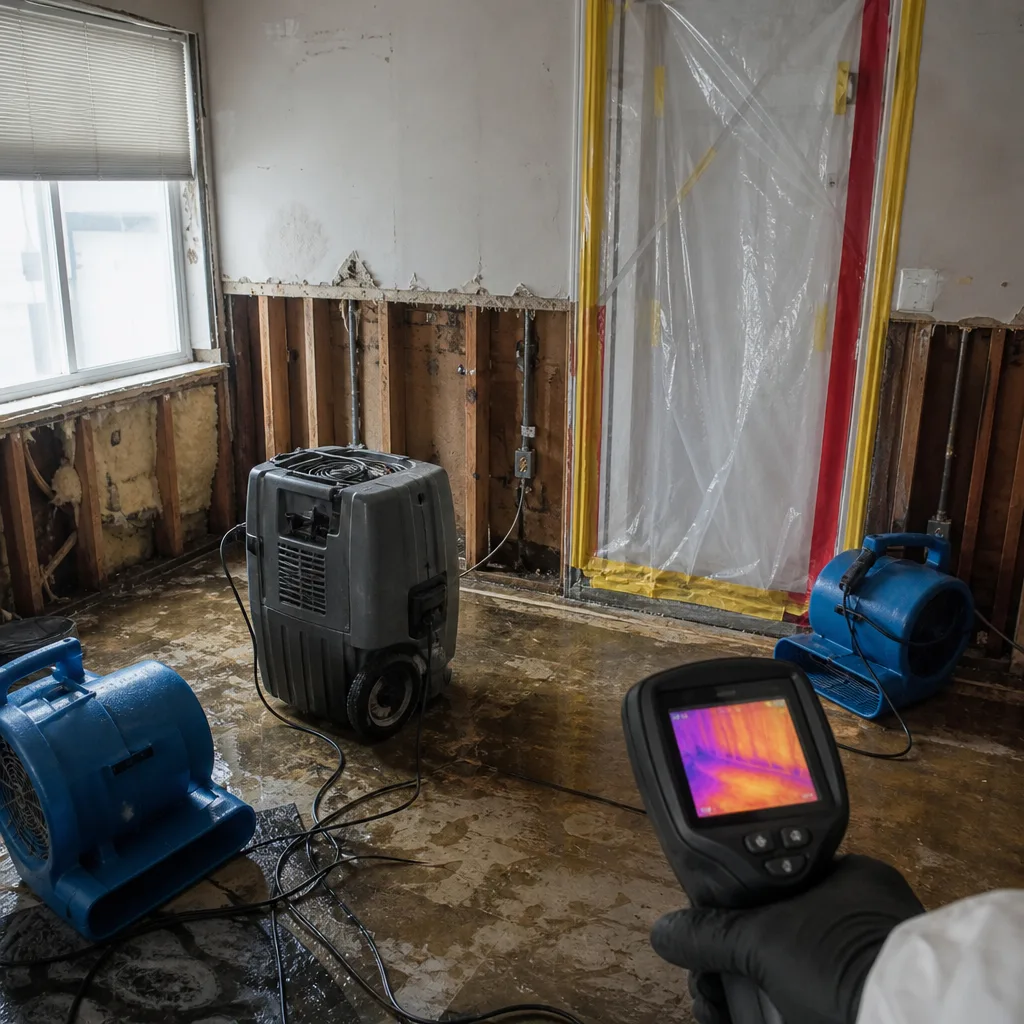 Before
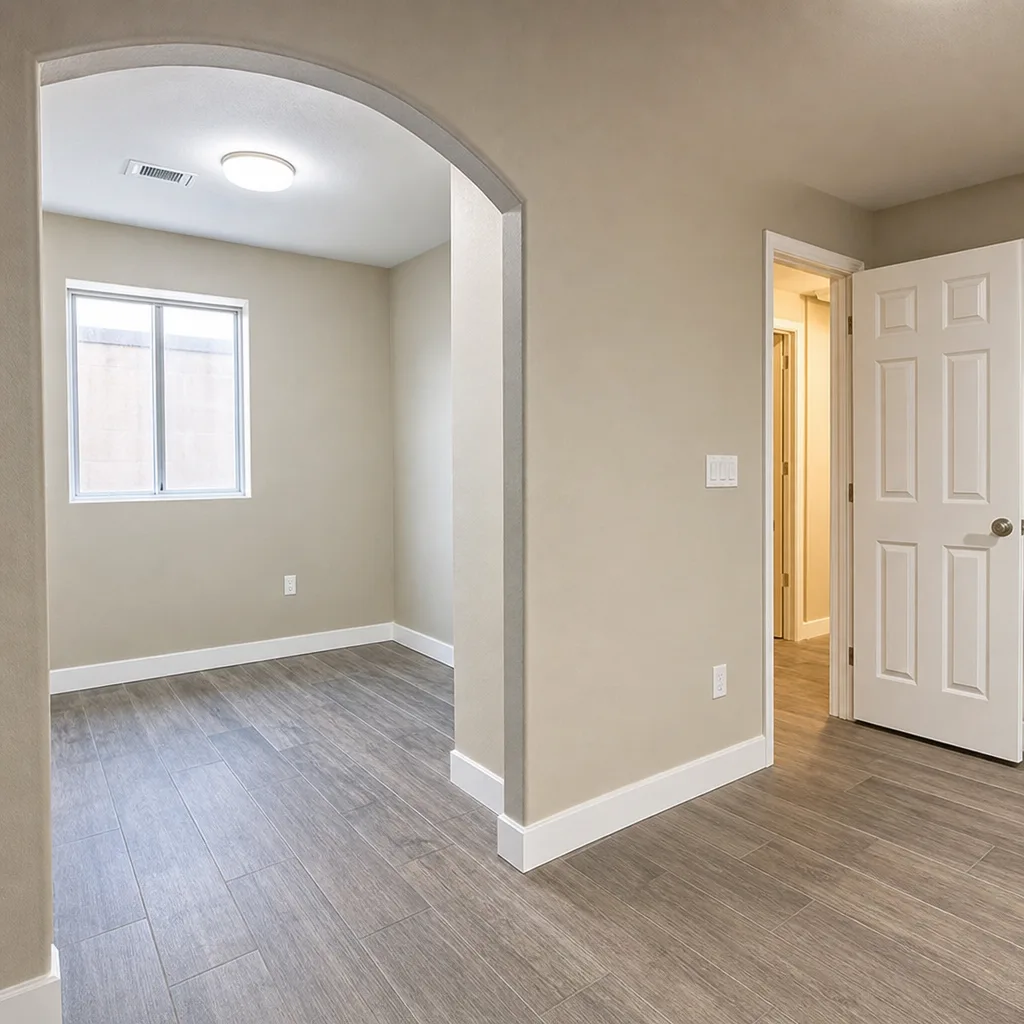 After
After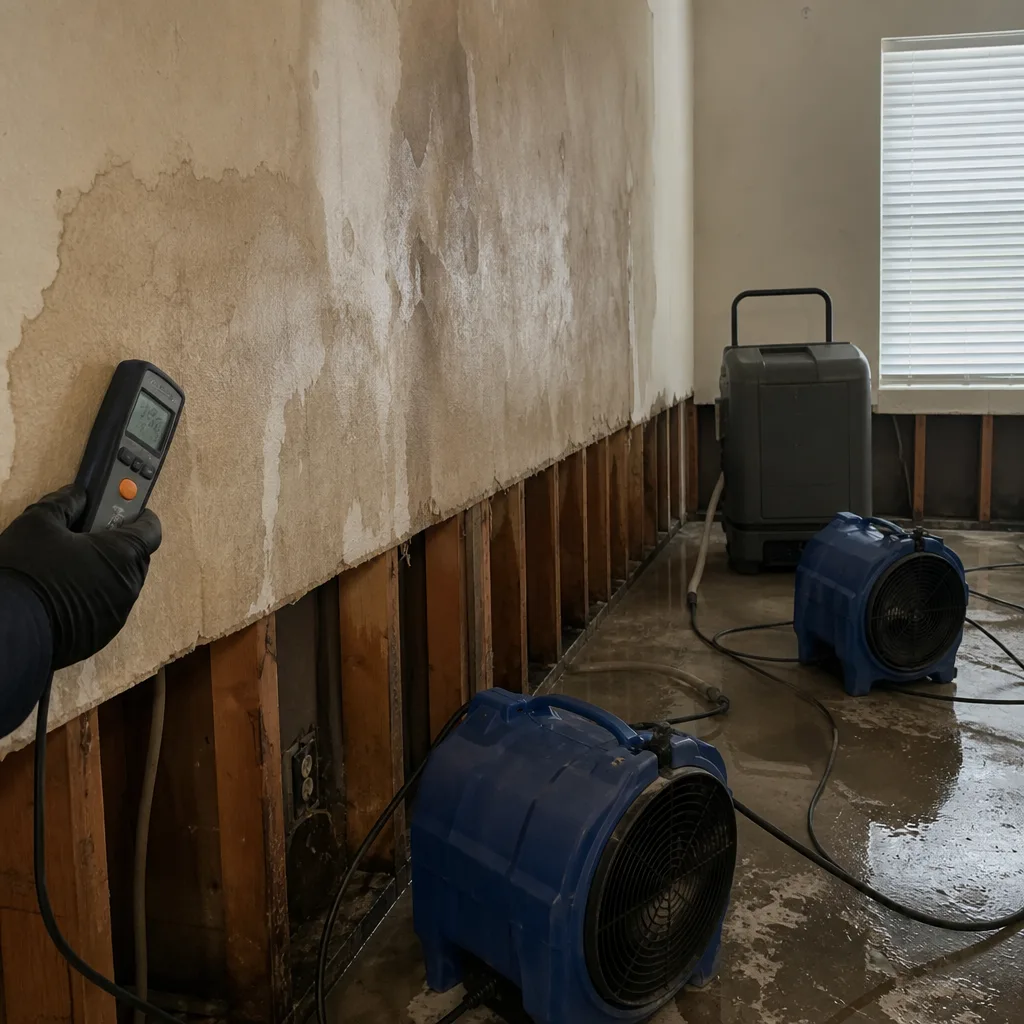 Before
 After
After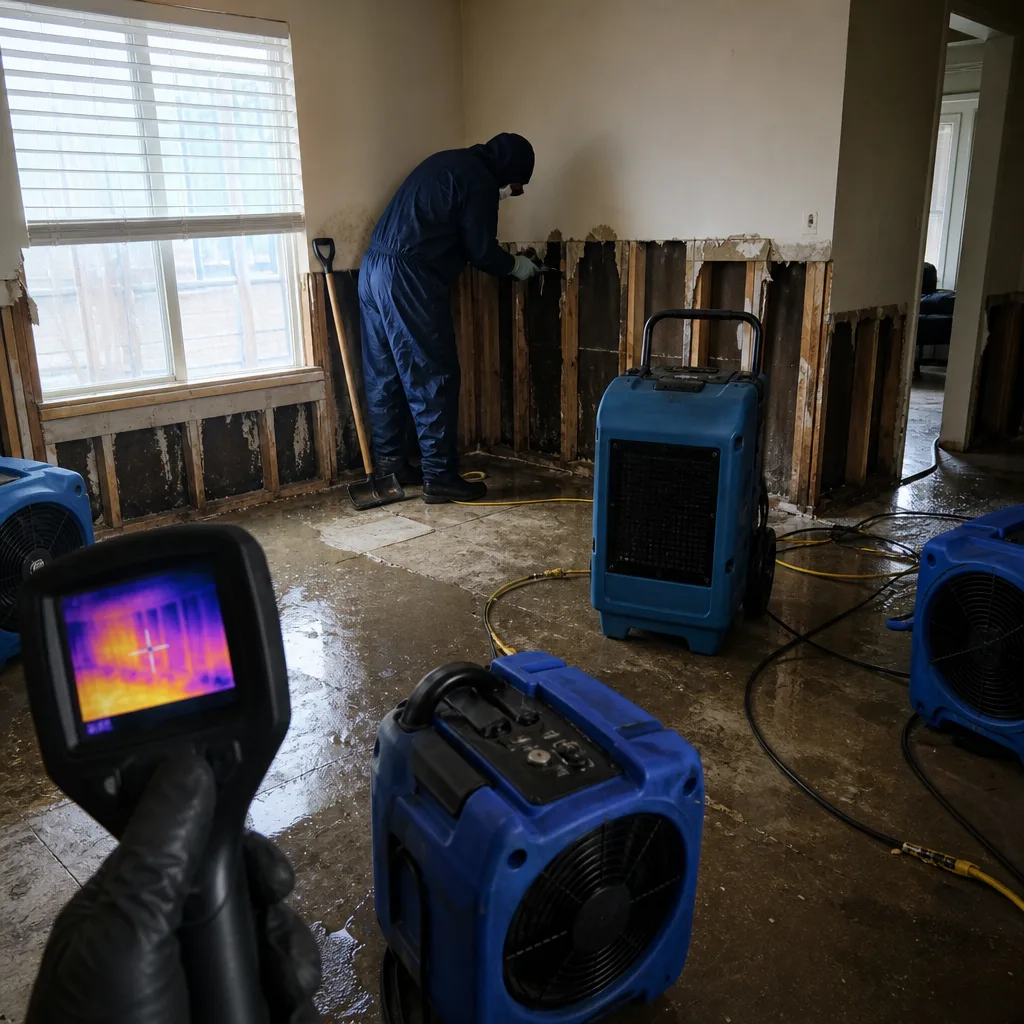 Before
 After
AfterSeasonal Damage Restoration Care for North Las Vegas: Year-Round Homeowner’s Guide
North Las Vegas averaged 4.3 inches of rain in 2023 - but nearly 60% of that fell in a six-week monsoon window, fast enough to overwhelm drainage systems designed for annual totals, not hourly rates. That’s a different risk than “spring rain” and it needs a different checklist. The hard freeze nights of January, the condensate line failures of June, and the post-storm documentation window of September all create distinct damage mechanisms that standard four-season guides miss entirely. This guide organizes maintenance and response by the actual climate calendar of the Mojave Desert, with specific inspection criteria, measurable preparation steps, and documentation protocols tied to North Las Vegas conditions. For related reading, see our Complete Guide to Damage Restoration in North Las Vegas.
Quick Answer
Seasonal damage restoration care in North Las Vegas means preparing for two distinct risk periods: the July-September monsoon season, when 2.5+ inches of rain can fall in six weeks against caliche-heavy soil that won’t absorb it, and the 10-15 nights each winter when temperatures drop below 28°F and threaten exposed pipes in garage walls and exterior utility chases. Year-round care requires pre-July roof and drainage inspections, June HVAC condensate line checks, January pipe insulation verification, and 72-hour post-event documentation to establish pre-loss condition for any future claim. Our Water Damage Restoration Maintenance Checklist for North Las Vegas Homeowners provides a printable version of these tasks.
Table of Contents
- The Monsoon Preparation Protocol: What to Complete Before July 1
- Winter Freeze Nights: Protecting Pipes When North Las Vegas Drops Below 28°F
- Summer HVAC Condensate Failures: The June Spike
- Post-Monsoon Inspection: The 72-Hour Documentation Window
- Reading Your Grading Against Caliche-Heavy Soil
- Year-Round Maintenance Calendar
- Common Mistakes to Avoid
- When to Call a Professional
- Frequently Asked Questions
 Before
 After
AfterThe Monsoon Preparation Protocol: What to Complete Before July 1
Monsoon season in North Las Vegas doesn’t build gradually. Moisture from the Gulf of California and the Gulf of Mexico collides with desert heat, producing localized downpours that drop half an inch in twenty minutes on one neighborhood while leaving another dry. The drainage infrastructure in older North Las Vegas subdivisions, particularly those built before 2005 in areas like Aliante and Centennial Hills, was engineered for spread-out annual totals, not concentrated hourly rates.
We’ve documented the aftermath of these events since 2011. The pattern is consistent: water enters where three conditions overlap - a compromised roof envelope, a drainage path that terminates against the foundation, and caliche substrate that sheds water horizontally instead of absorbing it vertically.
Roof and Flashing Inspection Criteria
Complete this inspection by June 15 each year. Use binoculars from the ground for safety, or hire a licensed roofer for walkable surfaces.
- Shingle condition: Look for lifted, curled, or missing tabs, especially on south- and west-facing slopes where thermal cycling is most aggressive. In North Las Vegas, asphalt shingles age faster than national averages due to UV exposure and daily temperature swings of 30°F or more. Replace any tab that lifts more than 1/4 inch at the leading edge.
- Flashing integrity at all penetrations: Check vent pipes, chimney saddles, and skylight curbs. The metal should lie flat with no gaps wider than 1/8 inch. Sealant at these joints degrades in 18-24 months of Mojave sun; reseal with polyurethane roof sealant if the bead is cracked or separated.
- Valley condition: Open valleys (where shingles meet at an angle) collect debris and back up water during intense rainfall. Closed valleys with woven shingles perform better in monsoon conditions. If you have open valleys, clear them completely and verify the metal valley liner has no punctures or rust-through.
- Gutter and downspout capacity: Measure the outlet size against the roof area served. A standard 2×3 inch outlet handles approximately 600 square feet of roof in moderate rain. In monsoon intensity, that capacity drops by 40%. North Las Vegas homes with roof areas over 1,500 square feet need 3×4 inch outlets or additional downspouts. Clean gutters completely - a single clogged elbow can overflow against the fascia and saturate wall cavities.
Drainage Path Verification
Water must discharge at least 6 feet from the foundation on a slope of 5% or greater (6 inches of drop per 10 feet of run). In the caliche-heavy soils of the North Las Vegas valley, water that pools within 4 feet of the foundation will migrate along the soil-rock interface and enter through slab penetrations or stem-wall cold joints.
Test your drainage paths with a hose during dry conditions. Run water at gutter capacity for 10 minutes. Walk the perimeter and mark any pooling, soil erosion, or water approaching the foundation. These are pre-loss documentation points - photograph them before the season starts.
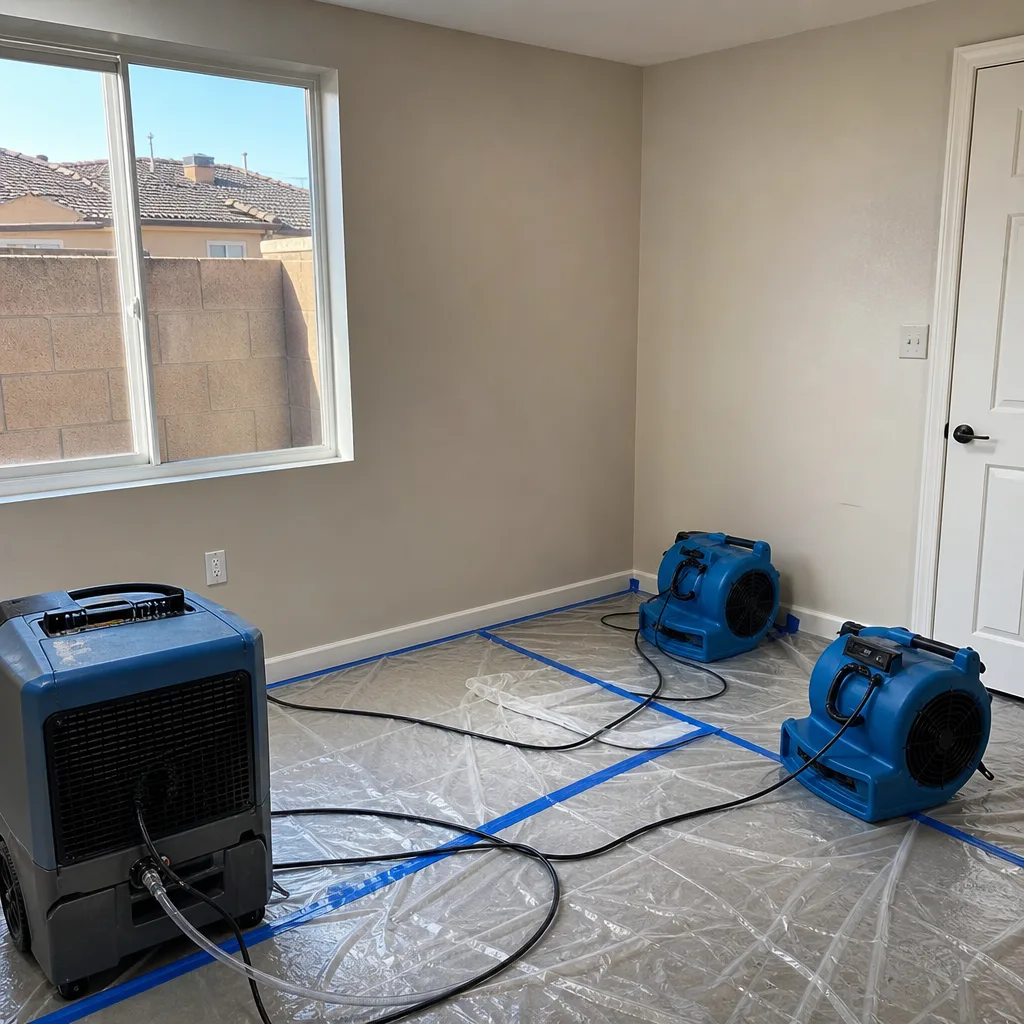
Water damage restoration in North Las Vegas after monsoon events typically involves Category 2 or 3 water classification due to soil and debris contamination. The drying protocol requires professional-grade equipment from Dri-Eaz and Phoenix, with daily moisture logs documented to IICRC standards - the same documentation standard we apply to every job.
Winter Freeze Nights: Protecting Pipes When North Las Vegas Drops Below 28°F
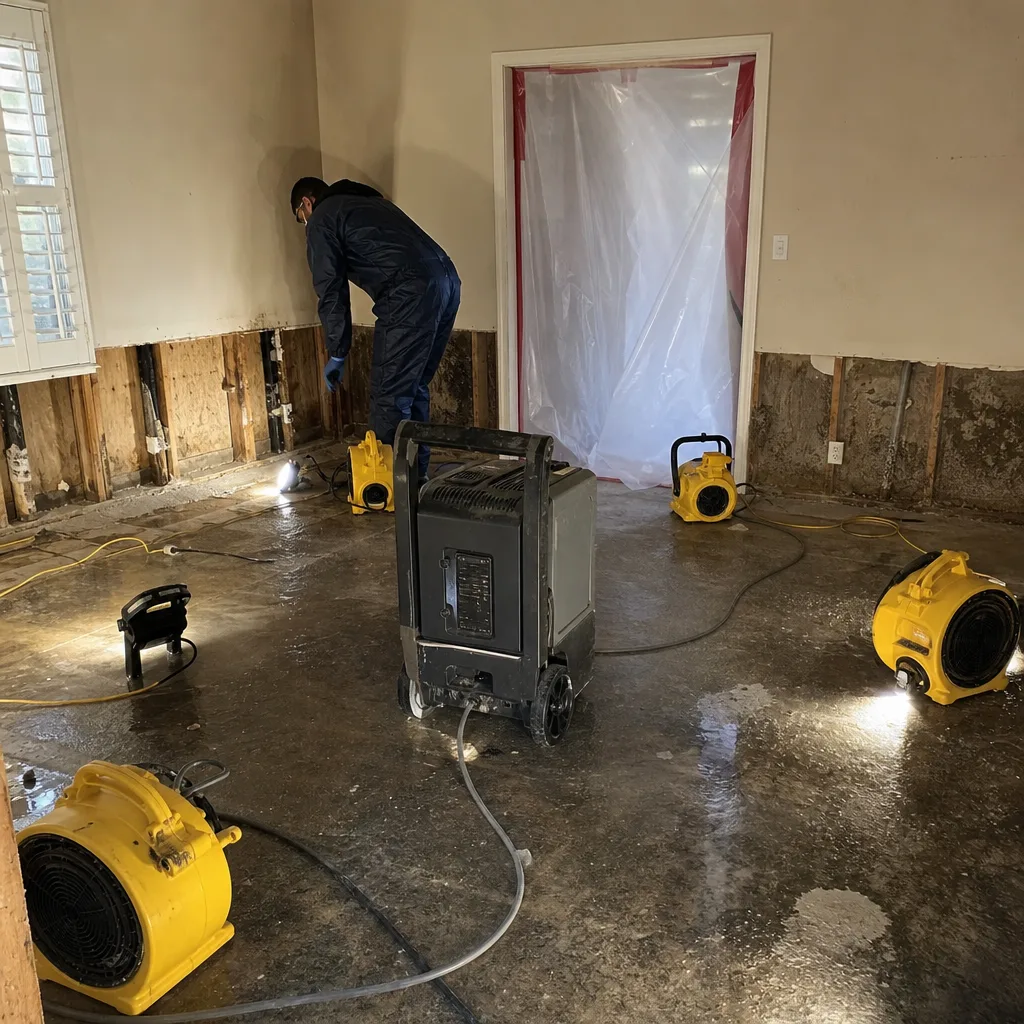
North Las Vegas sees 10-15 nights per year with temperatures below 28°F, concentrated in December through February. The 2023 freeze event of January 31 dropped the official reading to 24°F at North Las Vegas Airport, but microclimates in the lower elevations of the valley, particularly near the Craig Ranch Golf Course and along the Las Vegas Wash, reported 19-21°F. Those five degrees matter: copper pipe freezes at approximately 20°F under still-air conditions, but moving air and wind chill can push the effective temperature lower.
The highest-risk locations in North Las Vegas homes are not the obvious exterior hose bibs. They’re the pipe runs in garage walls that share a wall with conditioned space, and exterior utility chases that contain water heaters, softeners, or irrigation backflow preventers. These locations have three vulnerability factors: they’re on the pressure side of the plumbing system (so a freeze rupture releases full water pressure), they’re often uninsulated or under-insulated, and they’re out of sight so leaks can run for hours before detection.
Inspection Protocol for Freeze-Prone Pipe Sections
- Garage wall pipe runs: Open the access panel or drywall cutout where plumbing enters from the slab. Verify insulation R-value of at least R-6 on all pipes within 24 inches of the exterior wall surface. In North Las Vegas, garage walls are often framed with 2×4 studs and minimal insulation. If the pipe is bare or wrapped only with split foam, upgrade to self-sealing pipe insulation with a vapor barrier jacket.
- Exterior utility chases: These are the narrow framed enclosures on the home’s exterior that house mechanical equipment. Check that the chase has a vented door or louver, not a solid panel that traps cold air. If the water heater or softener is in an unconditioned chase, install a thermostatically controlled heat cable on the supply line, with the thermostat set to activate at 38°F.
- Irrigation backflow preventers: These above-ground brass assemblies are standard freeze casualties. Drain the assembly completely using the test cocks, or install an insulated enclosure rated for the pressure class of the device. A cracked backflow preventer can release 15-20 gallons per minute - we’ve documented losses exceeding 8,000 gallons in unoccupied homes.
- Hose bib and exterior faucets: Verify anti-siphon valves are functional and that interior shutoffs are accessible. Drain the line between the shutoff and the bib. In North Las Vegas, many homes built 2015-2020 have frost-proof bibs with the valve seat inside the wall; these still require the exterior head to drain freely - remove any attached hose before November 1.
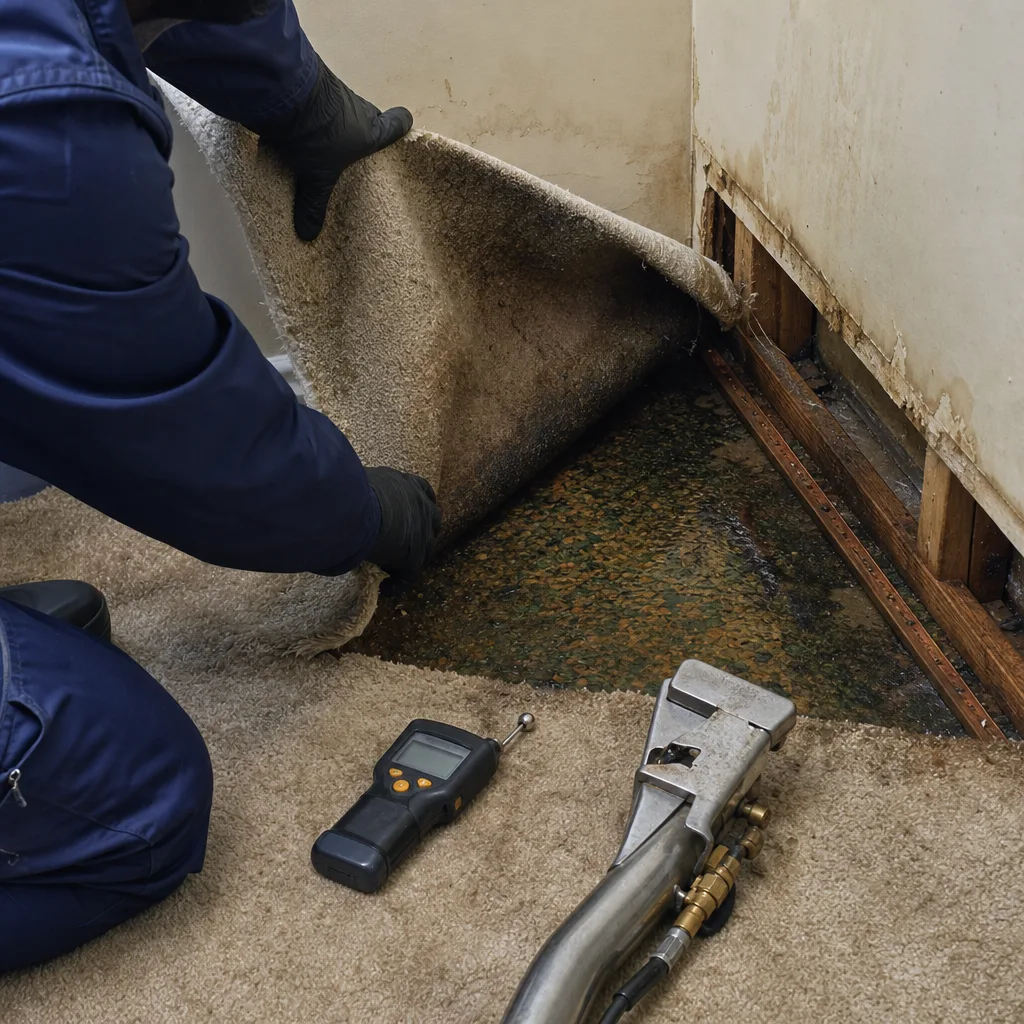
When a pipe freeze does occur, the damage pattern is predictable: a longitudinal split in copper, or a circumferential crack in PVC or PEX. The split opens under pressure, then closes partially when thawed, making the initial leak rate deceptive. We’ve arrived at homes where the visible water was minimal but the cavity behind the wall contained 40+ gallons of standing water, with moisture readings of 28-32% in the bottom plate and adjacent studs - well above the 16% threshold where mold colonization begins within 48-72 hours.
DryMark Restoration North Las Vegas home - our response to freeze events includes thermal imaging to trace the full extent of the leak path, not just the visible damage. The photo record documents every wet surface before any material is removed, establishing the pre-mitigation condition that insurers require.
Summer HVAC Condensate Failures: The June Spike
North Las Vegas air conditioning systems run at maximum capacity from late May through September, with peak load days in June when the temperature exceeds 105°F and the system operates 18-20 hours daily. The condensate that forms on the evaporator coil increases proportionally: a 4-ton system in 110°F outdoor conditions with 15% relative humidity still produces 3-5 gallons of condensate daily. That water must drain continuously through a 3/4 inch PVC line to a floor drain, utility sink, or exterior discharge point.
The June failure pattern is consistent in our records. Systems that ran without issue in May develop condensate overflows in the first week of sustained high load. The mechanisms are three: algae and biofilm accumulation in the drain line that finally blocks flow under maximum volume; cracked or displaced drain pans that flex under thermal expansion; and negative pressure in the air handler that prevents gravity drainage, causing the pan to overflow from the secondary port.
Pre-Season Condensate System Inspection
Complete by May 15, before the first sustained 100°F period.
- Primary drain line: Locate the cleanout tee (a vertical riser with a threaded cap, typically within 12 inches of the air handler). Remove the cap and pour 1 gallon of water slowly. It should drain completely within 60 seconds. If drainage is slow or backs up, the line needs mechanical cleaning with a drain auger or nitrogen blow - chemical cleaners are ineffective against the hardened biofilm that forms in desert condensate lines.
- Drain pan condition: With the system off, remove the access panel and inspect the pan with a flashlight. Look for cracks at corners, rust-through on metal pans, or deformation that creates low points where water pools instead of flowing to the drain connection. A pool depth of 1/4 inch or more indicates a pan problem, not a line problem.
- Secondary drain and float switch: The secondary drain line (often terminating at a visible location like above a window) should be dry. If it shows staining or moisture, the primary system has previously overflowed. Verify the float switch is present and functional - this device shuts the system down if the pan water level rises to a critical point. In North Las Vegas, code requires float switches on attic installations; many ground-level installations lack them, creating flood risk.
- Discharge point: If the line terminates exterior, verify the outlet is not blocked by landscaping, insect nests, or paint. The discharge should fall freely onto grade sloped away from the foundation. In caliche soil, a concentrated condensate discharge can erode a channel toward the foundation over one season - we’ve seen this create foundation moisture issues misdiagnosed as plumbing leaks.
A condensate overflow in a North Las Vegas home typically affects the utility room or garage first, then migrates under walls into adjacent living spaces. The water is Category 1 (clean) initially but degrades to Category 2 within 48 hours if the pad or subfloor is contaminated with dust, construction debris, or prior chemical exposure. Our documentation protocol on these jobs includes air handler model and serial numbers, refrigerant type, and psychrometric data (temperature, relative humidity, and vapor pressure differential) at the time of arrival - the measurements that determine drying equipment selection and placement.
Post-Monsoon Inspection: The 72-Hour Documentation Window
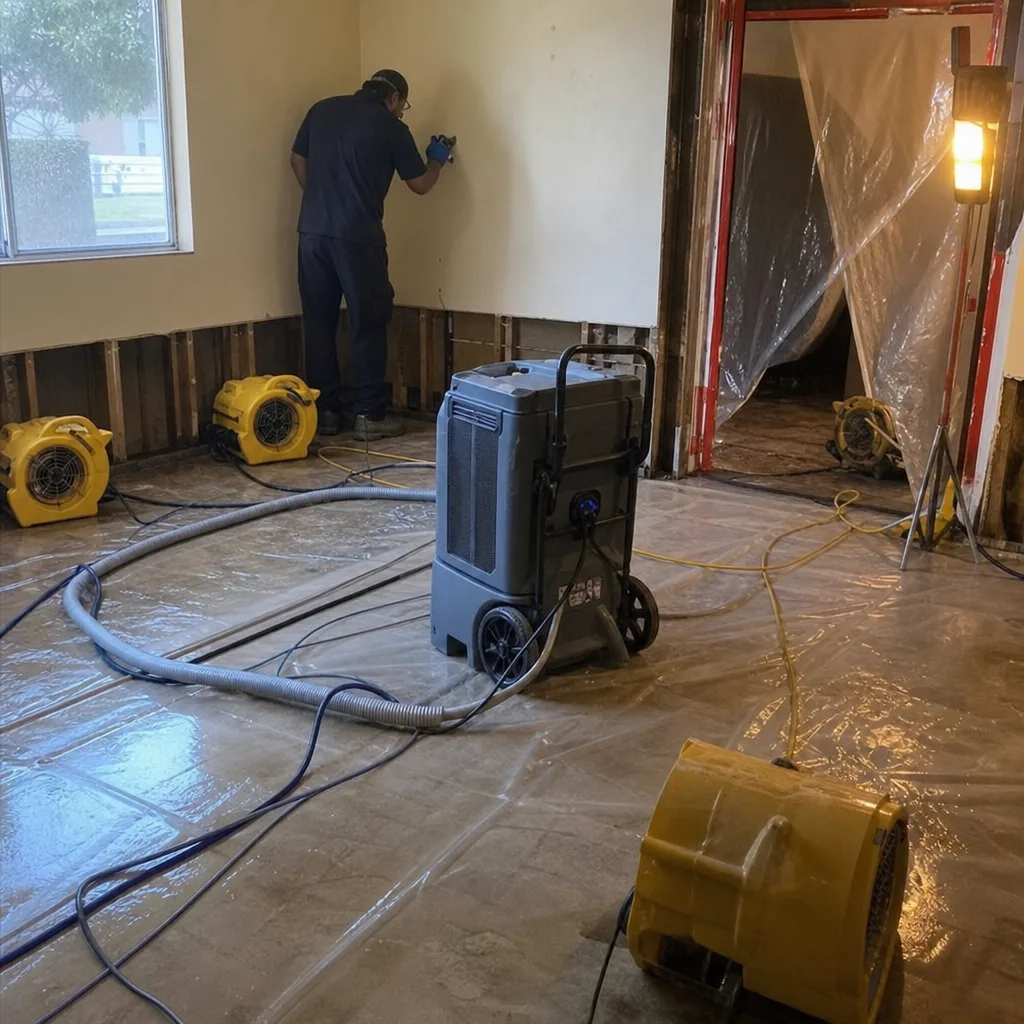
The critical documentation period after any significant storm event is 72 hours. This is not arbitrary - it’s the window during which moisture intrusion is discoverable before secondary damage (mold, material degradation, odor) begins to complicate the causal chain. For North Las Vegas homeowners, this documentation serves two purposes: immediate repair of active leaks, and establishment of pre-loss condition if a slow leak develops weeks or months later.
We’ve handled claims where a roof leak from July monsoon rain was not discovered until October ceiling staining appeared. The insurer disputed whether the damage was from the storm or from ongoing maintenance neglect. The homeowners who had documented their roof condition and post-storm inspection had a defensible claim; those who did not faced partial or full denial.
The 72-Hour Checklist
- Interior perimeter walk: Check all ceiling surfaces, wall-floor junctions, and window sills with a flashlight held at a low angle to reveal texture changes or sheen differences. Document any discoloration, bubbling paint, or soft drywall with dated photographs showing the location relative to fixed reference points (light fixtures, outlets, room corners).
- Attic or roof space inspection: If safely accessible, look for wet insulation (it compresses and darkens when saturated), stained sheathing, or active dripping. In North Las Vegas, attics reach 140°F+ in summer, so schedule this for early morning. Use a moisture meter on exposed wood surfaces - readings above 20% indicate active moisture that requires drying, not just ventilation.
- Exterior drainage verification: Re-run the hose test described in the monsoon preparation section. Storm debris may have altered drainage paths even if gutters appeared clear before the event. Photograph any changes: new erosion channels, displaced downspout extensions, or water marks on foundation walls.
- HVAC and mechanical systems: Check the condensate drain pan and line for overflow conditions that may have occurred during the humidity spike that accompanies monsoon storms. Even brief periods of 40-50% relative humidity increase condensate production significantly.
- Garage and exterior storage: Items stored against exterior walls may have absorbed moisture through wall penetration or slab wicking. Cardboard boxes are indicator materials - they show staining and structural weakness before visible damage appears on the wall itself.
Compile this documentation in a dated folder, digital or physical, with the storm date and your property address. If you later discover damage that you believe relates to this event, this record establishes the temporal connection that insurers require.
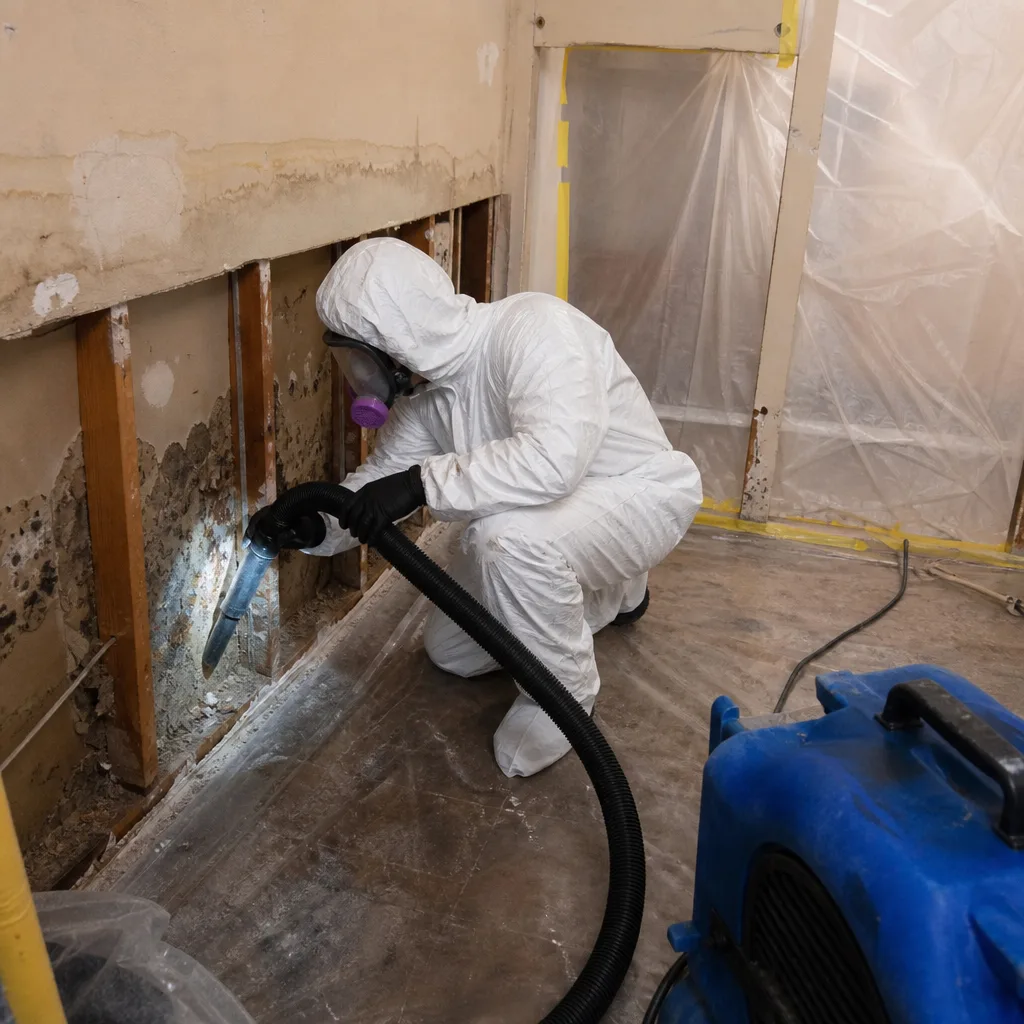
Mold remediation in North Las Vegas is often the downstream consequence of undocumented storm intrusion. Our mold assessments include a review of any prior documentation you have - the moisture log from a previous drying project, the roof inspection report, the post-storm photographs - to build the complete causal narrative that justifies remediation scope and cost.
Reading Your Grading Against Caliche-Heavy Soil
The soil geology of the North Las Vegas valley is dominated by caliche, a calcium carbonate-cemented layer that forms at depths of 6 inches to 3 feet depending on location and historical grading. Caliche has a permeability rate of 0.01 to 0.1 inches per hour - roughly 1/100th the absorption rate of loam soils. Water that falls on caliche-dominated ground does not sink; it moves laterally until it finds a lower point or a penetration.
This fundamentally changes how grading and drainage must be designed. National guidelines that assume soil absorption will handle moderate rainfall do not apply. In North Las Vegas, every gallon that reaches the ground surface must be accounted for in a designed drainage path.
Grading Assessment Method
Use a 4-foot level and a tape measure, or a laser level if available. Measure grade at points 1 foot, 5 feet, and 10 feet from the foundation on each side of the home.
- Minimum acceptable: 6 inches of drop in the first 10 feet (5% slope). This is the IRC standard, but in caliche conditions it’s marginal - 8 inches in 10 feet (8% slope) provides better performance during intense events.
- Critical zone: The first 3 feet from the foundation must have continuous positive slope with no low spots. Even a 2-foot depression can hold 15-20 gallons during a downpour, creating hydrostatic pressure against the stem wall.
- Downspout discharge: Downspouts must terminate on a hard surface (concrete splash block or paved area) that carries water to a designed drainage point, or on a sloped gravel bed that extends 6+ feet from the foundation. Terminating onto bare soil within 4 feet of the foundation is a common North Las Vegas installation error that we see cause repeated moisture intrusion.
The soil type also affects how water behaves once it does penetrate. Caliche layers create perched water tables - saturated zones above the impermeable layer that persist for days or weeks after surface conditions appear dry. We’ve extracted moisture from sub-slab soil at 22% volumetric water content two weeks after a storm, with no visible surface moisture. This is why our drying protocols for slab-adjacent water damage include sub-slab injection drying with Injectidry systems, forcing dry air through the soil matrix to reduce vapor pressure differential and prevent ongoing moisture migration into the structure.
Understanding your specific soil profile requires observation during a wet event, not dry-season assumptions. The next significant rain, note where water stands, where it flows, and how long standing water persists. These observations, documented with photographs, complete the site-specific knowledge that no generic guide can provide.
Year-Round Maintenance Calendar
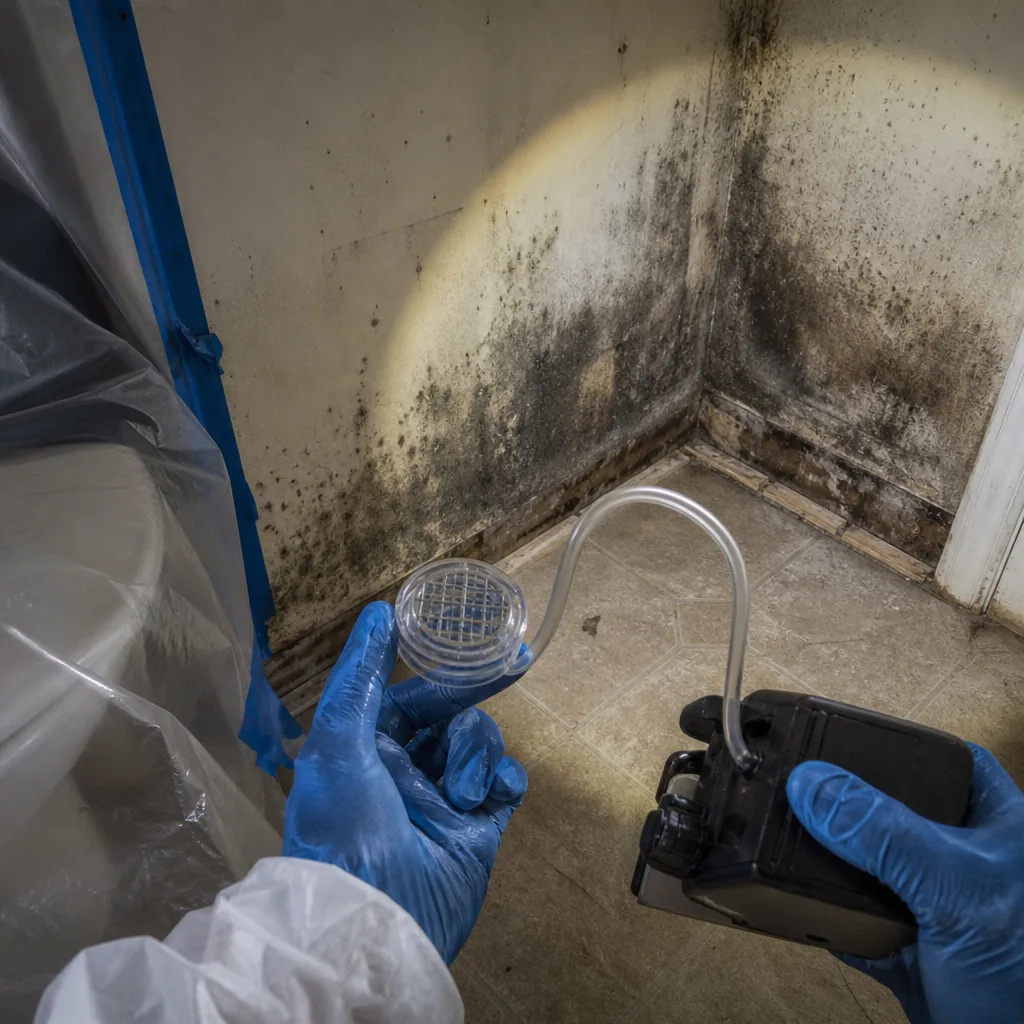
This calendar organizes tasks by the actual climate drivers of the North Las Vegas region, not by conventional season names. The dates are approximate - adjust based on annual weather forecasts and your specific microclimate.
Pre-Monsoon (May 15 - June 30)
- Complete roof, flashing, and drainage inspection using criteria in Section 1
- Service HVAC condensate system: line cleaning, pan inspection, float switch test
- Verify exterior hose bibs drain freely; remove and store hoses
- Test all drainage paths with hose simulation; photograph baseline conditions
- Inspect and clear any storm drain inlets on or adjacent to your property
Monsoon Active (July 1 - September 15)
- Monitor weather alerts for flash flood warnings in your specific North Las Vegas area
- Inspect roof and interior within 72 hours of any storm event producing 0.25 inches or more in one hour
- Verify gutter function during actual rainfall; mark any overflow points for post-season repair
- Document any water intrusion immediately with dated photographs and written notes
Post-Monsoon / Pre-Freeze (September 16 - November 30)
- Complete repairs identified during monsoon season: gutter modifications, flashing repairs, grading corrections
- Insulate or verify insulation on all freeze-risk pipe sections
- Install heat cables in exterior utility chases if not already present
- Drain and winterize irrigation systems; insulate or enclose backflow preventers
- Schedule professional HVAC maintenance including condensate system cleaning
Freeze Season (December 1 - February 28)
- Monitor overnight low temperature forecasts; take protective action when below 32°F is predicted
- Verify heat cable function in utility chases
- During freeze events, maintain minimum thermostat setting of 55°F even in unoccupied homes
- Open cabinet doors under sinks on exterior walls to allow conditioned air circulation
- Inspect attic for ice dam conditions (rare but possible with poor ventilation and sustained cold)
Spring Transition (March 1 - May 14)
- Test all hose bibs and exterior faucets for freeze damage before first use
- Inspect irrigation system for cracked heads, split lines, or damaged backflow preventers
- Verify grading has not been altered by winter erosion or landscaping activity
- Schedule pre-season HVAC service before first cooling demand
Common Mistakes to Avoid
- Assuming desert dryness prevents mold. North Las Vegas homes with monsoon intrusion or condensate failures develop mold at the same rates as humid-climate homes when moisture readings exceed 16% in organic materials. The difference is that desert homeowners often delay response, believing the dry air will resolve the problem. It doesn’t - the moisture is inside walls, not exposed to ambient air.
- Installing downspout extensions only during storms. Temporary extensions that are removed for mowing or aesthetics defeat the purpose. Permanent buried drain lines to daylight points, or hard-surface splash blocks that remain in place, provide consistent protection. We’ve documented foundation moisture in homes where the owner “had extensions but took them off.”
- Insulating pipes without sealing the insulation. Split foam insulation with gaps at seams or ends allows cold air penetration. The pipe freezes at the gap, and the insulation traps the expanding ice, increasing rupture pressure. Use self-sealing products or tape all seams with acrylic adhesive tape rated for temperature exposure.
- Ignoring the secondary condensate drain. A wet secondary line is not “normal in humid weather” - it’s evidence of primary system failure. Every instance of secondary drainage should trigger immediate inspection of the primary line, pan, and float switch. We’ve responded to overflows where the secondary line had been dripping for two seasons before the primary finally failed completely.
- Documenting damage only after discovering it. The 72-hour post-event window exists because early documentation is defensible documentation. Photographs taken three months after a storm, when staining has developed, cannot establish that the storm was the cause. Insurers routinely deny these claims for lack of temporal connection.
- Assuming caliche soil provides natural drainage. Caliche provides the opposite - it prevents drainage. Every drainage design in North Las Vegas must assume zero soil absorption and engineer complete surface water management. Homeowners who plant water-intensive landscaping against foundations, believing the soil will handle irrigation runoff, create the exact moisture conditions that damage structure.
- Delaying professional assessment to “see if it dries out.” By the time visible water has disappeared, moisture meters often show 18-22% in structural materials - the active mold growth zone. Our assessments include thermal imaging and penetrating moisture readings that reveal conditions invisible to surface observation. The cost of assessment is minimal compared to the cost of remediating mold that colonized during a “wait and see” period.
When to Call a Professional
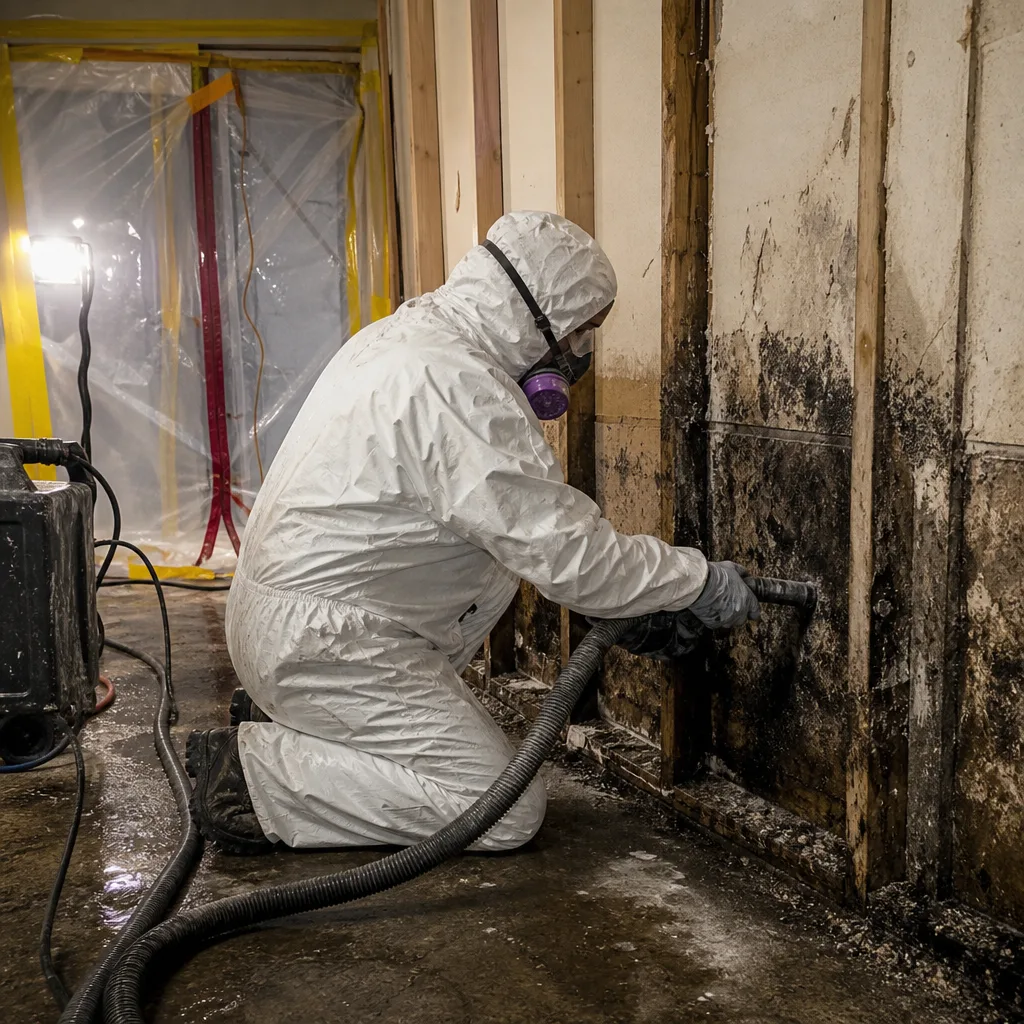
Call for professional assessment when: moisture readings in any material exceed 16% as measured by a pin-type moisture meter; you observe active water intrusion during or after any weather event; a pipe freeze has occurred, even if visible leakage has stopped; your HVAC condensate system has overflowed or the secondary drain is active; or you discover mold growth of any visible extent on any surface.
For water damage, mold concerns, fire and smoke restoration, or any situation where documentation will matter to an insurance claim, fire & smoke damage restoration in North Las Vegas and related services from DryMark Restoration North Las Vegas provide written scope and pricing before any work begins, with a photo record on every visit and daily moisture logs that satisfy IICRC, RIA, and IFA documentation standards. Free estimates are available in North Las Vegas - call (725) 726-3239.
Frequently Asked Questions
Professional gutter cleaning and roof inspection runs $200-$400 for a typical single-story North Las Vegas home; HVAC condensate service is $150-$250; and pipe insulation for high-risk sections is $300-$600 depending on accessibility. These are annual costs that prevent losses averaging $8,000-$15,000 for a Category 2 water damage event with professional drying and documentation. See our Damage Restoration Cost Breakdown: The North Las Vegas Homeowner’s Reference for 2026 for detailed pricing on common scenarios. DryMark Restoration North Las Vegas offers free estimates for any concern - call (725) 726-3239.
Most standard homeowners policies cover sudden and accidental water damage from pipe ruptures, including freeze events, provided the home was maintained at minimum temperature and the damage was promptly reported. Monsoon-related roof leaks are typically covered if the roof was in reasonable condition - gradual deterioration or known maintenance issues may be excluded. Documentation is decisive: photos of roof condition before the season, post-storm inspection records, and immediate reporting all strengthen claim validity. We coordinate directly with adjusters and provide the documented photo record and written scope that insurers require for full payment.
Live phone coverage is available 24 hours a day, 7 days a week with no voicemail on emergency lines. For active water intrusion, our response prioritizes stopping the source and beginning documentation - the first crew on site establishes the photo record, moisture readings, and written scope that determine the entire restoration trajectory. Speed matters most for mitigation; reconstruction is scheduled after scope approval and material selection, with a written price before work starts under Haven Standard, Clause 1.
Surface drying with household equipment addresses visible water but not the moisture trapped in wall cavities, subfloors, and structural materials. We’ve measured 24-28% moisture content in bottom plates and studs days after homeowners believed the area was “dry.” At those levels, mold colonization is probable within 48-72 hours, and structural damage to engineered wood products accelerates. Professional drying with Dri-Eaz and Phoenix equipment, documented with daily moisture logs to IICRC standards, provides the evidence that the structure returned to dry standard - typically 12-16% for wood framing in North Las Vegas conditions.
The combination of caliche soil, concentrated monsoon rainfall, and rapid suburban expansion onto previously undeveloped desert creates unique risk patterns. Drainage infrastructure in newer North Las Vegas subdivisions often handles designed capacity but fails during the intensity spikes that characterize monsoon events. The freeze risk, while brief, affects homes built with minimal cold-climate provisions - garage wall pipes and exterior utility chases are particularly vulnerable. Our protocols are developed from 12,000+ homes restored since 2011, with documentation patterns specific to Mojave Desert conditions.
Maintain: annual inspection records with dates and photographs; pre-season and post-event photographs of roof, drainage, and foundation conditions; any professional maintenance invoices (HVAC, roofing, plumbing); and immediate documentation of any water intrusion with dated photographs showing location and extent. If we perform restoration work, you receive a complete photo record on every visit, a written scope with line-item pricing, daily drying logs with moisture readings, and a signed 365-Day Done Right Promise under The Haven Standard. This documentation package is designed to convert restoration invoices into payable claims.
The Bottom Line
Seasonal damage prevention in North Las Vegas requires understanding two distinct risk calendars: the concentrated monsoon window of July through September, when caliche soil and overwhelmed drainage create rapid intrusion; and the brief but hard freeze nights of winter, when under-protected pipes in garage walls and exterior chases rupture under pressure. Between these peaks, the June HVAC condensate spike and the year-round reality of zero soil absorption demand specific inspection protocols and measurable preparation criteria. Documentation before, during, and after events establishes the pre-loss condition that insurers require and protects against the scope disputes that delay recovery. The maintenance calendar in this guide replaces generic four-season advice with the actual climate drivers of the Mojave Desert, organized by task and deadline. Explore more guides & resources for year-round home protection.
Written by Alicia Brennan, Owner at DryMark Restoration North Las Vegas, serving North Las Vegas since 2011.