
Last updated September 23, 2026
Free visual inspection and a written scope of work before any mitigation begins - photos, moisture readings, and drying logs go in your claim file
The scope we write is the scope we bill. Anything new gets shown to you, in writing, before we touch it.
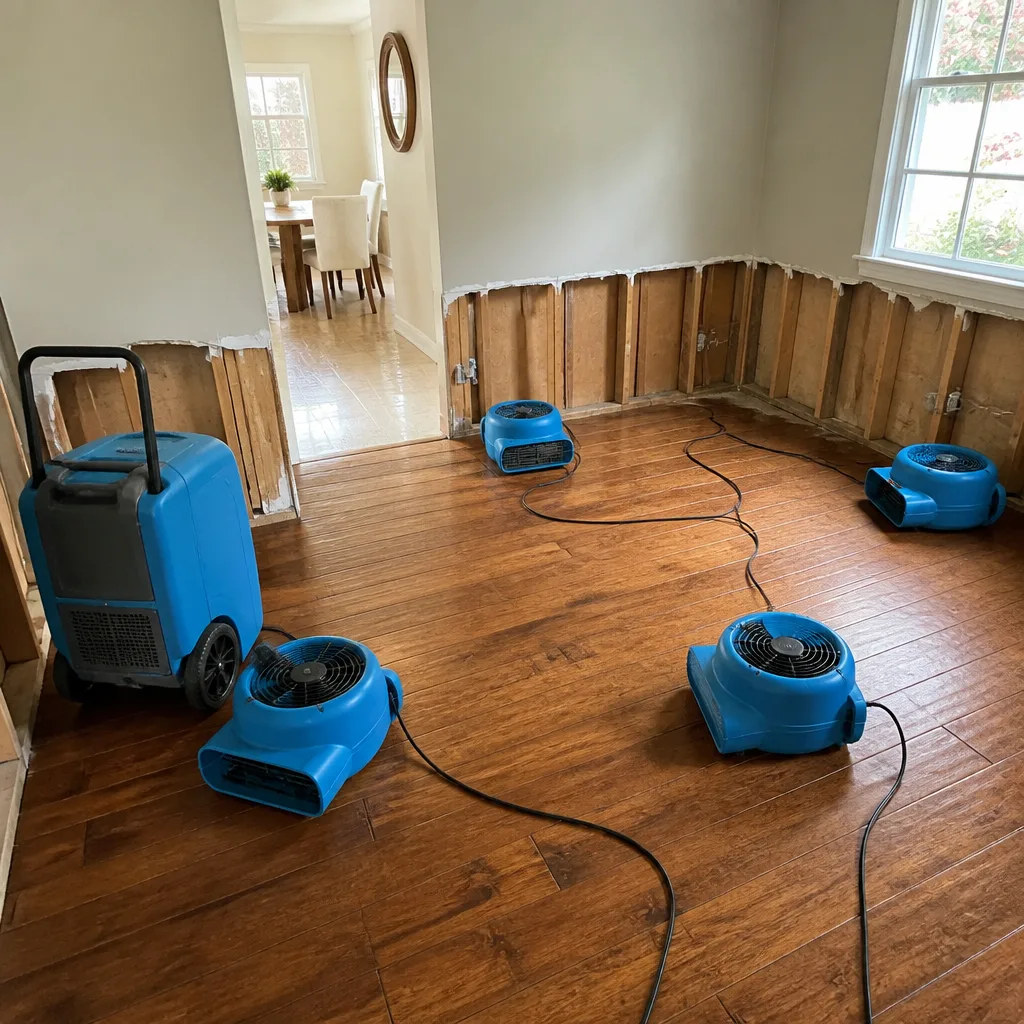
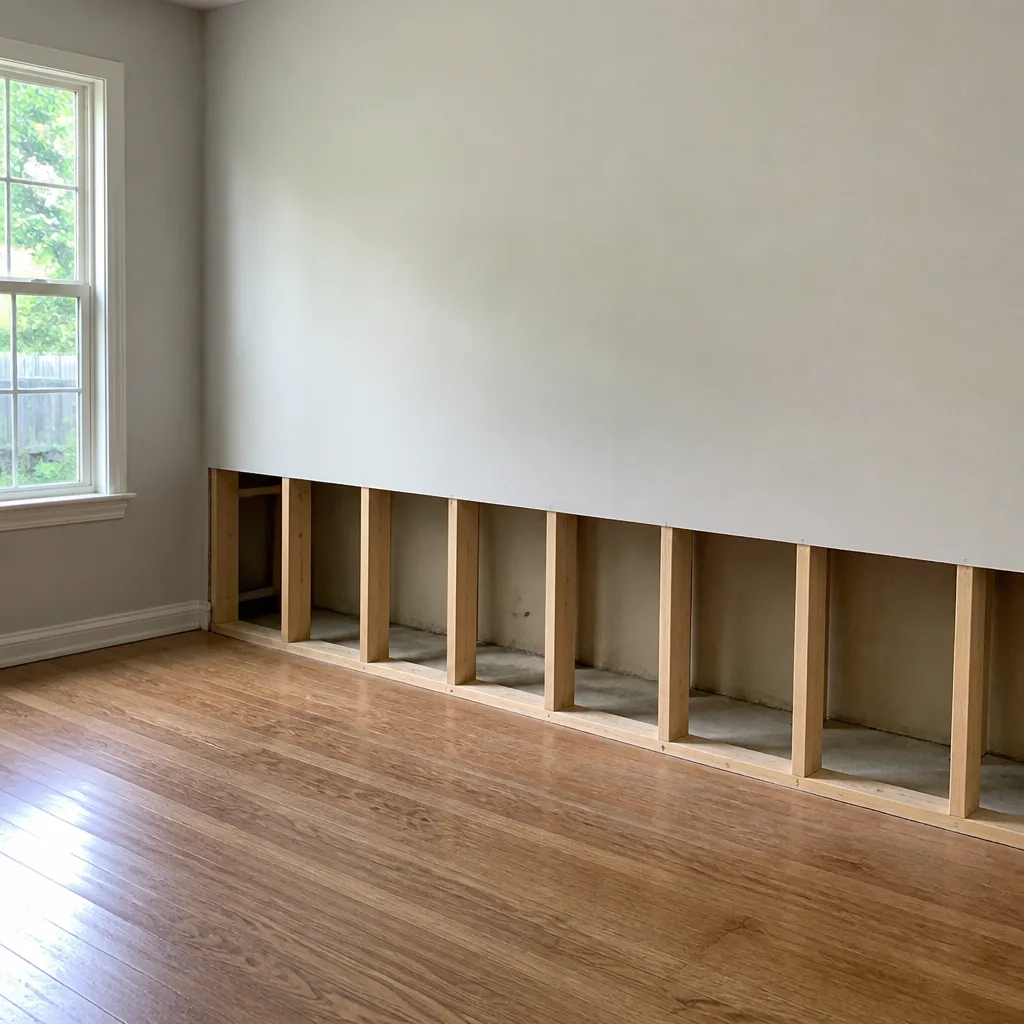

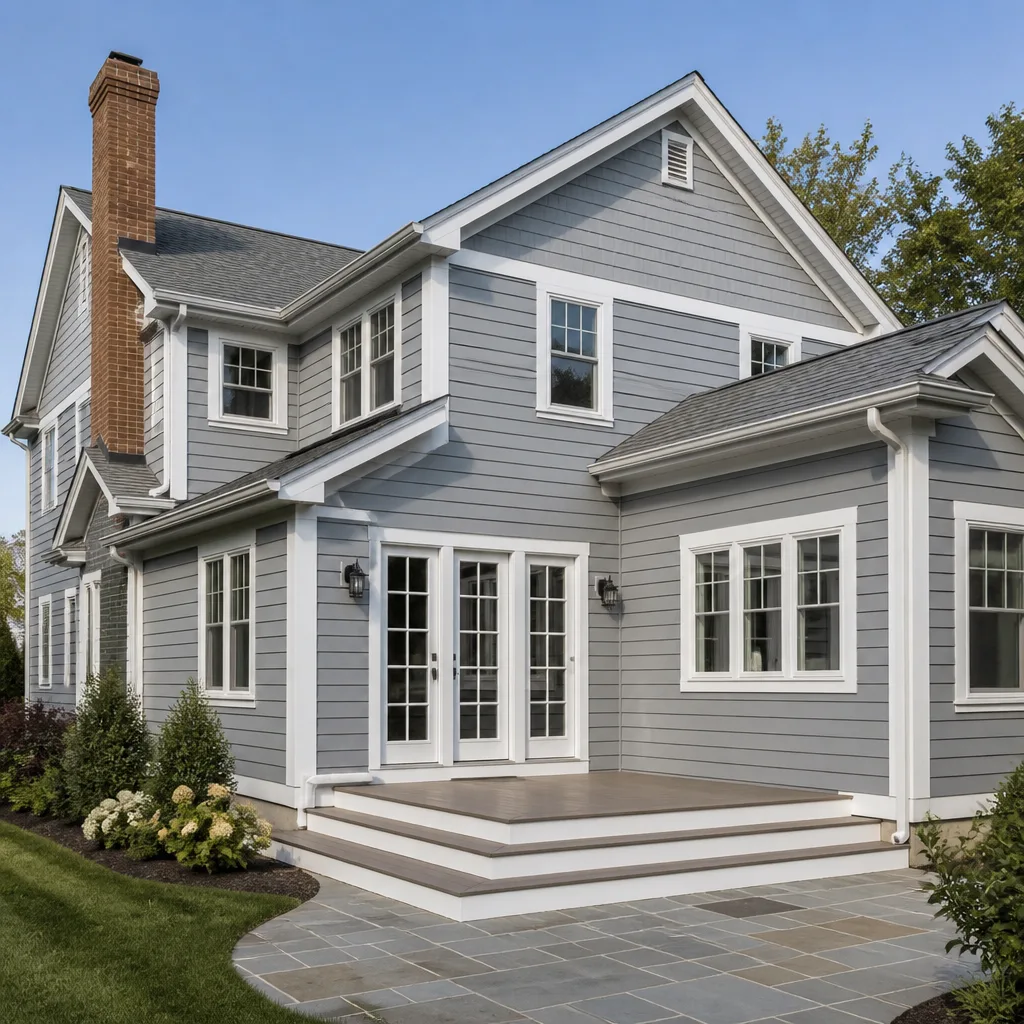
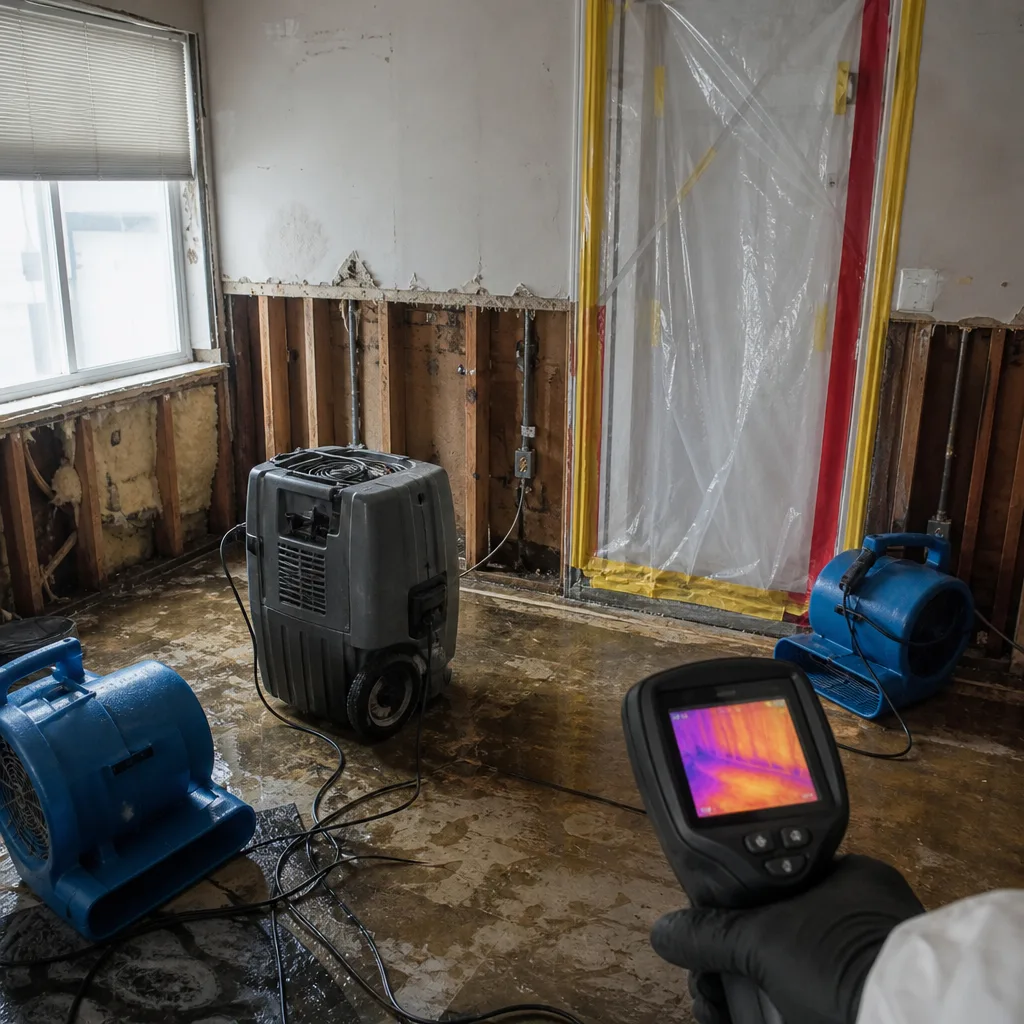 Before
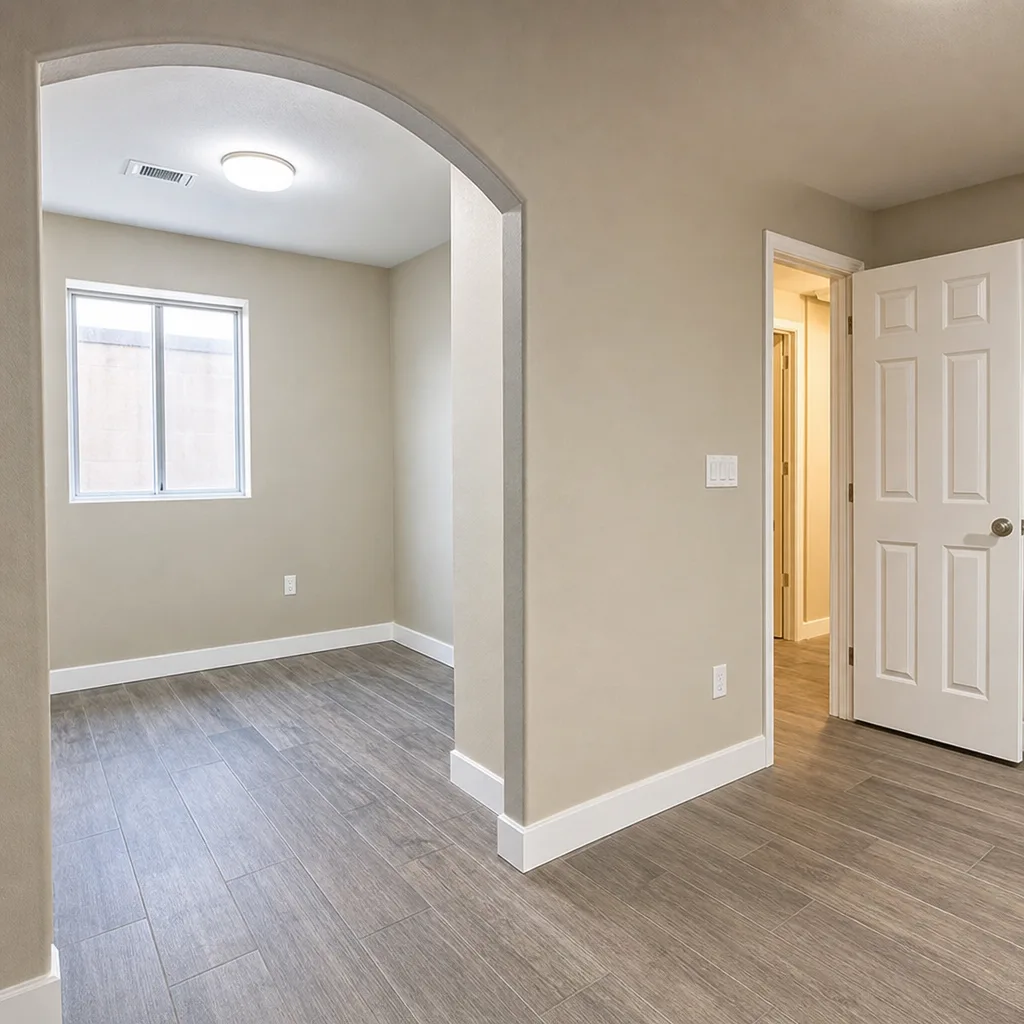 After
After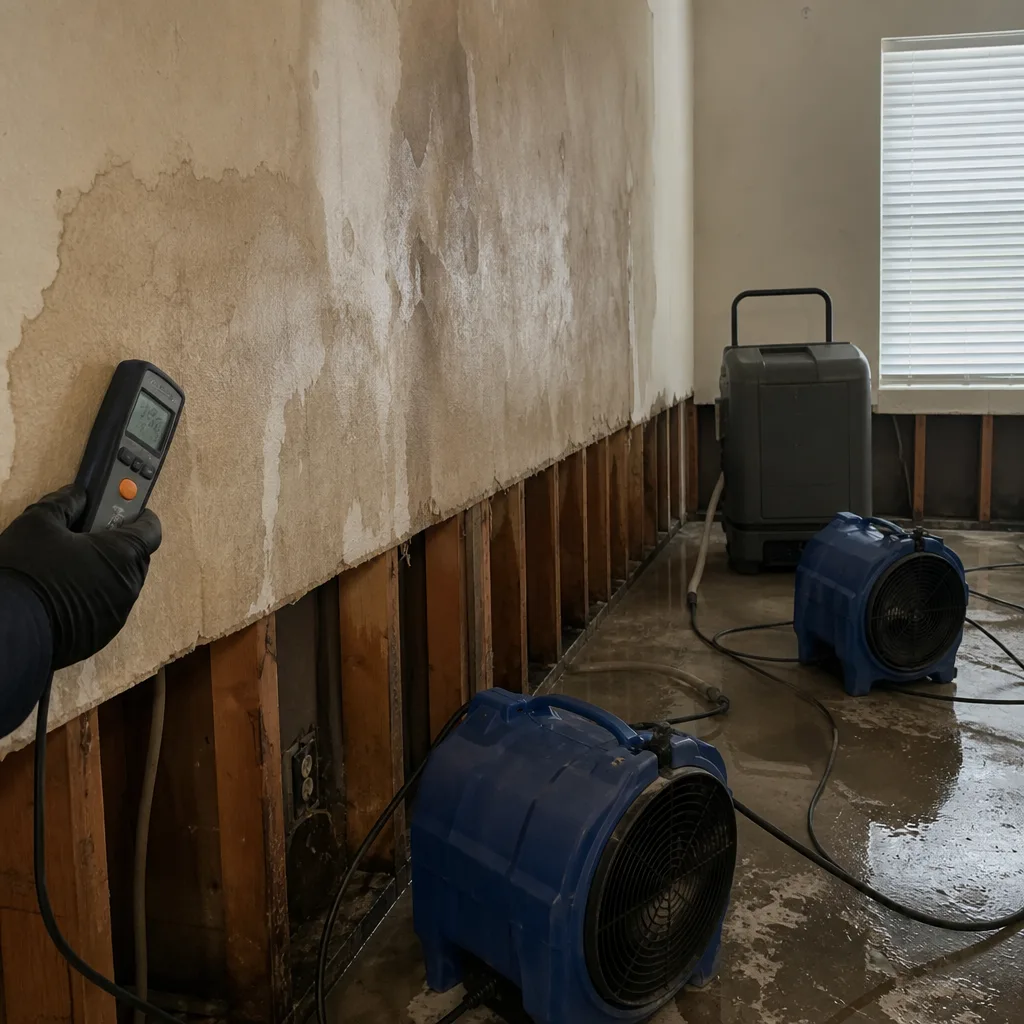 Before
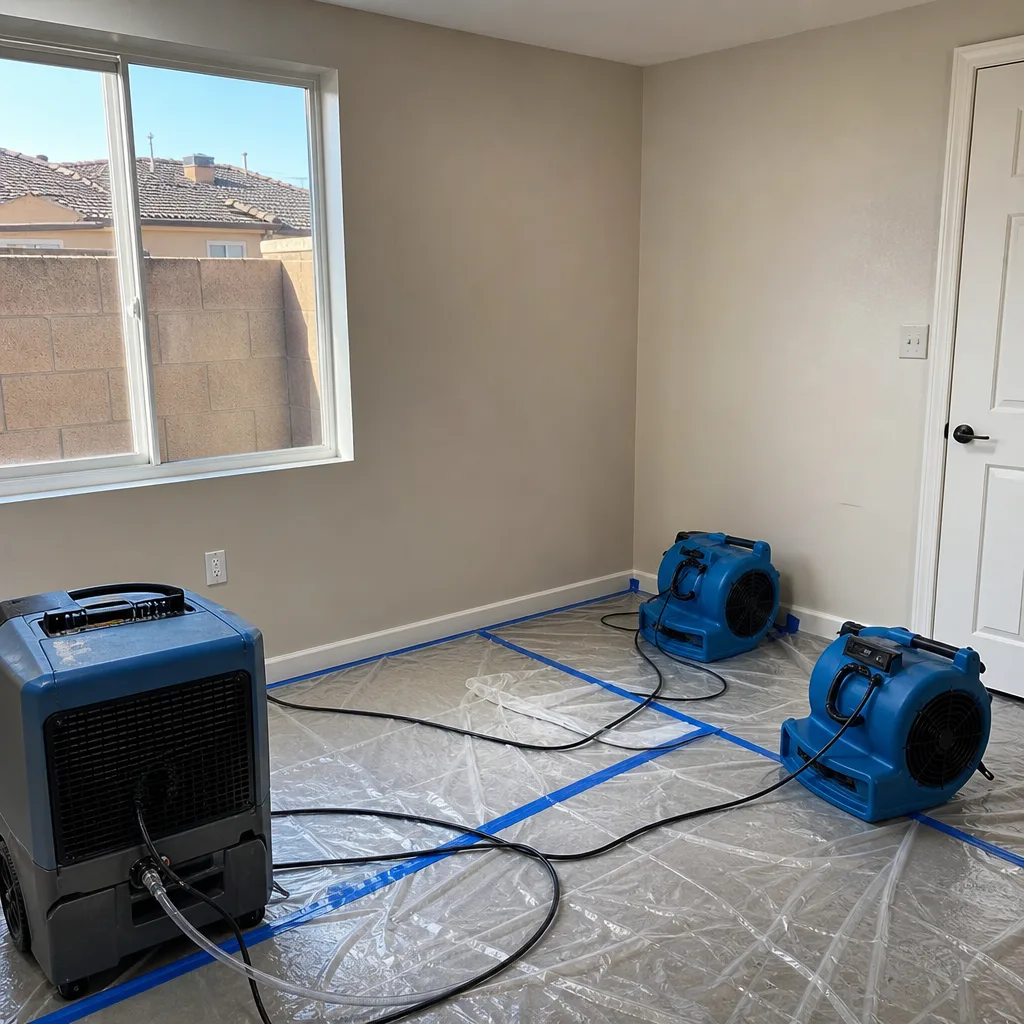 After
After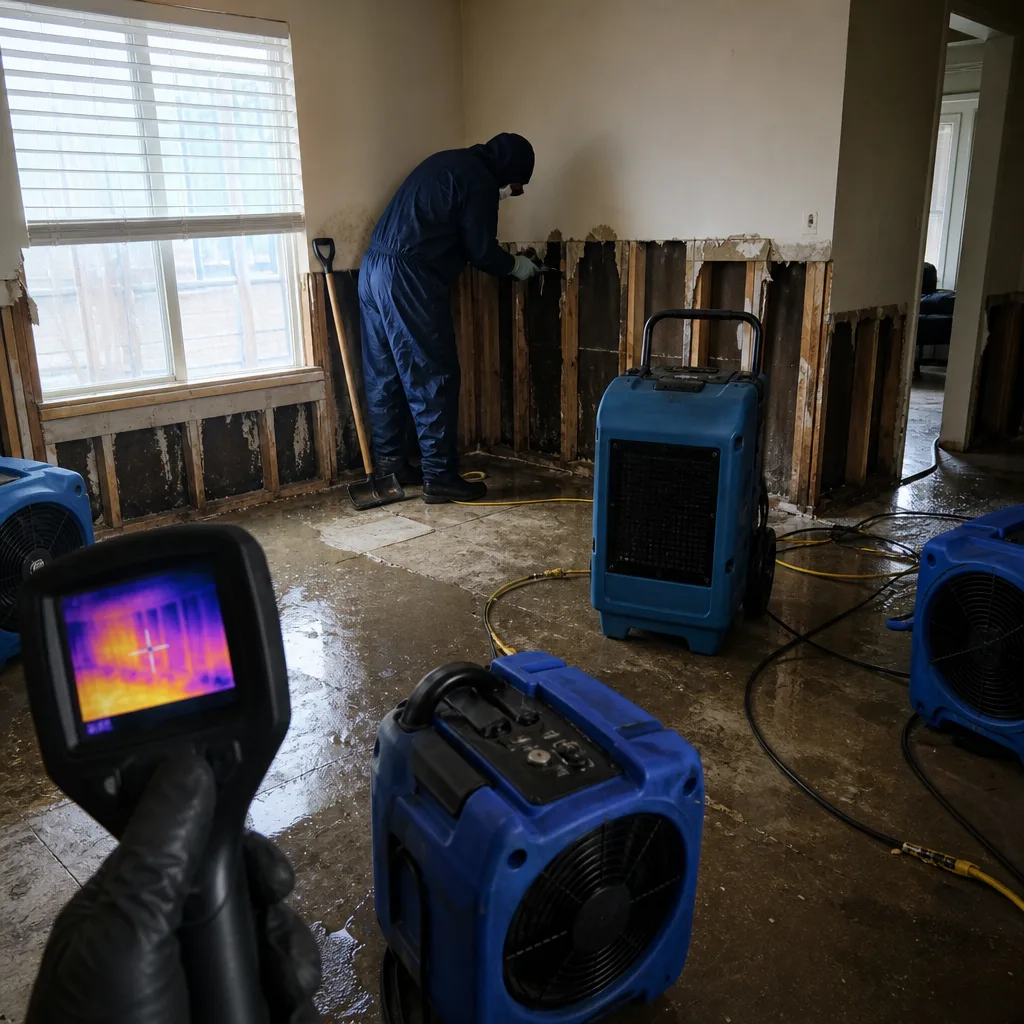 Before
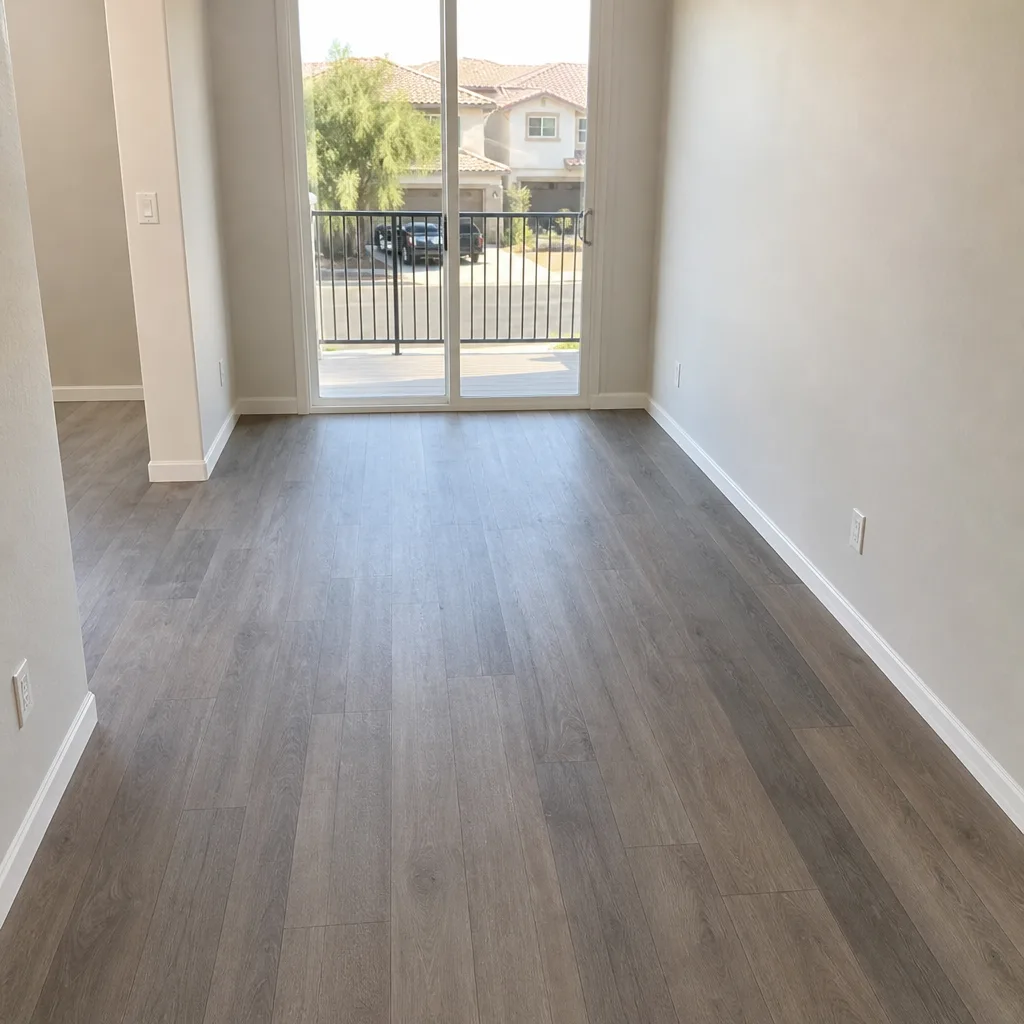 After
AfterWater Damage Restoration Maintenance Checklist for North Las Vegas Homeowners
A pinhole leak behind a North Las Vegas water heater can hold ambient moisture readings above 16% WME for 60 days before the drywall shows a stain. By then, mold is already colonizing the cavity. The checklist that prevents that call is three items long and takes eight minutes. In The Complete Guide to Damage Restoration in North Las Vegas, you’ll learn the specific moisture thresholds that demand action before visible damage appears, which appliances account for most indoor water losses in Clark County homes, and how to document baseline conditions that protect your insurance claim if a loss does occur.
Quick Answer
North Las Vegas homeowners should inspect water heaters, washing machine hoses, and HVAC condensate lines quarterly; test moisture in walls and subfloors with a pin meter twice yearly; and photograph all plumbing fixtures, appliances, and baseline readings annually. Catching moisture above 16% WME in drywall or 20% WME in framing before stains appear prevents the mold colonization and structural damage that drive most restoration claims in the Las Vegas Valley.
Table of Contents
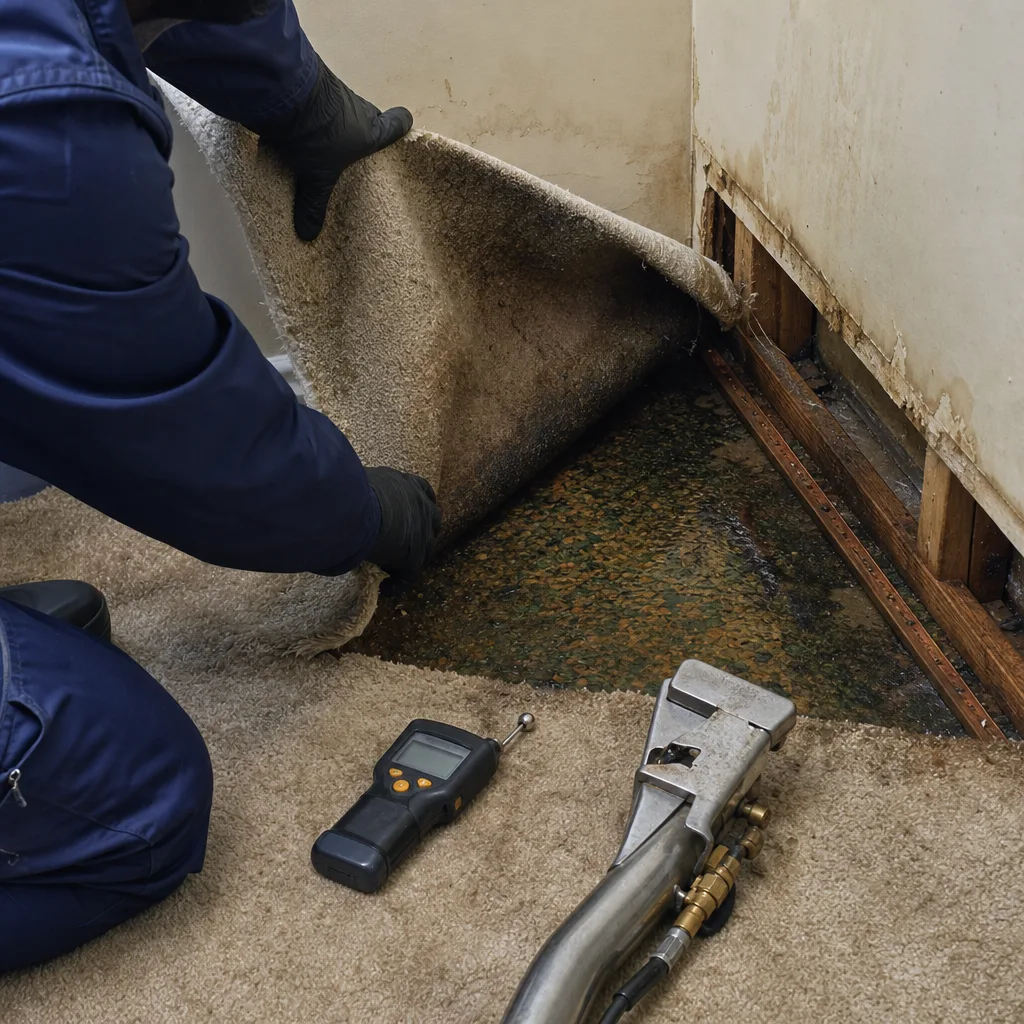
- Why North Las Vegas Homes Fail Differently
- The Eight-Minute Quarterly Inspection
- Moisture Thresholds That Demand Action
- Appliance and Fixture Risk Rankings
- Seasonal Timing for North Las Vegas
- Documenting Your Baseline Readings
- Annual Photography Protocol
- Common Mistakes to Avoid
- When to Call a Professional
- Frequently Asked Questions
- The Bottom Line
 Before
 After
AfterWhy North Las Vegas Homes Fail Differently
Homes in North Las Vegas face a specific set of water damage risks that differ from wetter climates and even from older Las Vegas neighborhoods. The combination of hard water, rapid temperature swings, and construction-era patterns creates predictable failure points.
Most North Las Vegas housing stock was built between 1990 and 2010, with significant expansion after 2000. That era’s construction used PEX and copper plumbing in configurations that are now reaching the end of reliable service life for water heaters, angle stops, and washing machine hoses. The hard water in Clark County, measuring 12-20 grains per gallon depending on your municipal source, accelerates corrosion at brass fittings and mineral buildup in solenoid valves.
The desert climate creates a false sense of security. Relative humidity in North Las Vegas averages 15-30% outdoors, but indoor humidity can spike dramatically when HVAC condensate lines clog or bathroom exhaust fans fail. A clogged condensate line in July can dump 5-20 gallons of water into a ceiling cavity before the homeowner notices, because the dry air outside masks the humidity trapped inside the wall.
Temperature swings compound the problem. Summer attic temperatures in North Las Vegas regularly exceed 150°F, while winter nights drop below freezing. This thermal cycling stresses pipe expansion joints, water heater tank seams, and appliance supply hoses more aggressively than in moderate climates. We’ve documented pipe failures in Aliante and Centennial Hills where the temperature delta alone contributed to fatigue cracking at copper elbows.
The soil composition matters too. Much of North Las Vegas sits on expansive clay soils that shift with seasonal moisture changes. This ground movement stresses slab foundations and can crack sewer laterals, creating the slow leaks that produce the highest moisture readings we see in slab-on-grade homes. In neighborhoods like Shadow Creek and Eldorado, we’ve traced repeated water damage claims to the same sewer lateral cracks that foundation movement reopened after initial repairs.
Finally, the insurance landscape in Clark County has tightened. Carriers are increasingly denying claims where homeowners cannot demonstrate pre-loss maintenance or where mold resulted from long-term moisture rather than a sudden event. Documentation isn’t optional anymore. It’s the difference between a covered loss and a $15,000 out-of-pocket restoration bill.
The Eight-Minute Quarterly Inspection
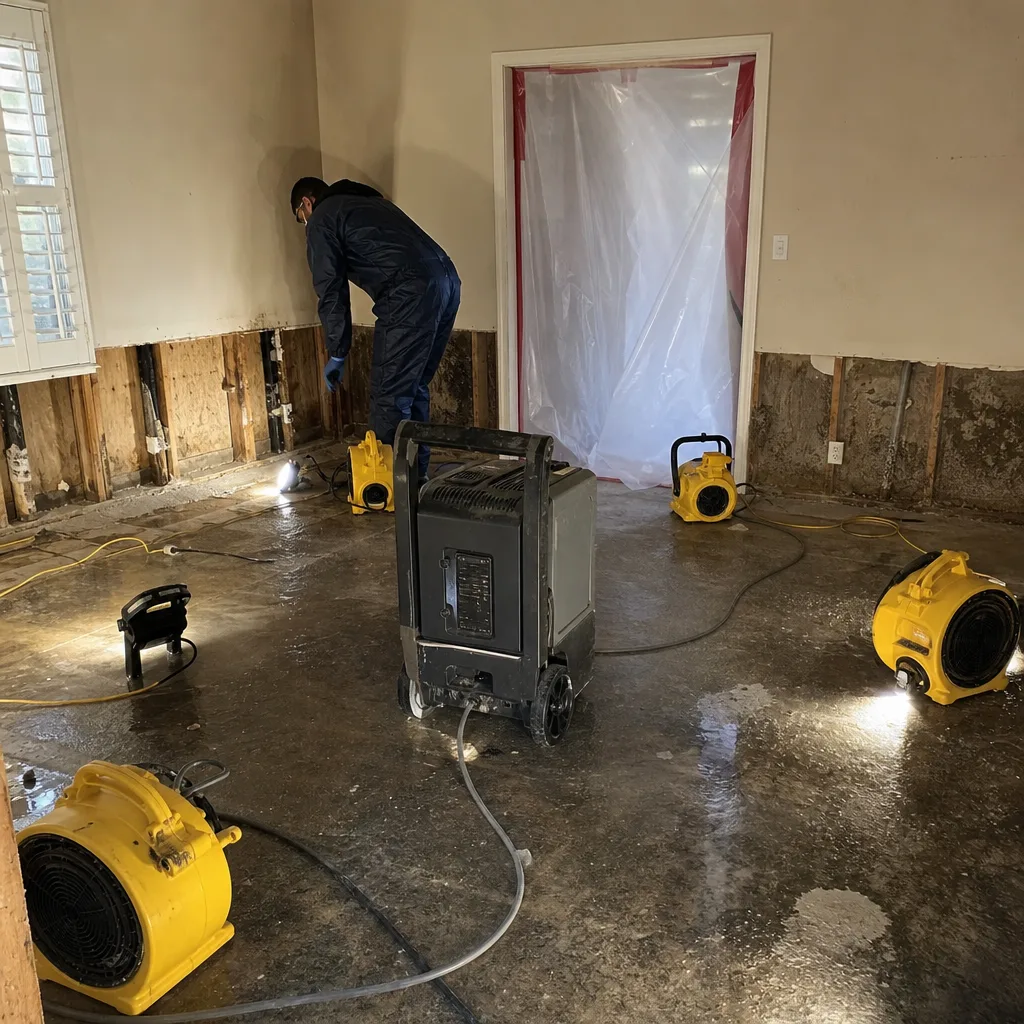
This inspection targets the three locations that generate the majority of water damage calls we respond to in North Las Vegas. Do it in January, April, July, and October. Set a phone reminder.
Location 1: Water Heater (3 minutes)
- Check the temperature-pressure relief valve. Lift the lever slightly; water should discharge through the drain tube and stop when you release it. If it dribbles continuously, the valve is failing.
- Inspect the drain pan. It should be dry. Any standing water indicates a tank seam leak or fitting corrosion.
- Run your hand along the cold water inlet and hot water outlet pipes where they enter the tank. Corrosion at these brass fittings is the most common failure point in North Las Vegas water heaters after year 8.
- Check the sacrificial anode rod if your water heater is over 5 years old. In hard water areas like Clark County, anode rods deplete faster than manufacturer estimates. A depleted anode accelerates tank corrosion.
Location 2: Washing Machine (3 minutes)
- Inspect both supply hoses for blistering, cracking, or corrosion at the brass couplings. Replace rubber hoses with braided stainless steel if they are more than 3 years old.
- Check the hose connection tightness with your fingers. Overtightening by installers strips brass threads in North Las Vegas homes, creating slow leaks that pool behind the machine.
- Run a cycle and observe the drain hose connection to the standpipe. Disconnection here causes immediate flooding, but slow seepage at the connection is more common and more insidious.
- Pull the machine forward 6 inches and check the floor with your hand. Any moisture indicates a leak that hasn’t yet reached visible damage.
Location 3: HVAC Condensate Line (2 minutes)
- Locate the primary condensate drain, usually a PVC line exiting near the outdoor unit or into a sink drain.
- Check the secondary/emergency drain pan under the air handler. It must be dry. Water here means the primary line is clogged.
- Pour 1 cup of white vinegar into the drain line access port. This dissolves algae buildup that clogs lines in the Las Vegas Valley’s warm months.
Total time: 8 minutes. The January and July inspections are critical. January catches water heater stress from winter heating loads. July catches condensate line clogs at peak cooling demand.
Moisture Thresholds That Demand Action
Visible water damage is late-stage damage. The goal of this checklist is to catch moisture accumulation before it produces stains, warping, or mold. These thresholds are based on IICRC S500 standards and our field data from thousands of North Las Vegas Water Damage Restoration jobs.
Wood Moisture Equivalent (WME) Targets
WME is the standard measurement for moisture in building materials, expressed as a percentage. A consumer-grade pin meter with insulated probes costs $40-$80 and is sufficient for homeowner monitoring. We use professional meters calibrated to IICRC standards, but the threshold values remain the same.
| Material | Normal Range | Elevated - Investigate | Critical - Professional Assessment Needed |
|---|---|---|---|
| Drywall (interior) | 7-12% WME | 13-16% WME | Above 16% WME |
| Wood framing (studs, plates) | 9-14% WME | 15-20% WME | Above 20% WME |
| Plywood subfloor | 10-15% WME | 16-20% WME | Above 20% WME |
| OSB subfloor | 8-13% WME | 14-18% WME | Above 18% WME |
| Concrete slab (surface) | 3-5% WME | 6-8% WME | Above 8% WME |
These thresholds assume interior conditions of 70-75°F and 30-50% relative humidity. North Las Vegas homes in summer with AC running typically sit at 40-50% RH indoors. Winter heating can drop RH to 20-25%, which artificially lowers pin meter readings. Always measure at consistent times of day for comparable data.
At 16% WME in drywall, mold colonization becomes likely within 48-72 hours if temperature and organic food sources are present. In North Las Vegas, that timeline extends slightly in dry winter months and compresses in summer when indoor humidity spikes from AC condensate issues. We’ve found active mold growth in Centennial Hills homes at 14% WME where a slow leak maintained humidity in a wall cavity for 3 weeks.
Subfloor readings above 20% WME indicate either an active leak or capillary moisture from a slab. In slab-on-grade homes common in North Las Vegas neighborhoods like Aliante and Desert Shores, a reading of 22% WME in plywood subfloor almost always traces to a sewer lateral crack or foundation moisture intrusion, not a plumbing leak above.
Document your baseline readings when the home is known dry. Write them on a card taped inside the electrical panel or saved to cloud storage with date stamps. Future restoration contractors and insurance adjusters need this data to distinguish sudden damage from long-term moisture.
Appliance and Fixture Risk Rankings
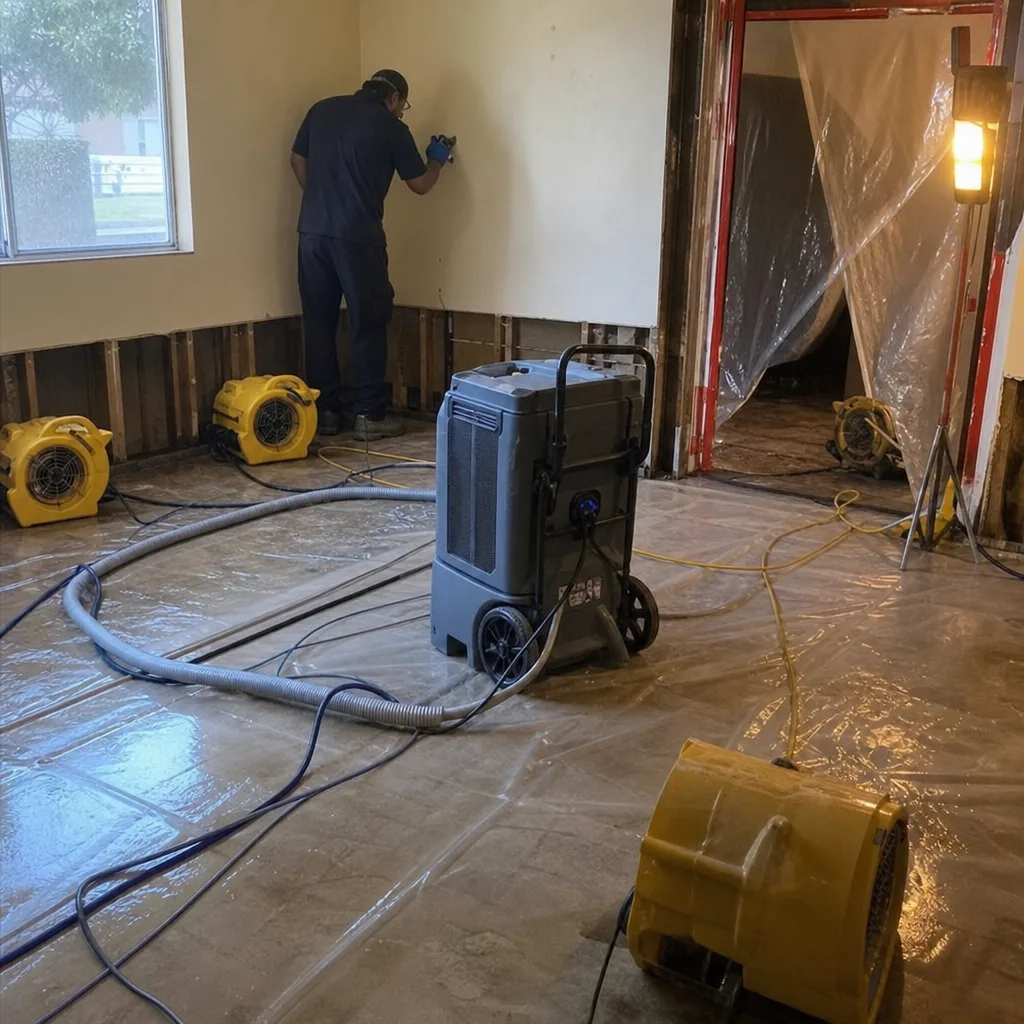
Insurance data from Clark County and our own job records from 12,000+ homes restored since 2011 show consistent patterns. These rankings reflect frequency of water damage calls, not severity of individual losses.
Ranked by Claim Frequency in North Las Vegas
- Washing machine supply hoses: 23% of indoor water losses. Rubber hoses fail at 3-5 years in hard water; braided stainless steel at 8-10 years. The failure is typically sudden and releases full water pressure.
- Water heaters: 18% of losses. Tank failures, T&P valve discharge, and corroded fittings. Average tank life in Clark County hard water: 8-10 years for standard tanks, 12-15 for tankless units with descaling maintenance.
- HVAC condensate systems: 16% of losses. Clogged primary drains, cracked drain pans in attic installations, and float switch failures. Peak season: June through September in North Las Vegas.
- Refrigerator ice maker lines: 12% of losses. PEX or copper lines develop pinholes; saddle valves on older homes fail. Often undetected for weeks because the leak is small and behind the refrigerator.
- Dishwasher drain hoses and inlet valves: 11% of losses. High-loop drain configurations fail; inlet valves develop slow seepage that damages adjacent cabinetry before reaching the floor.
- Toilet flanges and supply lines: 10% of losses. Wax ring failure allows sewer gas and slow leakage; flexible supply lines corrode at compression fittings.
- Angle stops and supply lines under sinks: 7% of losses. Multi-turn angle stops fail from mineral buildup; flexible supply lines kink or corrode.
- Slab leaks and foundation moisture: 3% of losses by frequency, but among the highest severity and cost per incident. More common in pre-2000 construction and areas with expansive clay soils.
The pattern is clear: the highest-frequency losses come from pressurized supply lines and appliances with active water connections, not from drainage systems. Your quarterly inspection should weight accordingly. The 8-minute routine above addresses the top three categories representing 57% of all indoor water losses.
For the remaining categories, add these annual checks: refrigerator ice maker line inspection (pull refrigerator, check floor), dishwasher drain hose verification (confirm high loop, check under sink for moisture), and toilet stability test (rock the bowl; movement indicates wax ring compromise).
Seasonal Timing for North Las Vegas
Generic “spring and fall” maintenance advice fails in the Mojave Desert. North Las Vegas has two distinct water damage seasons and two shoulder periods with specific risks.
January-March: Heating Season Stress
Water heaters work hardest when incoming water temperature drops to 50-55°F. The thermal cycling from heating 40-gallon batches to 120°F stresses tank seams and T&P valves. Check your water heater in January, before peak load. Also verify that bathroom exhaust fans are functional; closed windows and active heating trap moisture from showers. We’ve seen mold colonization in North Las Vegas bathrooms where exhaust fans failed in January and homeowners didn’t notice until April.
April-May: Transition Period
First HVAC cycles of the season reveal condensate line clogs that formed during winter disuse. Run the system and check the secondary drain pan within 24 hours of first use. This is also the ideal time for your annual pin meter baseline readings, before summer humidity loads begin.
June-September: Peak Cooling and Monsoon Moisture
North Las Vegas receives 4-5 inches of annual rainfall, with 60% concentrated in July and August monsoon events. Flash flooding overwhelms drainage in neighborhoods with flat grades like parts of downtown North Las Vegas. Check exterior grading, downspout extensions, and window well drains before July. Interior, condensate production peaks. The vinegar flush in your July quarterly inspection is non-negotiable.
Monsoon humidity spikes also affect homes with evaporative cooling. Swamp coolers add 10-15 gallons of water vapor daily to indoor air. If you’re converting to refrigerated air or running both systems, monitor humidity with a simple hygrometer. Sustained indoor RH above 60% risks condensation on cool surfaces, particularly in closets and exterior corners.
October-November: Second Transition
Final condensate system check before heating season. Drain and flush water heaters if you have hard water scaling. This is also optimal timing for annual photography of all plumbing fixtures and appliances.
The October inspection catches summer-wear failures before winter thermal stress compounds them. We’ve documented that water heater failures in North Las Vegas cluster in January and October, corresponding to the seasonal load transitions.
Documenting Your Baseline Readings
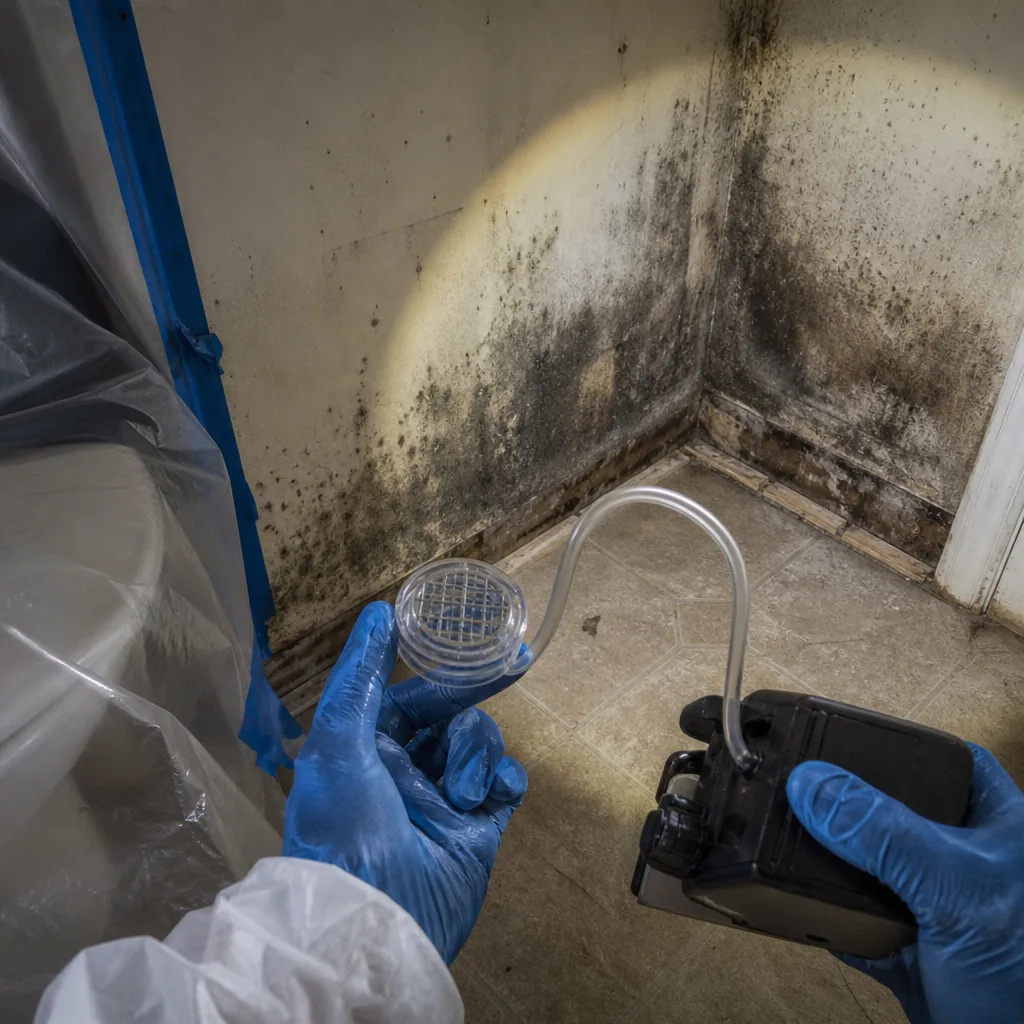
Insurance claims fail when homeowners cannot prove pre-loss conditions. The documentation gap is the problem Back to Dry was founded to solve. Here’s how to create your own record that supports a future claim.
Equipment Needed
- Pin-type moisture meter with insulated probes: $40-$80. Brands like Protimeter or Delmhorst offer homeowner-grade units. Avoid pinless meters for this application; they scan too broad an area for precise baseline documentation.
- Digital hygrometer: $15-$25. Place one per floor, record readings quarterly.
- Smartphone with date-stamp enabled on photos.
- Cloud storage or physical backup location off-site.
Measurement Protocol
- Identify 5-10 representative locations: an interior wall in each bathroom, the wall behind the water heater, a kitchen wall near the dishwasher, a closet on an exterior wall, and the subfloor access if available (through a floor register or in a closet).
- Measure at consistent depth. For drywall, insert pins to full depth (typically 5/8″). For framing, measure on exposed studs in unfinished areas or through outlet openings with power off.
- Record: location description, WME reading, date, time, indoor temperature, and relative humidity.
- Photograph the meter display with the location visible in background.
- Store with cloud timestamp. Email yourself the spreadsheet monthly as backup.
After a water loss, these readings establish that your home was within normal moisture parameters before the event. This matters because insurance adjusters in Clark County increasingly apply “long-term damage” exclusions where they suspect pre-existing moisture. A reading of 10% WME in your bathroom wall from April, versus 35% WME after a sudden pipe burst in December, makes the sudden event undeniable.
We provide documented photo records and drying logs on every Water Damage Restoration in North Las Vegas job we perform, calibrated to IICRC standards. Your homeowner documentation complements this professional record.
Annual Photography Protocol
Photographs establish pre-existing condition, which determines scope and coverage in restoration claims. Take these photos in October, store with date stamps, and update annually.
Required Photo Set
- Water heater: Full unit showing data plate with manufacture date, T&P valve, drain pan, and surrounding floor. Close-up of inlet/outlet fittings.
- Washing machine: Full unit pulled forward to show floor, supply hose connections, and drain standpipe.
- HVAC air handler: Unit in attic or closet, secondary drain pan, condensate line exit point.
- Each bathroom: Toilet base where it meets floor, sink supply connections visible in cabinet, tub/shower surround condition, exhaust fan grille.
- Kitchen: Dishwasher pulled forward showing floor and connections, refrigerator water line connection, sink supply lines in cabinet.
- Water main and shutoff valves: Main entry point, individual fixture shutoffs. Verify they turn freely.
- Exterior: Grade at foundation, downspout discharge points, window well drains if present.
Store these with a written inventory: “October 15, 2024. Water heater: Bradford White, serial XX, installed 2019. No corrosion at fittings. Floor dry.” This level of detail transforms a disputed claim into a documented loss.
In North Las Vegas, we’ve seen claims denied where homeowners could not prove a water heater was maintained, or where mold in a wall cavity was attributed to “long-term maintenance neglect” rather than a sudden supply line failure. Your photo record, combined with moisture readings, closes that vulnerability.
For homes in neighborhoods with HOA requirements, like many communities in Aliante or Eldorado, check whether your HOA maintains exterior drainage infrastructure. Document any drainage complaints or maintenance requests to the HOA. Shared drainage failures have generated complex liability disputes in North Las Vegas flash flood events.
Common Mistakes to Avoid
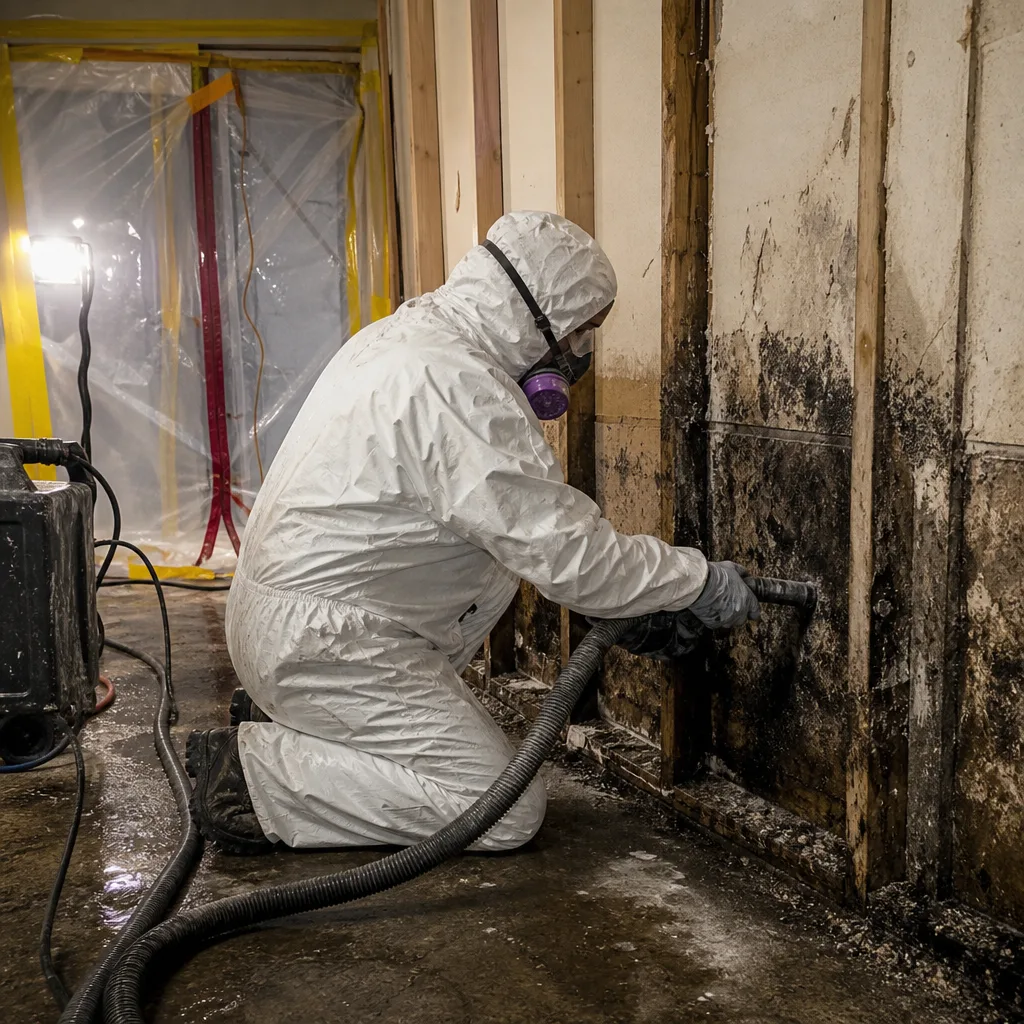
- Waiting for visible stains before acting. By the time drywall discolors, moisture has typically exceeded 20% WME for weeks and mold colonization is established. The 16% WME threshold exists precisely because it’s the last point where intervention prevents secondary damage.
- Using only touch to detect leaks. In North Las Vegas’s dry air, small leaks evaporate from surfaces while continuing to saturate the cavity behind. A dry floor in front of the washing machine means nothing if the subfloor beneath reads 24% WME.
- Ignoring the secondary HVAC drain pan. “It’s just the emergency pan” is a phrase we hear before $8,000 ceiling replacements. That pan is dry, or you have a primary drain failure in progress.
- Replacing failed rubber hoses with more rubber hoses. Braided stainless steel washing machine hoses cost $15 more and last 3x longer in hard water. The false economy of rubber hoses generates a quarter of our water damage calls.
- Failing to document after any plumbing repair. If a plumber fixes a leak, photograph the repair and take post-repair moisture readings. We’ve handled claims where insurers disputed whether a previous repair was successful, leaving the homeowner to prove the new damage was a separate event.
- Assuming slab homes are immune to foundation moisture. Expansive clay soils in North Las Vegas create slab cracks that admit moisture during monsoon events or from broken sewer laterals. Musty odors in slab-on-grade homes without visible leaks demand professional moisture mapping.
- Skipping the October inspection because “it’s still warm.” October water heater checks prevent January failures. The thermal cycling from first heating season operation reveals seams stressed by summer expansion.
When to Call a Professional
Call for professional assessment when: moisture readings exceed the critical thresholds in this guide; you detect musty odors without visible source; your water bill increases without explanation; or any appliance shows corrosion, seepage, or intermittent malfunction. These are not emergencies yet, but they will become emergencies.
For active flooding, water reaching electrical fixtures, or sewage backup, the response is immediate evacuation of the area and emergency dispatch. Do not enter standing water that contacts electrical outlets or panels.
DryMark Restoration North Las Vegas offers free estimates in North Las Vegas. Our assessments include documented moisture readings, photo records, and written scopes with prices before any work begins. Call (725) 726-3239. For emergency water damage, our live dispatch answers 24 hours a day, 7 days a week with no voicemail trees.
Frequently Asked Questions
Category 1 (clean water) mitigation typically ranges from $1,200 for limited area drying to $4,500 for whole-room extraction and dehumidification with professional-grade Dri-Eaz and Phoenix equipment. Category 2 (gray water) and Category 3 (black water) losses require additional sanitation and range higher depending on affected square footage and material classification; see our Damage Restoration Cost Breakdown: The North Las Vegas Homeowner’s Reference for 2026 for detailed pricing factors. DryMark Restoration North Las Vegas provides a written price before any work starts on every job, with no scope-creep additions. Call (725) 726-3239 for a free estimate.
Probably not. Most policies cover “sudden and accidental” damage but exclude long-term leaks. This is why baseline moisture documentation matters. If you can demonstrate normal readings before a sudden failure, you strengthen your claim significantly. We provide photo-documented assessments that help establish the sudden nature of a loss for adjuster review.
For active water damage, DryMark Restoration North Las Vegas maintains live phone coverage 24 hours a day, 7 days a week with no voicemail. Emergency response times vary by current demand and your location within North Las Vegas, but our dispatch coordinates immediate deployment for Category 2 and 3 losses. For non-emergency assessments, we typically schedule within 24-48 hours.
Fans move surface moisture but do not establish the vapor pressure differential needed to extract bound water from wall cavities and subfloors. Professional drying uses psychrometric data, temperature control, and air movement calculated to specific grain depression targets. We’ve been called to homes where homeowner fan drying appeared successful for 2 weeks, then mold colonized the cavity because moisture at 18% WME remained trapped behind intact drywall. For moisture readings above critical thresholds, professional assessment is warranted.
Mitigation is emergency water removal, drying, and sanitation to prevent further damage. Reconstruction is the repair or replacement of removed materials. DryMark Restoration North Las Vegas handles both, but they are priced and scheduled separately. Mitigation is urgent; reconstruction is scoped, scheduled, and priced in writing like a remodel. Find more guides & resources on our blog. Haven Standard, Clause 1 applies to both: written price before work begins, every time.
Hard water accelerates corrosion at brass fittings, mineralizes solenoid valves to failure, and depletes water heater anode rods faster than manufacturer estimates. In Clark County’s 12-20 grain-per-gallon water, a water heater anode that should last 5 years may fail in 3. The resulting tank corrosion produces the slow leaks that maintain 16%+ WME for weeks before visible damage. Water softener installation, or at minimum annual anode inspection, reduces this risk measurably.
A homeowner-grade pin meter is sufficient for baseline monitoring and early detection. Professional restoration contractors use meters calibrated to IICRC standards with documented traceability, and we produce daily drying logs with psychrometric data that insurers require for claim payment. Your homeowner readings establish pre-loss condition; our professional readings establish loss scope and drying progress. Both have distinct purposes. If your readings exceed critical thresholds, professional confirmation is the next step.
The Bottom Line
Water damage in North Las Vegas is predictable, detectable, and largely preventable with an 8-minute quarterly inspection and twice-yearly moisture readings. The thresholds in this guide, 16% WME for drywall and 20% WME for framing, are your action points before visible damage appears. Document everything: baseline readings, annual photos, and any maintenance or repairs. When a loss does occur, that documentation transforms a disputed claim into a payable one. For assessment, documented moisture mapping, or emergency response, DryMark Restoration North Las Vegas provides written prices before work begins and a 365-Day Done Right Promise on every job. Call (725) 726-3239.
Written by Alicia Brennan, Owner at DryMark Restoration North Las Vegas, serving North Las Vegas since 2011.