
Last updated September 23, 2026
Free visual inspection and a written scope of work before any mitigation begins - photos, moisture readings, and drying logs go in your claim file
The scope we write is the scope we bill. Anything new gets shown to you, in writing, before we touch it.
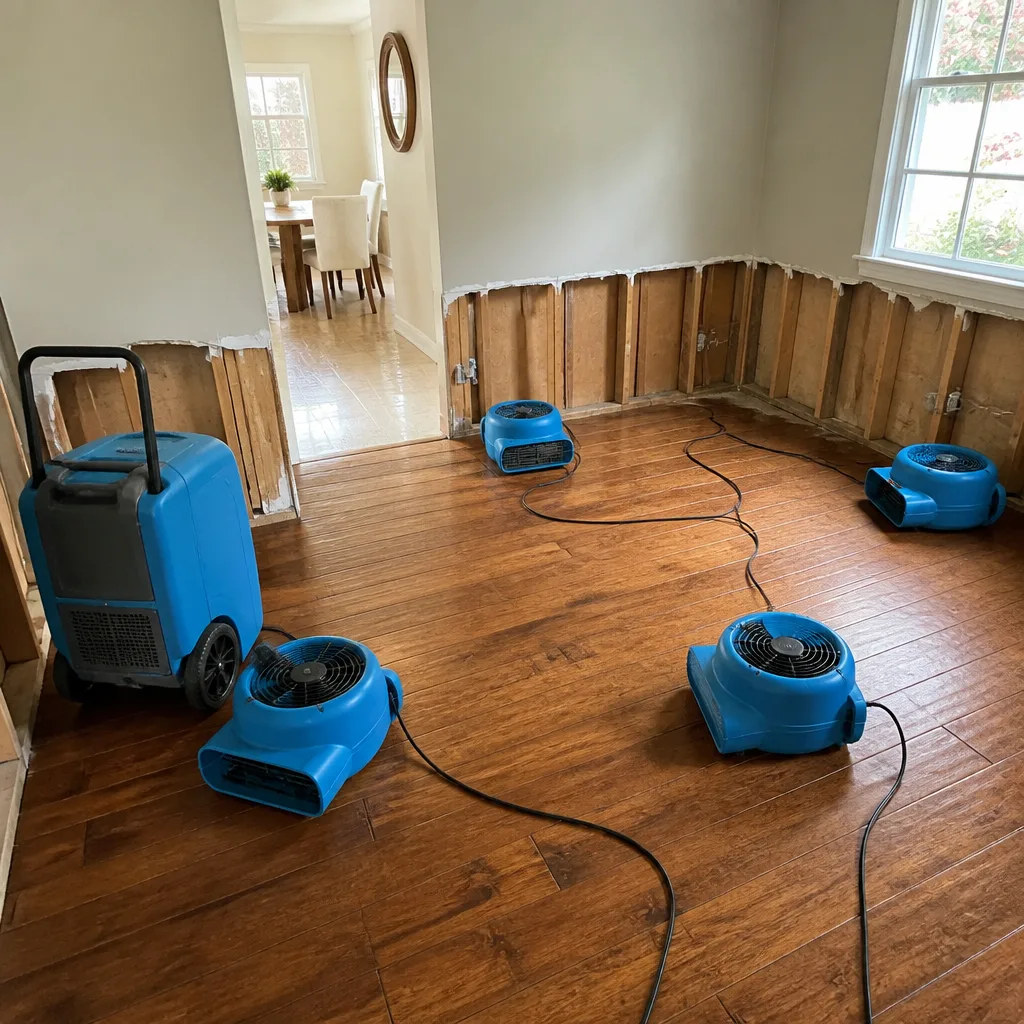
 Before
 After
After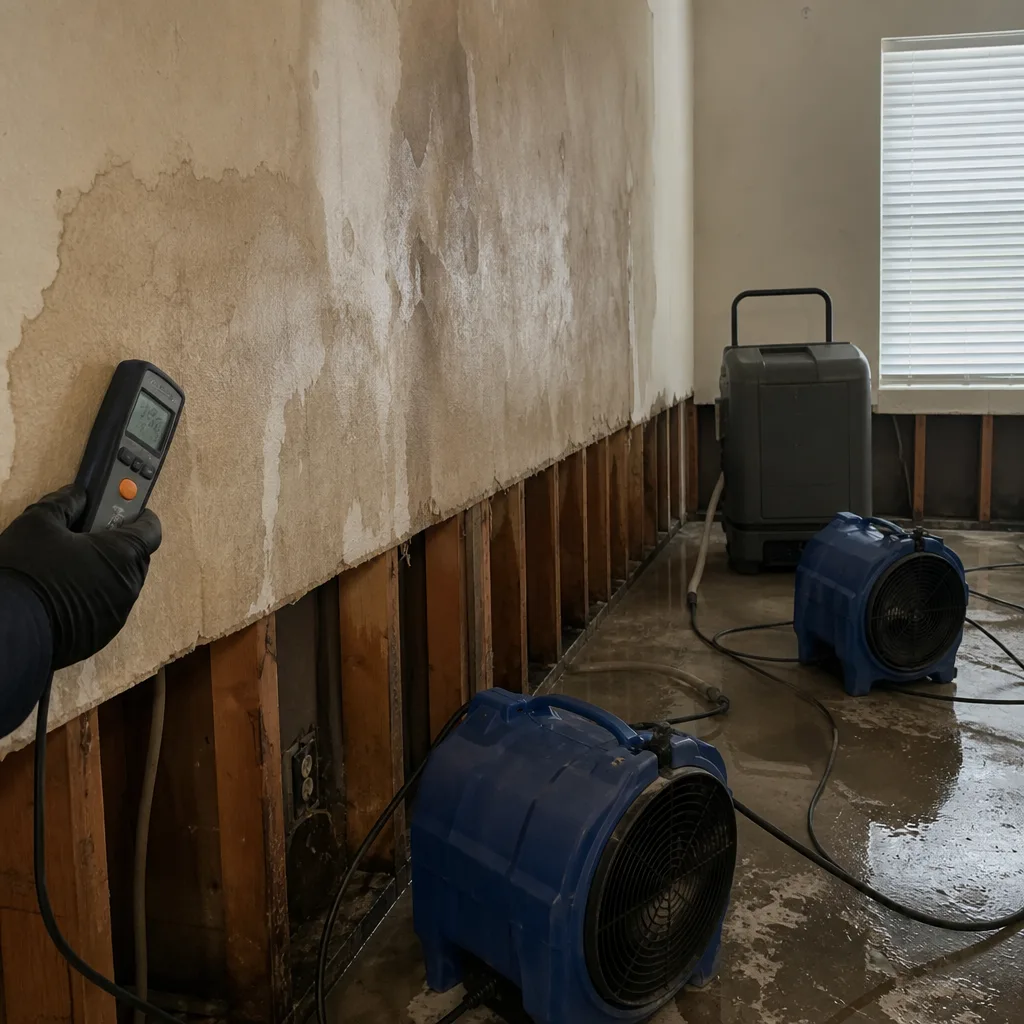 Before
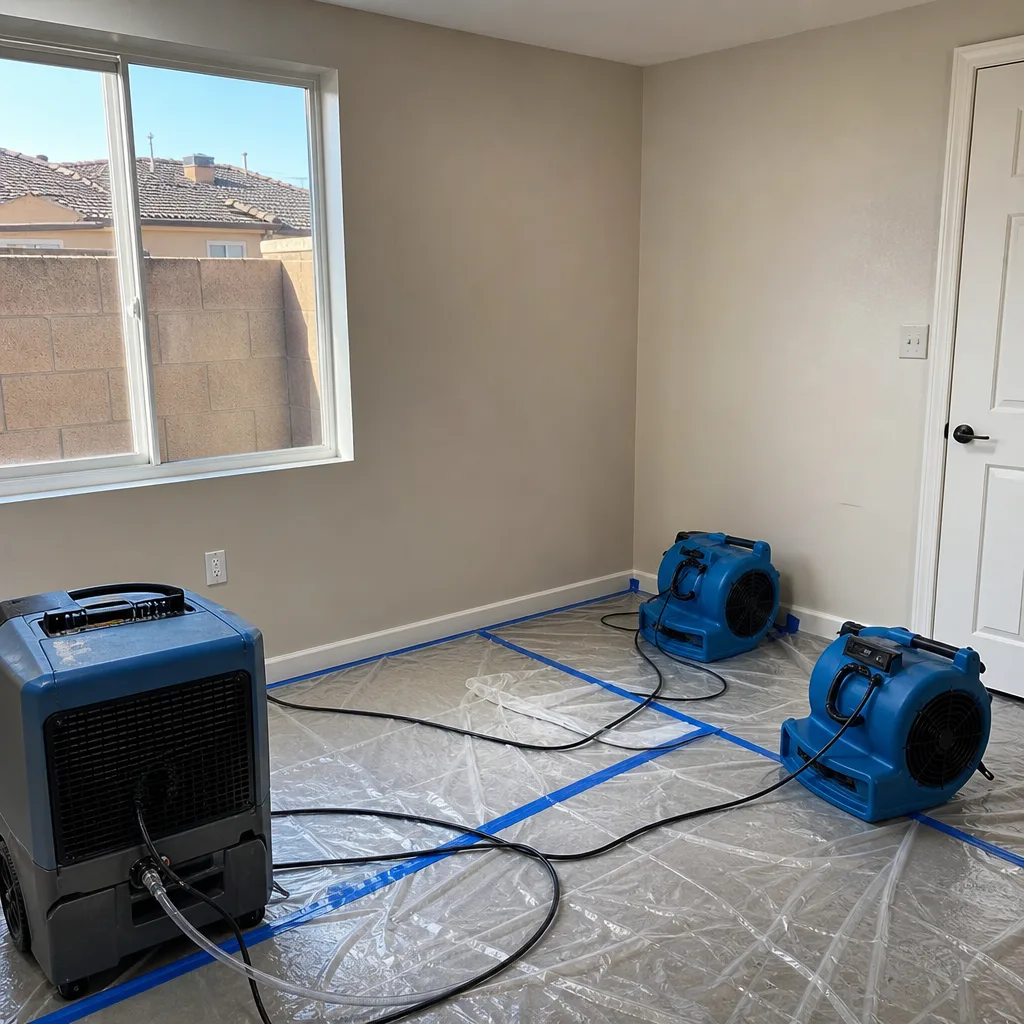 After
After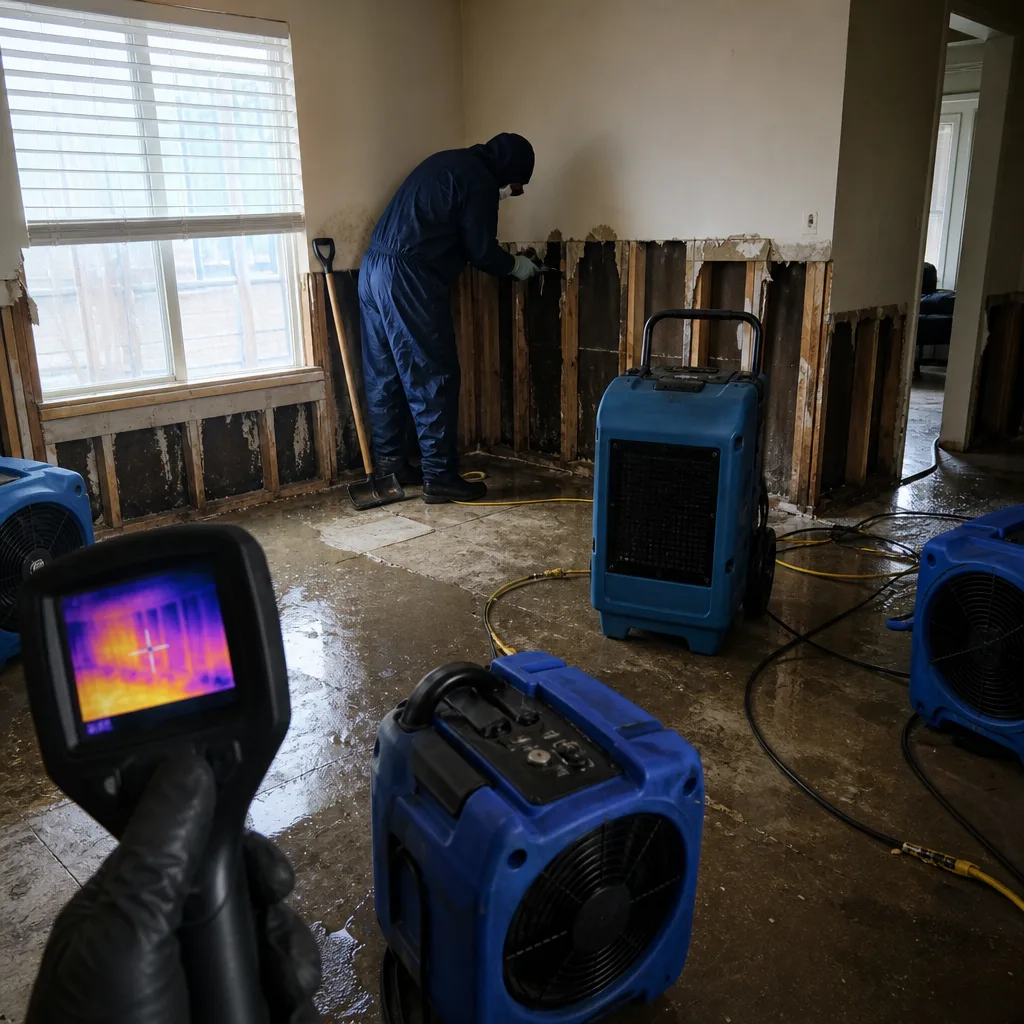 Before
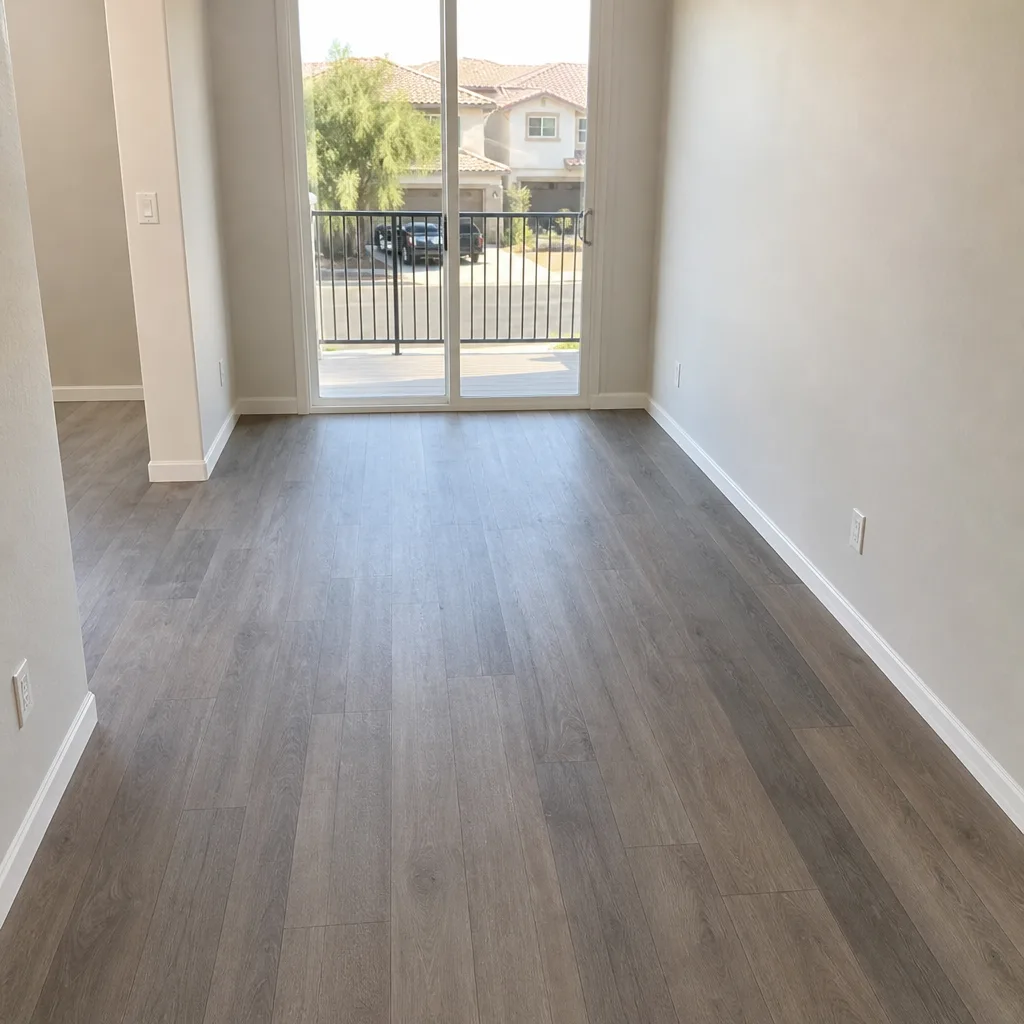 After
AfterDamage Restoration Cost Breakdown: The North Las Vegas Homeowner’s Reference for 2026
The single most disputed line item in Clark County water damage claims in 2024 was not demolition or rebuild. It was equipment rental during the drying phase. Contractors who couldn’t produce daily moisture logs couldn’t prove their dehumidifiers ran as long as billed, and adjusters cut the line item in half. In North Las Vegas, where summer humidity can drop below 10% and winter cold snaps burst copper lines in uninsulated attic spaces, that documentation gap costs homeowners thousands out of pocket. This guide translates the line items on a Xactimate estimate into plain-language cost drivers you can verify yourself, phase by phase, before you sign anything, and points you to warning signs every North Las Vegas homeowner should watch for.
Quick Answer
Water damage restoration in North Las Vegas typically ranges from $3,000 to $18,000 for mitigation and drying, with rebuild costs adding $15 to $65 per square foot depending on materials. The total invoice is driven by three factors: square footage affected, the class of water damage (clean, gray, or black), and whether your contractor documents daily moisture readings to justify each equipment day. Fire and smoke restoration runs higher, from $8,000 to $50,000+, while mold remediation in North Las Vegas averages $2,500 to $7,000 for contained growth in a single area.
Table of Contents
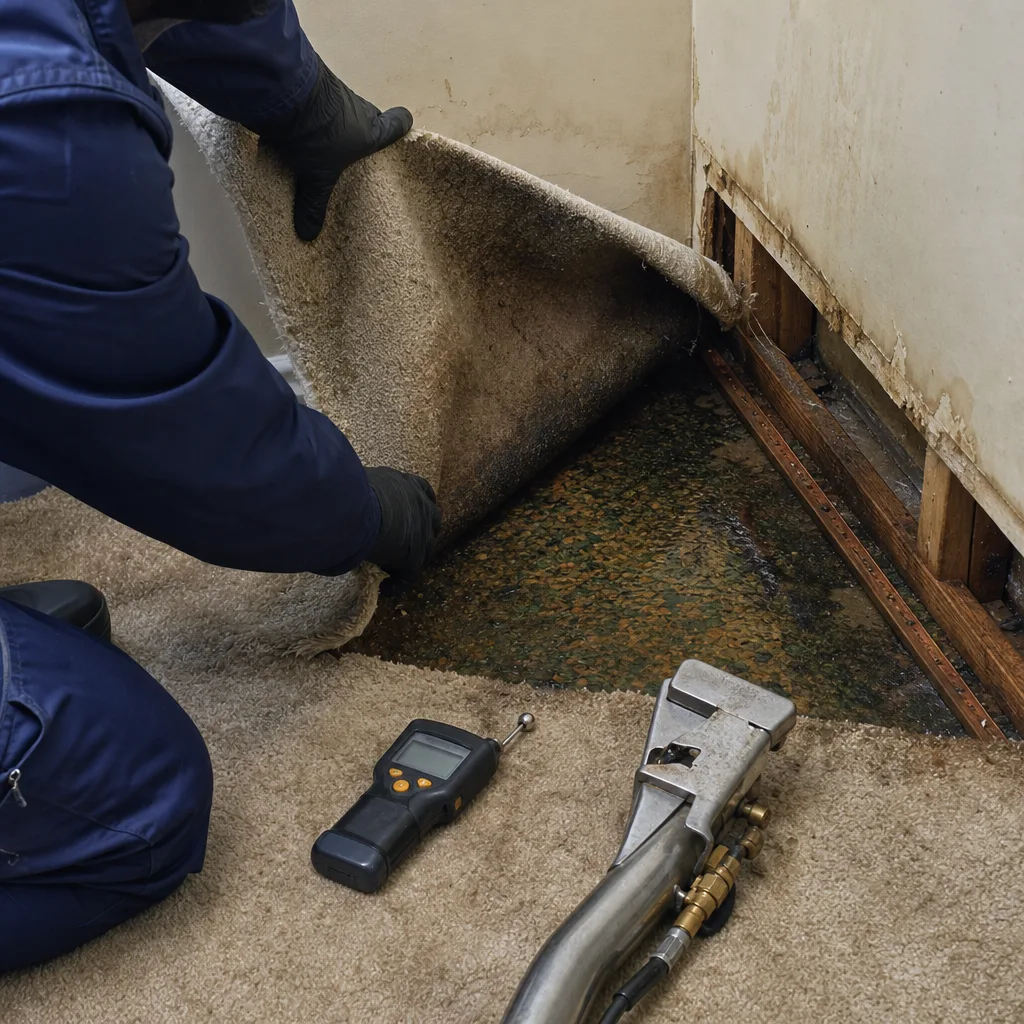
- How Much Does Water Damage Restoration Cost in North Las Vegas?
- Understanding the Four Phases of Restoration Billing
- Equipment Days and Daily Logs: What You’re Actually Paying For
- North Las Vegas Material Variables: Stucco, Tile, and Cabinetry
- Insurance Coverage vs. Out-of-Pocket: What HO-3 Policies Actually Pay
- How to Compare Two Restoration Bids Apples-to-Apples
- Fire, Smoke, and Mold Cost Differences
- Common Mistakes to Avoid
- When to Call a Professional
- Frequently Asked Questions
- The Bottom Line
 Before
 After
AfterHow Much Does Water Damage Restoration Cost in North Las Vegas?
Restoration invoices in North Las Vegas range from $3,000 to $80,000 for what homeowners describe as “the same kind of water damage.” The difference is almost entirely explained by square footage affected, materials present, and whether the drying phase was documented rigorously enough to justify equipment days.
Here are the current per-square-foot ranges we see in the North Las Vegas market, based on 2025-2026 labor rates and material costs:
| Phase | Cost Range (per sq ft) | Typical Total for 1,500 sq ft Affected |
|---|---|---|
| Emergency mitigation (water extraction, initial setup) | $1.50 – $3.00 | $2,250 – $4,500 |
| Structural drying (equipment, monitoring, daily logs) | $2.00 – $4.50 | $3,000 – $6,750 |
| Demolition and disposal (drywall, flooring, insulation) | $1.00 – $2.50 | $1,500 – $3,750 |
| Rebuild and restoration (materials + labor) | $15 – $65 | $22,500 – $97,500 |
These figures assume a Category 1 (clean water) loss with no hazardous materials. Category 2 (gray water, such as dishwasher discharge) adds 20-30% for sanitization. Category 3 (black water, including sewage or flooding from the Las Vegas Wash) can double mitigation costs due to PPE, containment, and specialized disposal requirements.
The North Las Vegas labor market affects these numbers directly. Clark County’s construction sector has recovered from its 2020-2022 contraction, but skilled trades remain tight. A drywall finisher or tile setter who can pass a background check and show up consistently commands $35-48 per hour in 2026, up from $28-38 five years ago. That cost flows through to rebuild estimates.
Neighborhoods matter too. In older areas near Downtown North Las Vegas, homes built before 1990 often have galvanized plumbing, ungrounded electrical, and no moisture barrier between slab and flooring. Each of these conditions adds line items a newer home in Aliante or Eldorado won’t need. We’ve documented $8,000 in additional demo costs on a 1,200-square-foot ranch near Craig Road solely because the original oak flooring was glued directly to concrete with no vapor barrier, requiring full slab grinding before new flooring could install.
Understanding the Four Phases of Restoration Billing
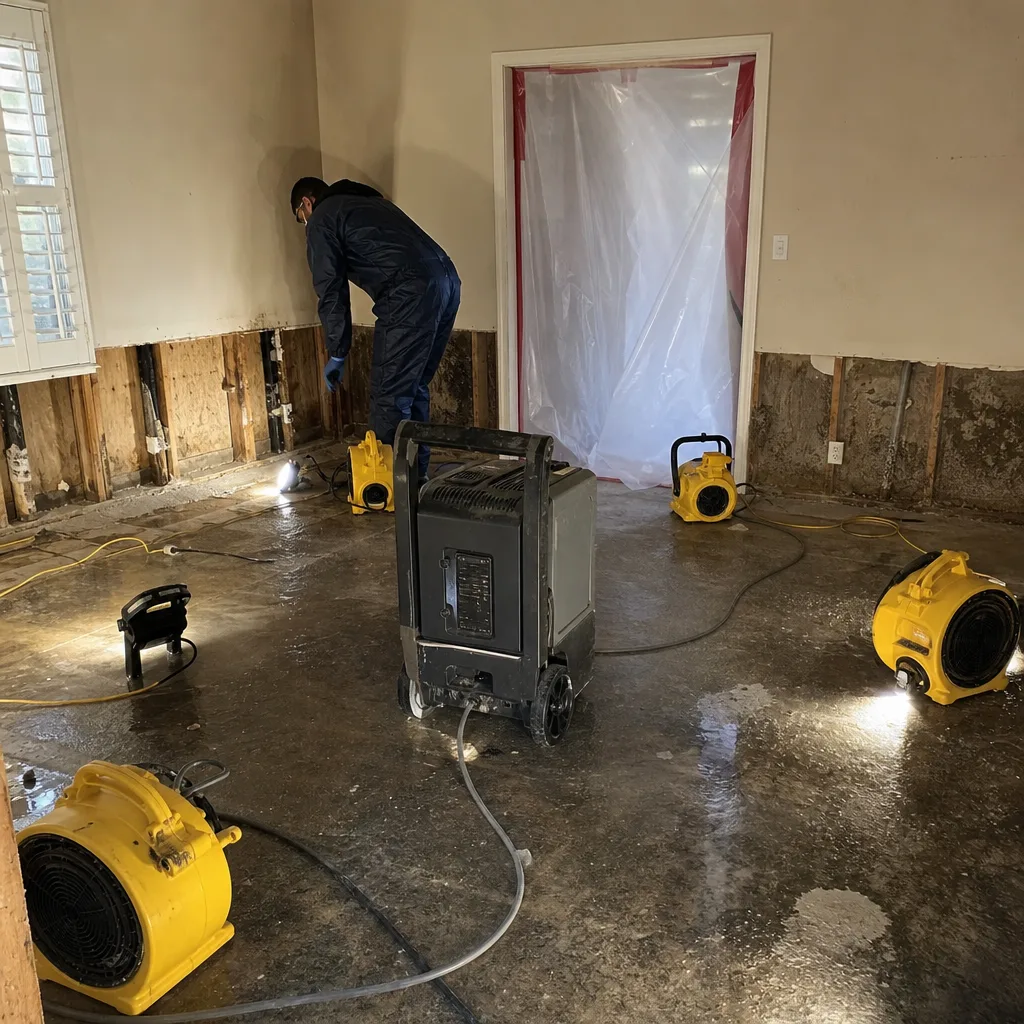
Most homeowners receive a single number and assume it covers everything. In reality, a proper estimate breaks into four distinct phases, each with its own pricing logic and documentation requirements. Understanding this structure protects you from scope creep and helps you verify what you’re paying for, as explained in our DIY vs Professional Damage Restoration guide for North Las Vegas homeowners.
Phase 1: Emergency Mitigation
This is the work done in the first 4-24 hours: water extraction, content manipulation, initial moisture mapping, and equipment placement. Billing is typically time-and-materials plus a service call fee. In North Las Vegas, expect:
- Service call and initial assessment: $150-$350
- Water extraction (per square foot): $0.75-$1.50
- Content manipulation (moving furniture, blocking): $45-$85 per hour per technician
- Initial antimicrobial application (if needed): $0.25-$0.50 per square foot
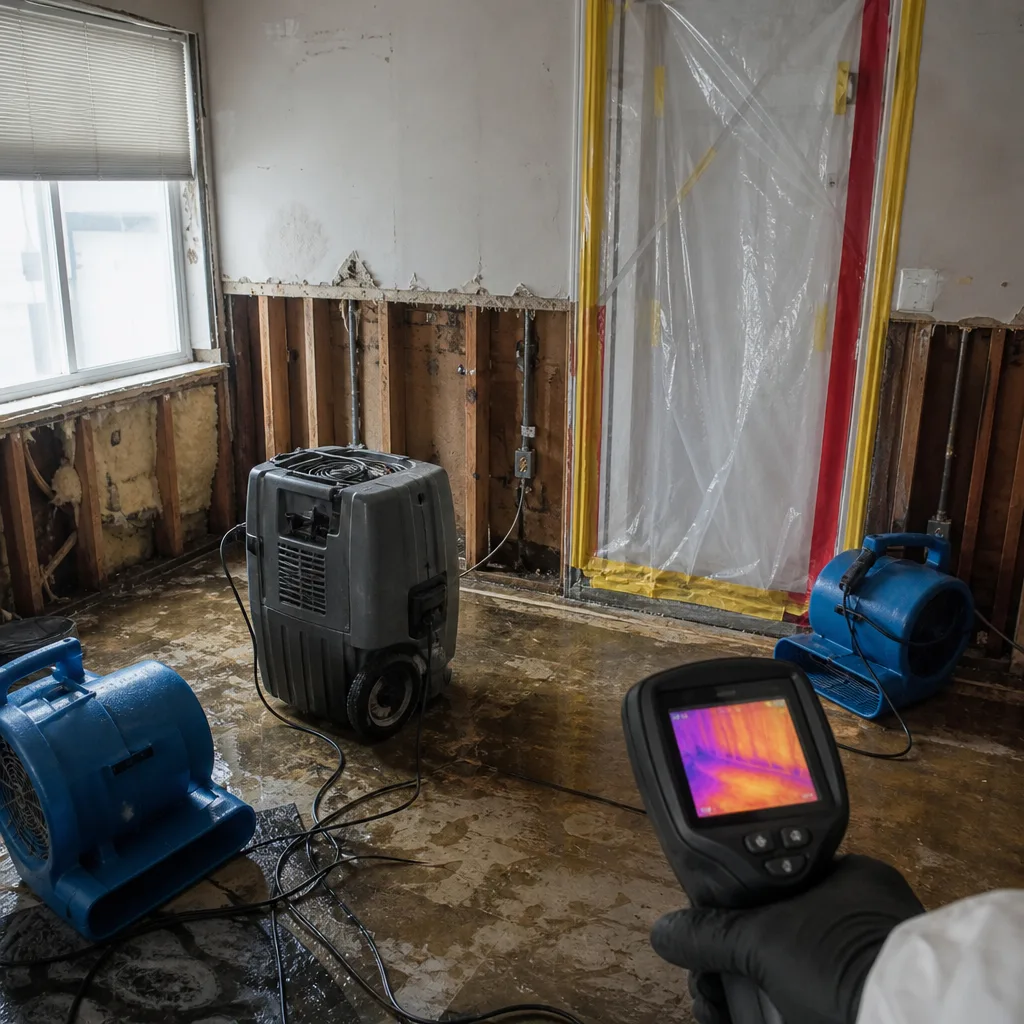
The key document here is the moisture map, a floor plan showing readings from a calibrated pin or pinless meter at multiple points. If your contractor can’t produce this at the end of Day 1, you have no baseline to prove drying progress.
Phase 2: Structural Drying
This is where disputes happen. Drying continues until materials return to within 2-4 percentage points of their documented dry standard, typically 3-5 days for standard losses, 7-14 days for complex assemblies. Billing is per equipment day, with each unit’s runtime logged.
Standard rates in North Las Vegas:
- Low-grain refrigerant (LGR) dehumidifier: $85-$150 per day
- Axial or centrifugal air mover: $25-$45 per day
- Negative air machine (for containment): $65-$110 per day
- Desiccant dehumidifier (for large commercial or hardwood drying): $200-$400 per day
Under Haven Standard, Clause 1, we deliver a written price before any work starts, including projected equipment days. If drying extends beyond projection, the reason is documented with new moisture readings, not added verbally.
Phase 3: Demolition and Disposal
Not every loss requires demo. Category 1 water caught within 24 hours, with no insulation involvement, often dries in place. But when drywall wicks above the water line, when particleboard cabinetry swells, or when fiberglass insulation compresses, removal is necessary.
Demo pricing includes:
- Removal and disposal of affected materials: $1.00-$2.50 per square foot
- Hazardous material handling (asbestos, lead): additional $3-$8 per square foot, with mandatory third-party clearance
- HEPA vacuuming and surface cleaning post-demo: $0.50-$1.00 per square foot
North Las Vegas homes in the 210 corridor and near the Apex Industrial Park built between 1950 and 1980 have elevated asbestos risk in flooring mastic, popcorn ceilings, and HVAC duct insulation. Testing runs $250-$450 per sample, with 2-hour turnaround available from local labs. Never skip this step; improper abatement triggers EPA fines and voids insurance coverage.
Phase 4: Rebuild and Restoration
This phase returns the space to pre-loss condition. Unlike mitigation, which is urgent and time-sensitive, rebuild is scheduled, scoped, and priced in writing like any remodeling project. No same-day promises apply here. Materials are ordered, subcontractors coordinated, and inspections scheduled.
Typical North Las Vegas rebuild costs:
- Drywall (hang, tape, texture, prime): $2.50-$5.50 per square foot
- Paint (two coats, standard ceiling): $1.50-$3.00 per square foot
- Luxury vinyl plank flooring (material + install): $6.00-$12.00 per square foot
- Porcelain tile flooring (material + install, including subfloor prep): $10.00-$18.00 per square foot
- Kitchen cabinetry (mid-grade, per linear foot): $400-$800
- Base and case trim (paint-grade): $3.50-$6.00 per linear foot
Equipment Days and Daily Logs: What You’re Actually Paying For
An “equipment day” means a dehumidifier, air mover, or other drying unit ran for a 24-hour period at your property. The charge covers electricity consumption, depreciation, maintenance, transport, and the technician’s time to monitor and reposition equipment. What it should also cover is documentation, though many contractors treat this as optional.
Here’s what a legitimate daily log includes, and what you should request on Day 1:
- Psychrometric data - the temperature and relative humidity readings at the dehumidifier’s intake and exhaust, plus the specific humidity calculation. This tells you whether the machine is actually removing moisture or just recirculating air.
- Moisture content readings - taken with a calibrated pin or pinless meter at the same locations as the initial moisture map, showing progression toward the dry standard. Wood framing should read below 16%; drywall below 1% above its documented baseline.
- Equipment inventory - serial numbers or asset tags for each unit, confirming the LGR dehumidifier billed as a Dri-Eaz or Phoenix unit is actually on site, not a rental-house generic.
- Technician signature and timestamp - not a checkbox, but a named individual who can be questioned if readings don’t progress.
- Photo documentation - dated images of equipment placement, moisture meter displays, and any changes to the drying environment.
Without these five elements, an adjuster can challenge every equipment day. We’ve reviewed competitor invoices where 12 days of dehumidifier rental were billed with no logs at all. The adjuster paid for 4 days. The homeowner absorbed the rest, or faced collections.
The drying process itself follows established science. An LGR dehumidifier works by pulling air across a cooled coil, condensing water vapor into liquid that drains away. The “low-grain” designation means it can achieve lower specific humidity than standard refrigerant units, critical in North Las Vegas where outdoor air in July holds minimal moisture but indoor conditions after a slab leak can sustain hidden humidity in wall cavities. Air movers create vapor pressure differential, the force that drives moisture from wet materials into the air where the dehumidifier can capture it. Tertiary drying, the final phase where materials read near their target, often requires reducing air mover count while maintaining dehumidification to prevent over-drying and cracking.
Equipment from Dri-Eaz, Phoenix, and XPOWER carries higher rental rates than generic units because their output is documented and verifiable. A Phoenix 200 HT LGR produces 130 pints per day at AHAM conditions, a number printed on the spec sheet and referenced in Xactimate pricing. When your contractor names the equipment brand in the estimate, you can verify the daily rate against published rental tariffs.
North Las Vegas Material Variables: Stucco, Tile, and Cabinetry
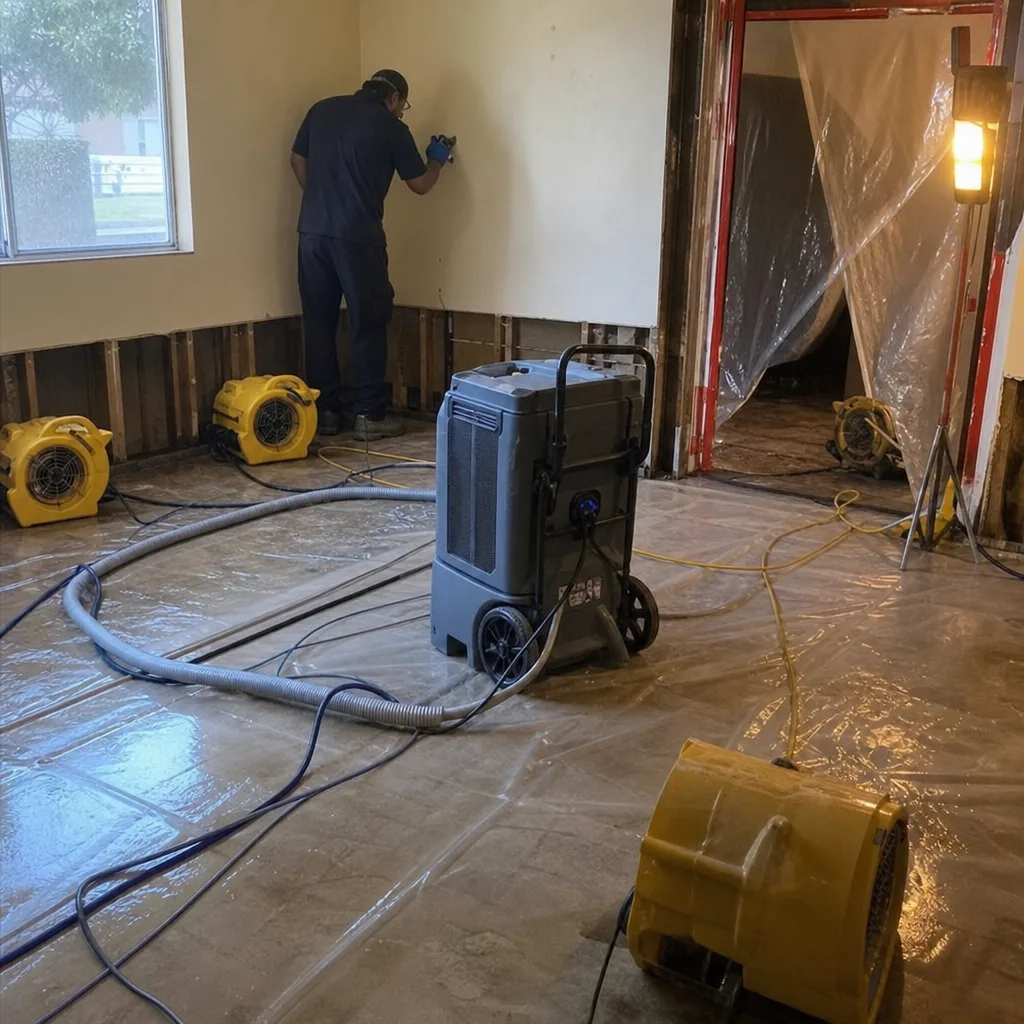
Restoration costs in North Las Vegas diverge from national averages because of how homes here are built. The desert climate, local code history, and dominant architectural styles create cost drivers that don’t appear in generic cost guides.
Stucco Exterior, Drywall Interior
Most North Las Vegas homes from the 1990s forward use one-coat or three-coat stucco over foam board and lath. When water intrusion reaches the exterior wall, stucco must be removed to access and dry the framing, then reapplied with proper curing time. Stucco repair runs $8-$15 per square foot in North Las Vegas, compared to $4-$8 for vinyl siding replacement in humid-climate markets. A single-story home with 2,000 square feet of affected exterior wall can see $16,000-$30,000 in stucco work alone.
The issue is moisture retention. Stucco is porous and designed to breathe, but when the water-resistive barrier behind it fails, water becomes trapped against OSB or plywood sheathing. In North Las Vegas, where summer temperatures exceed 110°F, this trapped moisture creates a steam-cooking effect that degrades structural integrity faster than in cooler climates. We’ve opened walls in the Aliante area where sheathing was crumbly after 72 hours of contact, requiring full replacement rather than drying.
Tile Subfloor Conditions
Tile is ubiquitous in North Las Vegas homes, from entry-level builds to custom estates. The subfloor beneath it determines whether a water loss becomes a simple extraction or a full demo. There are three common assemblies:
- Tile over cement backer over plywood subfloor: Water wicks laterally through backer joints. If caught quickly, drying from below may save the assembly. Cost: $3-$5 per square foot for mitigation, $12-$18 for rebuild if tile must be replaced.
- Tile over mud bed (mortar bed) over concrete slab: Common in 1980s-1990s builds. The mud bed acts as a reservoir, holding water for weeks. Full removal is usually required. Cost: $15-$25 per square foot for demo and replacement, plus slab drying time.
- Tile over DITRA or similar uncoupling membrane: Newer installations. The membrane limits lateral wicking but can trap water at the slab interface. Case-by-case assessment required.
In the Canyon Ridge and Shadow Creek areas, we’ve seen mud-bed tile failures from slab leaks where the homeowner’s first sign was efflorescence (white mineral deposits) appearing through grout joints six weeks after the leak was “fixed.” The water had never left the mud bed.
Cabinetry and Built-Ins
North Las Vegas kitchens trend large, with extensive cabinetry and island assemblies. Particleboard cabinet boxes, standard in production homes through 2015, swell and delaminate upon water contact. Replacement costs run $400-$800 per linear foot for mid-grade painted or stained wood, with 6-10 week lead times for semi-custom orders.
Solid plywood boxes, found in higher-end homes and most post-2018 builds, can often be dried in place if water exposure is brief. The difference in restoration cost between a particleboard kitchen and a plywood kitchen in a 200-square-foot kitchen can exceed $15,000.
Insurance Coverage vs. Out-of-Pocket: What HO-3 Policies Actually Pay
Most North Las Vegas homeowners carry an HO-3 policy, the standard “special form” coverage. Understanding what it covers, what it excludes, and how deductibles apply prevents the shock of a denied claim.
Covered Perils (Typical)
- Accidental discharge or overflow of water from plumbing, heating, or air conditioning
- Sudden and accidental tearing apart, cracking, burning, or bulging of a steam or hot water heating system
- Freezing of plumbing (if reasonable care was taken to maintain heat)
- Fire and smoke damage, including water used in suppression
Common Exclusions in North Las Vegas
- Gradual damage: The slow leak under a slab that went unreported for months. Insurers argue the homeowner failed to mitigate. Documentation of when you discovered the damage, and what you did next, is critical.
- Flood: Water from outside the home, including the Las Vegas Wash, street flooding during monsoon events, or groundwater rise. Separate flood insurance through NFIP or private market required.
- Sewer backup: Unless you purchased a specific rider, backup from municipal lines is excluded. In North Las Vegas, where aging infrastructure in older neighborhoods combines with intense storm events, this gap is significant. A sewer backup rider typically costs $50-$150 annually and covers $5,000-$25,000 in damage.
- Foundation and slab: The slab itself is not covered, only the damage caused by water escaping from it. If a slab leak requires tunneling or foundation repair, that’s often a separate claim or out-of-pocket expense.
How Deductibles Work
Your deductible applies to the total claim, not per phase. A $2,500 deductible on a $12,000 mitigation and rebuild claim means you pay $2,500, insurance pays $9,500. But if your contractor can’t document that equipment days were necessary, and the adjuster cuts $3,000 from the drying phase, you may absorb that reduction plus your deductible.
Photo documentation and direct adjuster coordination matter here. When we handle a claim, we provide the adjuster with the same moisture logs, photo records, and written scopes we give the homeowner. The invoice matches the documentation, and disputes drop sharply. We’ve had adjusters tell us explicitly that our files require less review time because the evidence is organized to their workflow.
How to Compare Two Restoration Bids Apples-to-Apples
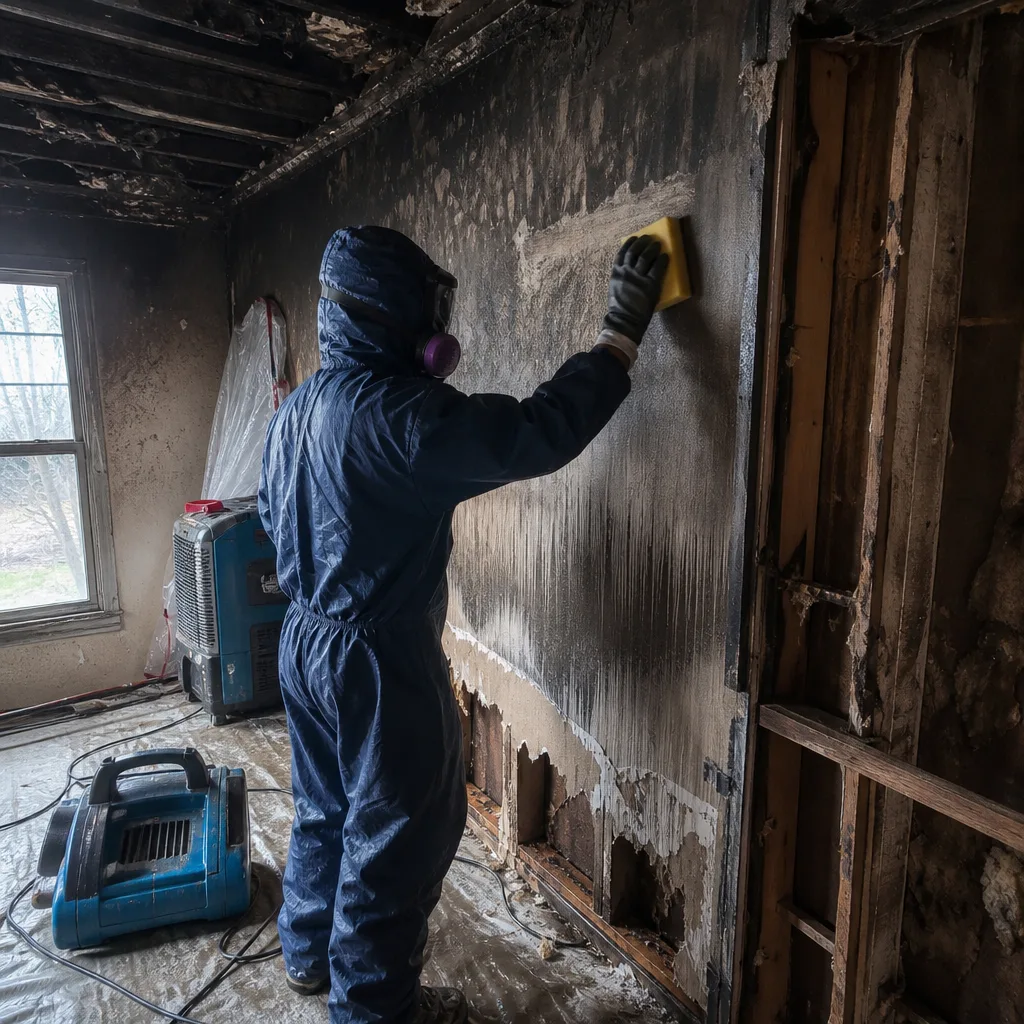
Homeowners often receive bids that differ by 40% or more and have no framework to evaluate why. Here’s how to line them up.
- Match the scope, not the total. One bid may include rebuild; another may stop at “dry and demo.” Verify each phase is represented in both estimates.
- Check equipment counts and projected days. A bid with 3 air movers for 1,500 square feet is under-equipped; 12 is excessive. Industry standard is 1 air mover per 50-70 square feet of affected area, plus 1 LGR dehumidifier per 8-10 air movers.
- Verify material specifications. “Replace flooring” means nothing. Is it LVP, tile, engineered hardwood, or carpet? What grade? With what underlayment?
- Ask for the moisture dry standard. A legitimate contractor can tell you the target moisture content for each material and how they’ll measure it. Vague answers mean no documentation plan.
- Confirm who handles the adjuster. Will the contractor meet the adjuster on site? Provide Xactimate-format estimates? Accept assignment of benefits? These services have value; their absence has cost.
- Review the change-order policy. Haven Standard, Clause 1 requires a written price before work begins with no scope-creep additions. If a bid includes language about “additional work as needed at prevailing rates,” you’re exposed.
What a lower bid often omits: daily monitoring visits (some contractors bill equipment days without checking the site), proper containment for Category 2 or 3 water, HEPA air scrubbing during demo, and detailed photo documentation. Each of these cuts cost upfront and creates exposure later, either in extended dry times, health complaints, or claim disputes.
We’ve provided free second opinions on competitor estimates where the lower bid saved $2,000 initially but would have cost $6,000 more in uncovered equipment days and change orders. The homeowner’s net was worse, and their documentation weaker.
Fire, Smoke, and Mold Cost Differences
While water damage dominates our call volume in North Las Vegas, fire and mold present distinct cost structures worth understanding.
Fire and Smoke Damage Restoration
Fire & Smoke Damage Restoration in North Las Vegas ranges from $8,000 for a contained kitchen grease fire with light smoke to $50,000+ for a structure fire with extensive soot and water damage from suppression. Key cost drivers:
- Soot type: Protein fires (burned food) create nearly invisible, extremely pungent residues that require specialized cleaning agents and thermal fogging. Cost: $1,500-$3,500 per room.
- Synthetic smoke: From plastics and petroleum products, these residues are acidic and corrosive, requiring immediate surface cleaning to prevent etching of metals and glass. Delay adds replacement costs.
- Water from suppression: Often 5,000-15,000 gallons for a structure fire, adding full water damage mitigation to the fire scope.
- HVAC contamination: Smoke travels through ductwork. Cleaning runs $400-$800 per zone; replacement of flex duct, common in North Las Vegas attic installations, runs $8-$15 per linear foot.
In North Las Vegas, where many homes have open floor plans and high ceilings popularized in 2000s construction, smoke travels farther and affects more square footage than in compartmentalized older homes. A fire in the great room of a Aliante home can require cleaning in three bedrooms and two baths due to shared HVAC and open stairwells.
Mold Remediation
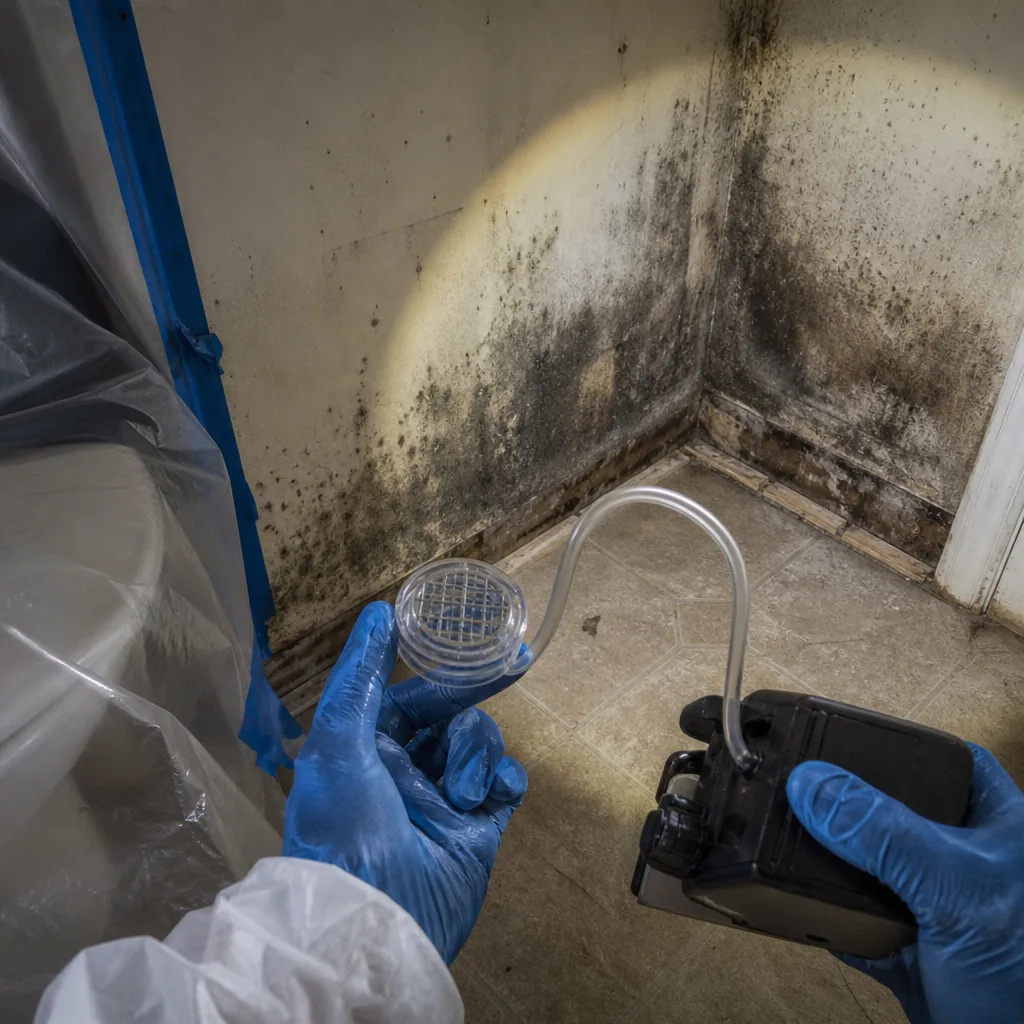
Mold Remediation in North Las Vegas averages $2,500-$7,000 for contained growth in a single area, such as a bathroom or under a kitchen sink. Whole-house remediation from long-term moisture intrusion can exceed $30,000.
North Las Vegas presents specific mold considerations. The desert climate means outdoor mold spore counts are generally low, but indoor conditions created by evaporative cooling, slab moisture, and construction moisture in new builds can sustain growth. We’ve found significant mold in:
- Homes with swamp coolers converted to refrigerated air, where abandoned ductwork traps moisture
- New construction in master-planned communities, where “drying in” during monsoon season left framing wet for weeks
- Slab-on-grade homes with failed perimeter drainage, creating capillary moisture at wall bases
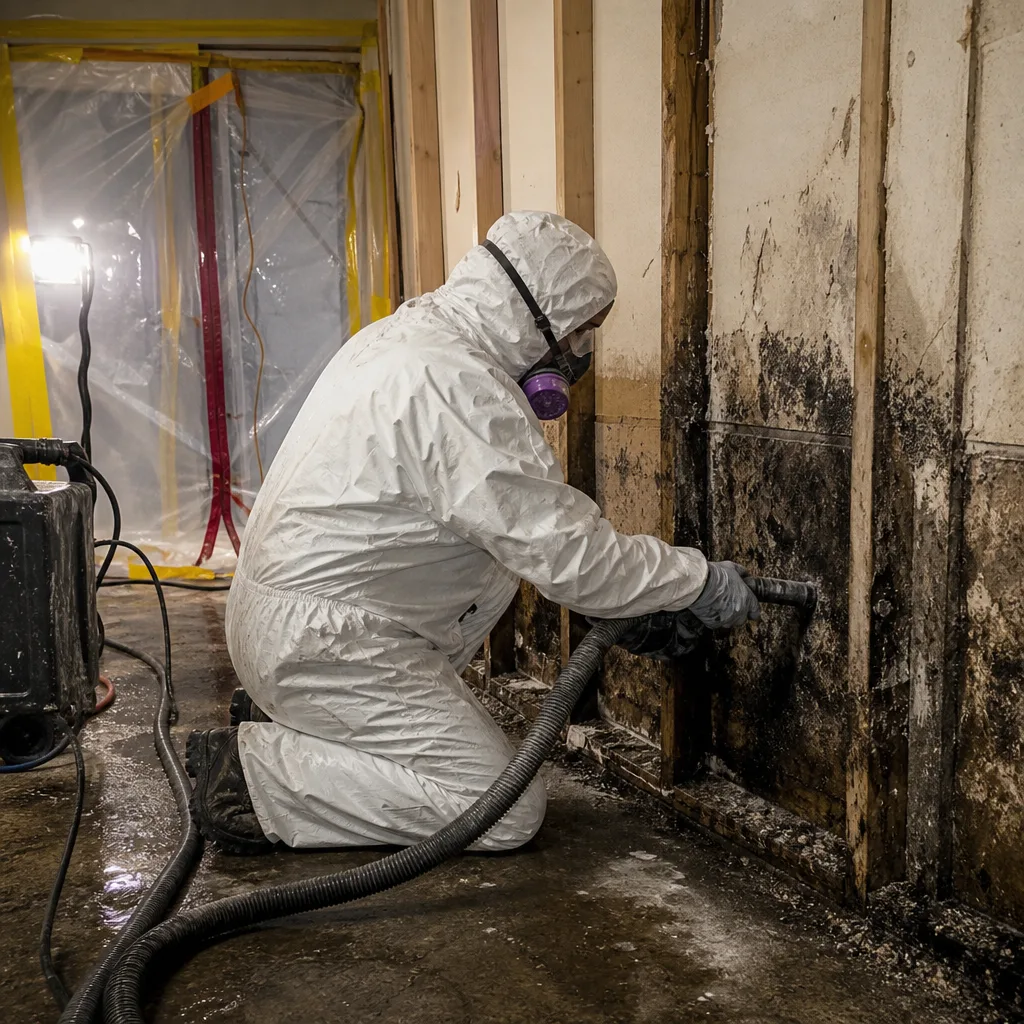
Remediation pricing includes containment (plastic barriers, negative air pressure), HEPA filtration, removal of affected materials, cleaning of semi-porous items, and post-remediation verification testing. The last item, often skipped in low bids, runs $400-$800 and is essential for insurance documentation and resale disclosure.
Common Mistakes to Avoid
- Waiting for the insurance adjuster before starting mitigation. In North Las Vegas summer heat, mold growth begins in 24-48 hours. Your policy requires you to mitigate further damage. Document everything, start drying, and let the adjuster review the documentation.
- Accepting a single blended estimate without phase breakdown. You can’t verify what you’re paying for if water extraction, drying, demo, and rebuild are lumped together. Demand line-item detail.
- Ignoring the equipment documentation. Daily logs are not a nice-to-have; they’re the evidence that justifies your invoice to the adjuster. If your contractor’s “log” is a handwritten note on a carbon form, you’re exposed.
- Assuming flood damage is covered. The 2023 and 2024 monsoon seasons caused street flooding in North Las Vegas neighborhoods near the Las Vegas Wash, including portions of Craig Ranch and Valley Verde. Standard HO-3 policies excluded this damage. Verify your flood coverage separately.
- Choosing the lowest bid without checking what’s omitted. We’ve reviewed bids that excluded moisture mapping, antimicrobial application, HEPA vacuuming, and final inspection. Each omission saves the contractor money and transfers risk to you.
- Failing to verify asbestos before demo in pre-1990 homes. The fine for improper asbestos disturbance in Clark County starts at $10,000 plus cleanup costs. The test costs $250-$450. This is not a corner to cut.
- Not getting rebuild scope in writing before demo starts. It’s harder to negotiate replacement specifications when your kitchen is already in a dumpster. Separate the mitigation and rebuild contracts if needed to maintain leverage.
When to Call a Professional
Call for professional assessment when water affects more than a single small area you can dry with household fans, when the source is unknown or recurring, when you smell mustiness or see visible mold, or when any fire or smoke damage has occurred. Safety considerations apply: Category 2 or 3 water, electrical panels or outlets in contact with water, and any structural compromise from fire or water require trained technicians with proper PPE and equipment.
DryMark Restoration North Las Vegas offers free estimates in North Las Vegas. Our assessment includes a moisture map, a written scope with line-item pricing, and a photo record of conditions as found. Call (725) 726-3239 to schedule. We also provide a free second opinion on any competitor’s written estimate, with no obligation. Explore more guides & resources on protecting your North Las Vegas home.
Frequently Asked Questions
Mitigation and drying typically cost $3.50 to $7.50 per square foot combined, with rebuild adding $15 to $65 per square foot depending on materials. A 1,500-square-foot affected area with standard drywall and carpet replacement usually totals $12,000 to $28,000 all phases included. Call (725) 726-3239 for an exact quote on your specific loss, estimates are free.
Most HO-3 policies cover sudden and accidental water damage from plumbing failures, but exclude gradual leaks, flooding, and sewer backup without a rider. Your deductible applies to the total claim. The key to coverage is documentation of the event’s sudden nature and your prompt mitigation effort. We coordinate directly with adjusters and provide the photo records and moisture logs that support payable claims.
For active water losses, DryMark Restoration North Las Vegas maintains live phone coverage 24 hours a day, 7 days a week with no voicemail on emergency lines. Dispatch for water damage mitigation typically occurs within 1-2 hours for North Las Vegas addresses. Rebuild and reconstruction work is scheduled, not dispatched, and is scoped and priced in writing before scheduling.
Visible mold growth exceeding 10 square feet, or any growth in HVAC systems, requires professional remediation with containment and negative air pressure. Small surface spots in a shower corner may be cleanable with proper antimicrobial agents and moisture source correction. We assess with moisture mapping and air sampling when indicated, then recommend based on findings, not assumptions. Call (725) 726-3239 for evaluation.
We do, as part of our standard service. Our documentation, drying logs, and photo records are formatted to adjuster workflow. We meet adjusters on site when possible, provide Xactimate-format estimates on request, and explain line items as needed. This coordination reduces claim disputes and speeds payment. Homeowners remain the policyholder and final decision-maker throughout.
Differences usually trace to scope definition (what’s included), equipment counts and projected days, material specifications, and documentation standards. A lower bid may omit daily monitoring, proper containment, or detailed photo records. We provide free second opinions on any competitor’s written estimate to help you identify what’s actually covered. Call (725) 726-3239 to schedule.
The Bottom Line
Restoration costs in North Las Vegas are knowable and verifiable when you understand the four phases of billing, demand equipment documentation, and compare bids by matching line items rather than totals. The difference between a $3,000 and $18,000 water damage invoice for the same square footage is explained by class of water, materials affected, and whether daily moisture logs justify each equipment day. The difference between a paid claim and a disputed one is documentation: the photo record, the written scope, and the drying log that turns restoration work into evidence an adjuster can approve. At DryMark Restoration North Las Vegas home, we built our process around this gap, because we’ve seen what its absence costs homeowners.
Written by Alicia Brennan, Owner at DryMark Restoration North Las Vegas, serving North Las Vegas since 2011.