
Last updated September 23, 2026
Free visual inspection and a written scope of work before any mitigation begins - photos, moisture readings, and drying logs go in your claim file
The scope we write is the scope we bill. Anything new gets shown to you, in writing, before we touch it.
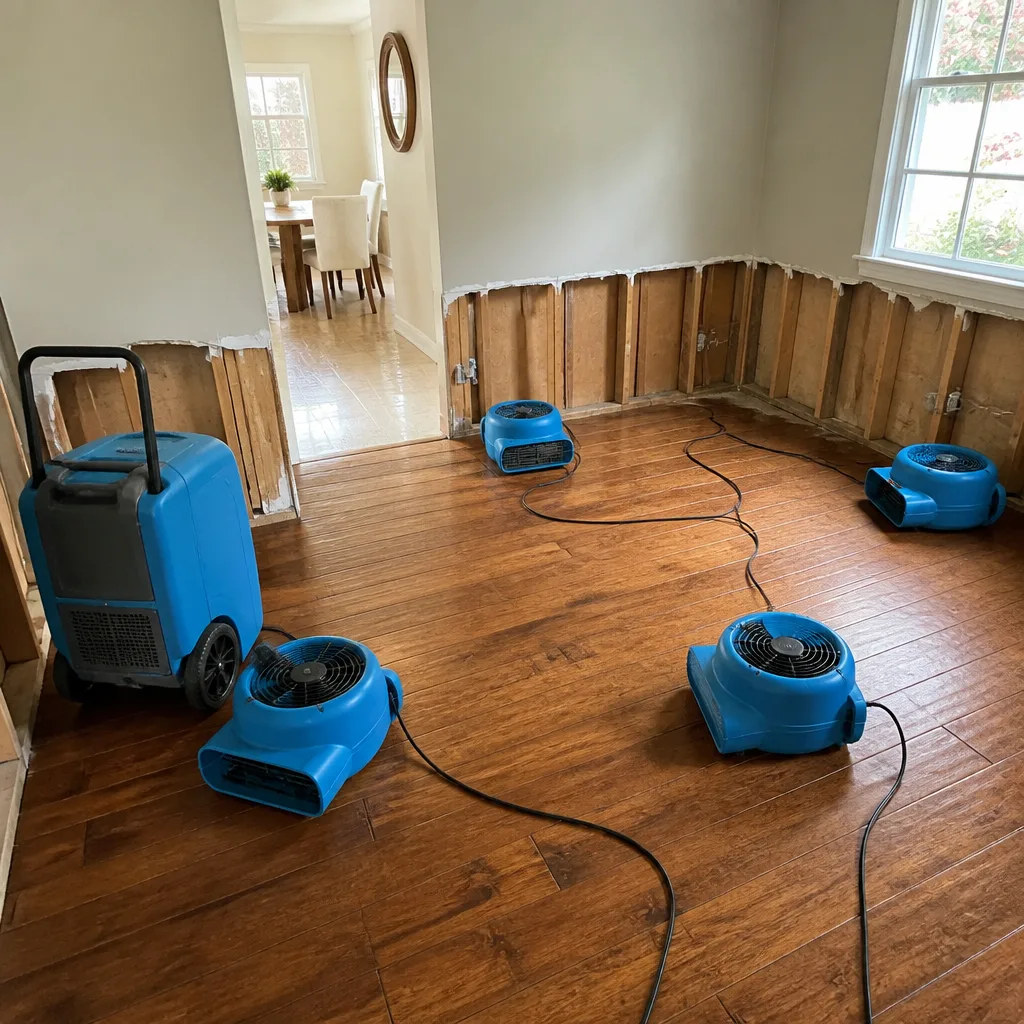
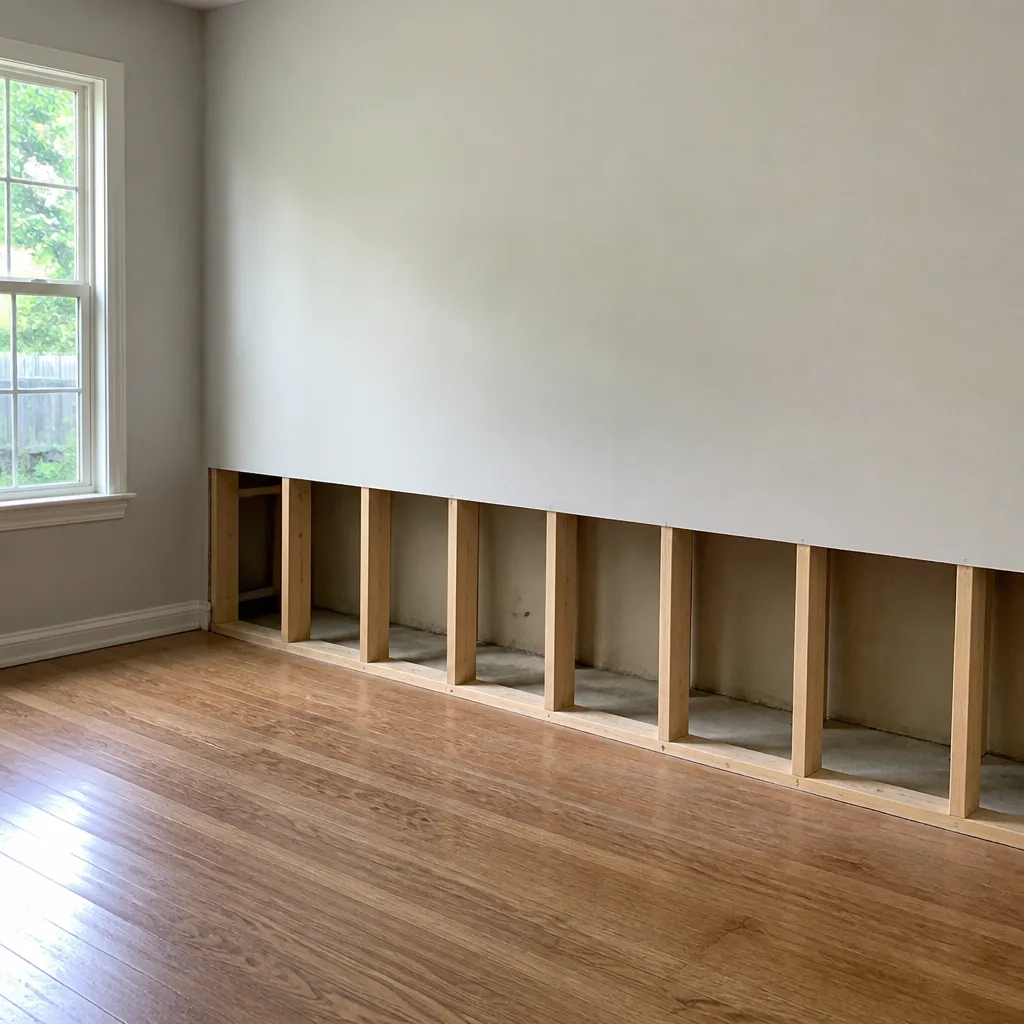
 Before
 After
After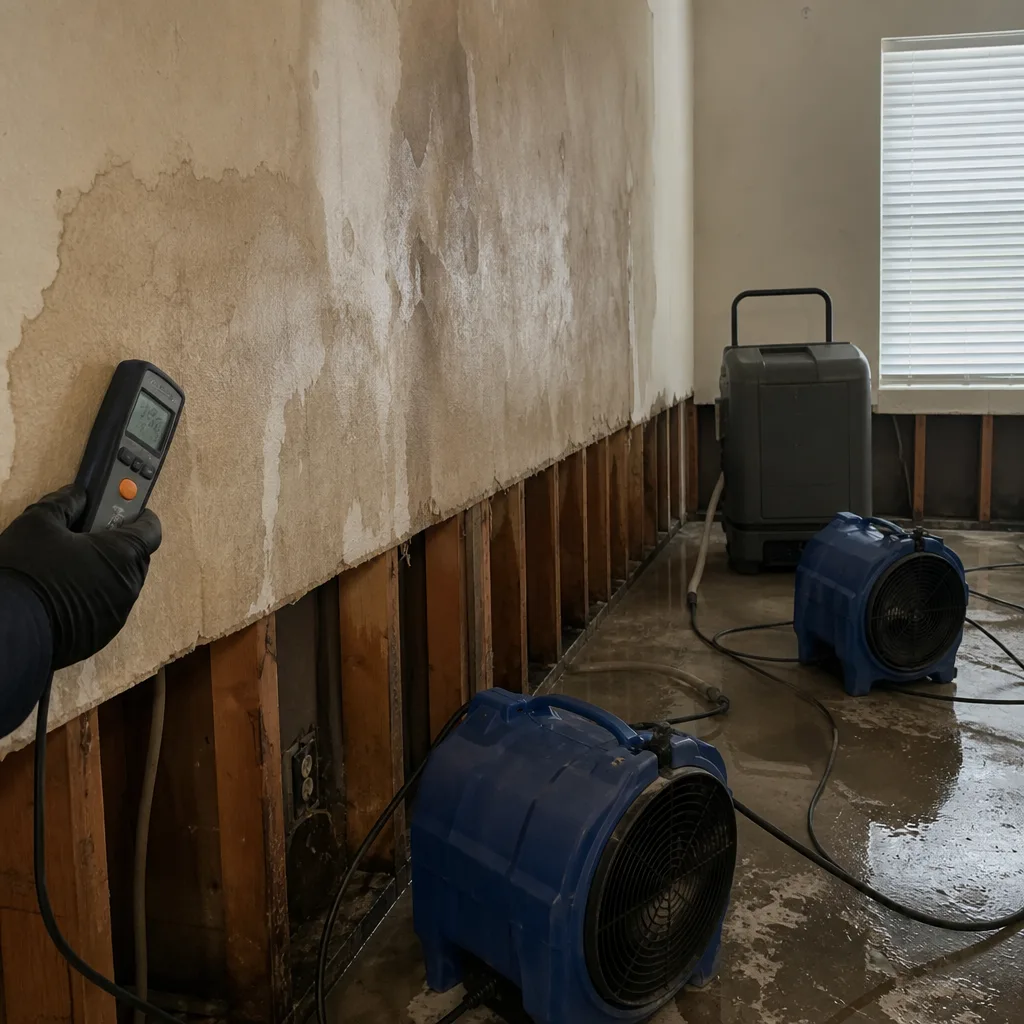 Before
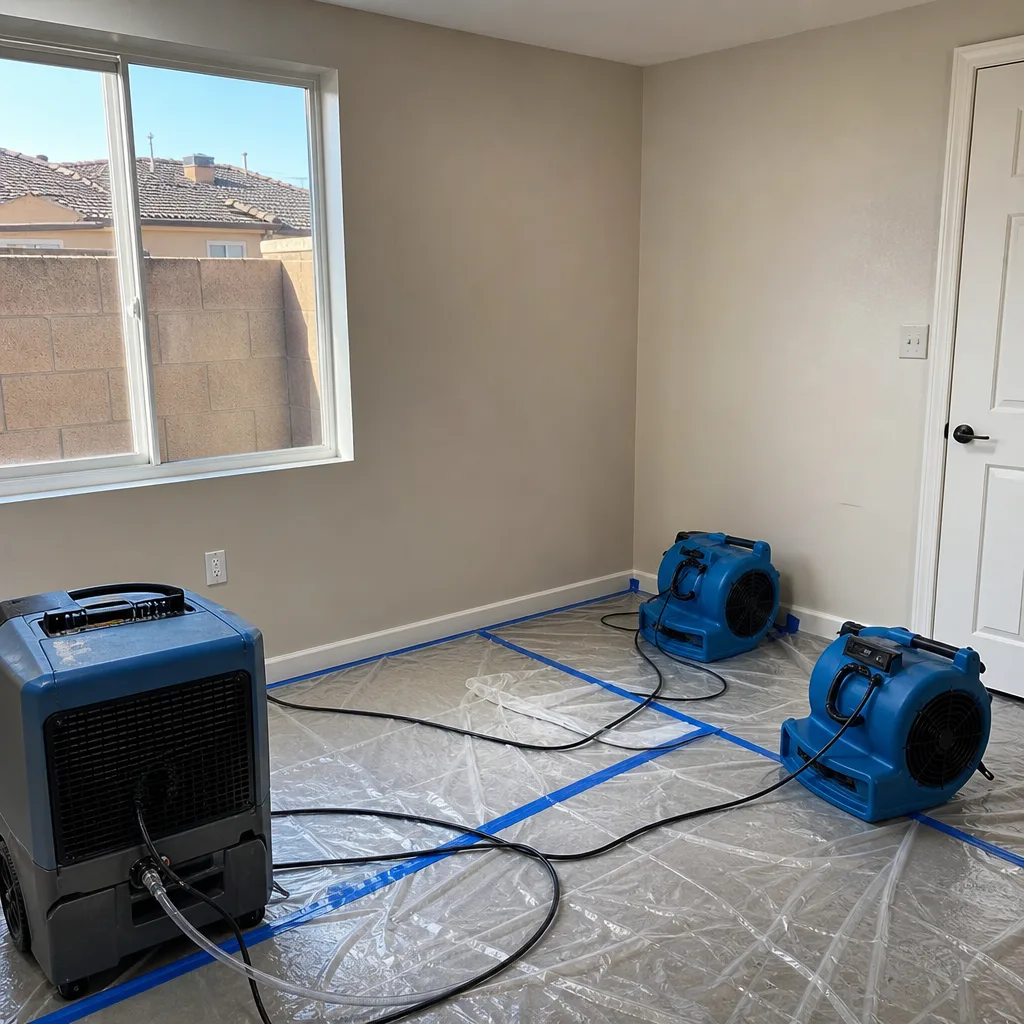 After
After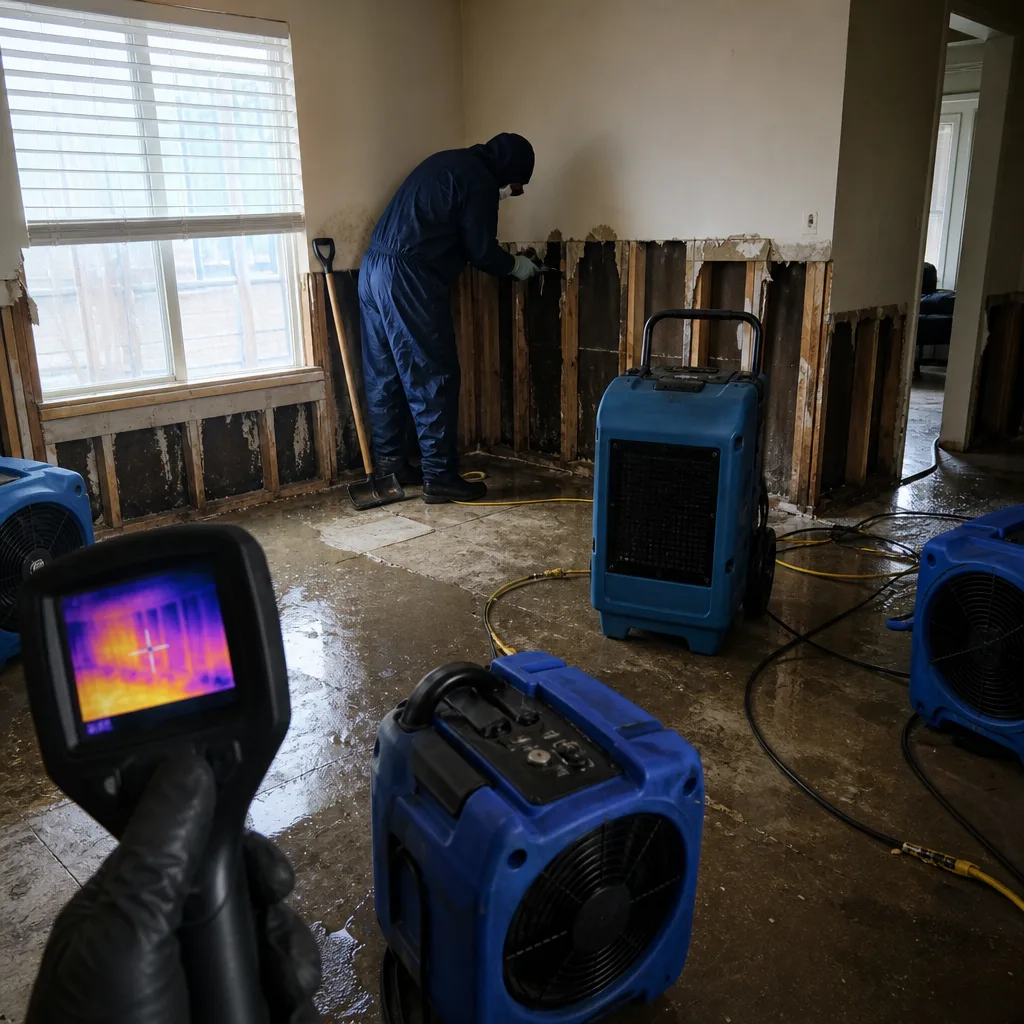 Before
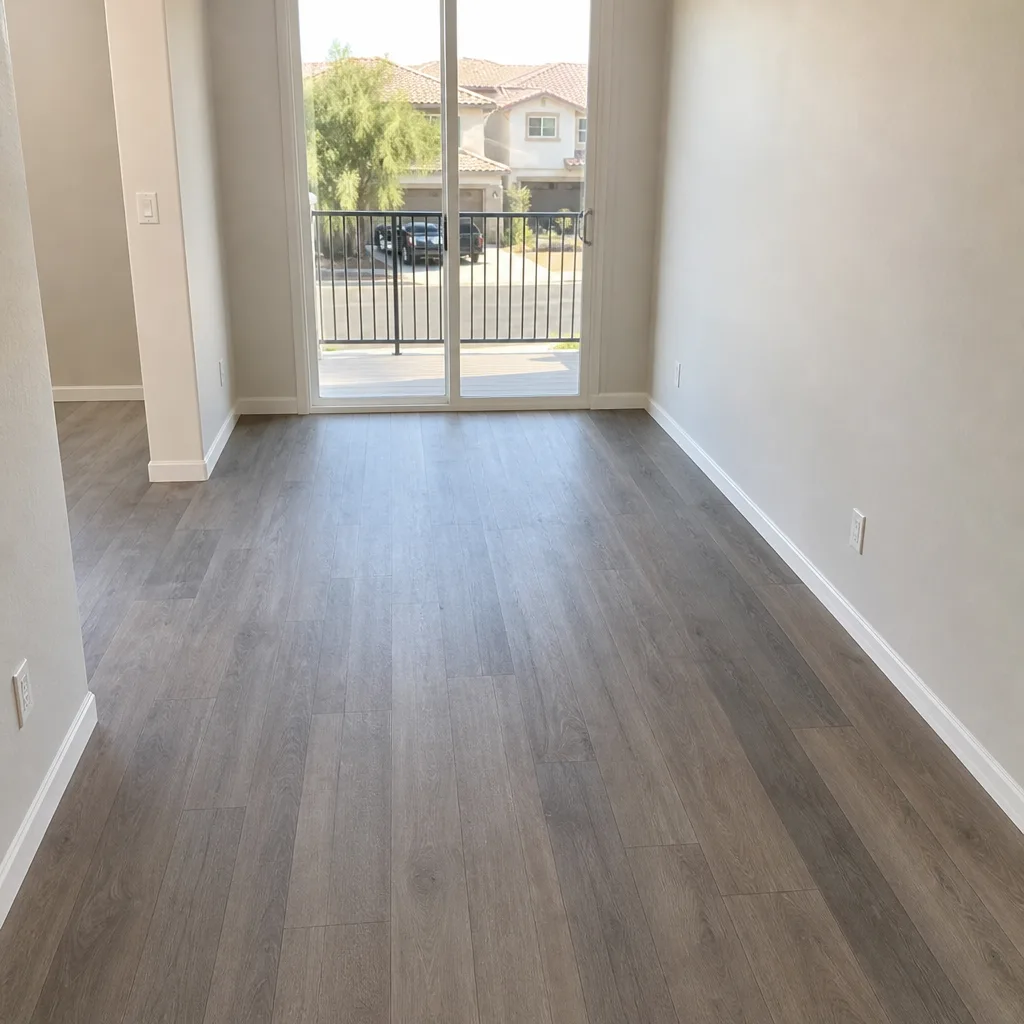 After
AfterThe Complete Guide to Damage Restoration in North Las Vegas
Insurance adjusters deny or reduce restoration claims not because the damage wasn’t real, but because the contractor’s file couldn’t prove it. No moisture logs, no pre-demo photos, no written scope. That gap costs Nevada homeowners thousands every year, and in North Las Vegas, where summer humidity drops below 20% RH, contractors who don’t document drying conditions against desert baselines leave money on the table that carriers won’t replace. This guide maps every phase of restoration to the specific records a carrier requires, so you can audit the process before the invoice arrives. For Damage Restoration Warning Signs: A North Las Vegas Homeowner’s Reference Guide, see our companion resource.
Quick Answer
Damage restoration in North Las Vegas is the documented process of returning a property to pre-loss condition after water, fire, mold, or biohazard events, with each phase, mitigation, demolition, drying, and rebuild, producing specific records that insurance carriers require for payment. A complete restoration file includes moisture logs, photo documentation, written scopes, and equipment placement maps, all formatted to IICRC standards and Nevada contractor regulations. In North Las Vegas’s arid climate, proper documentation of vapor pressure differential and tertiary drying phases prevents the claim disputes that arise when carriers question whether drying was actually completed.
Table of Contents
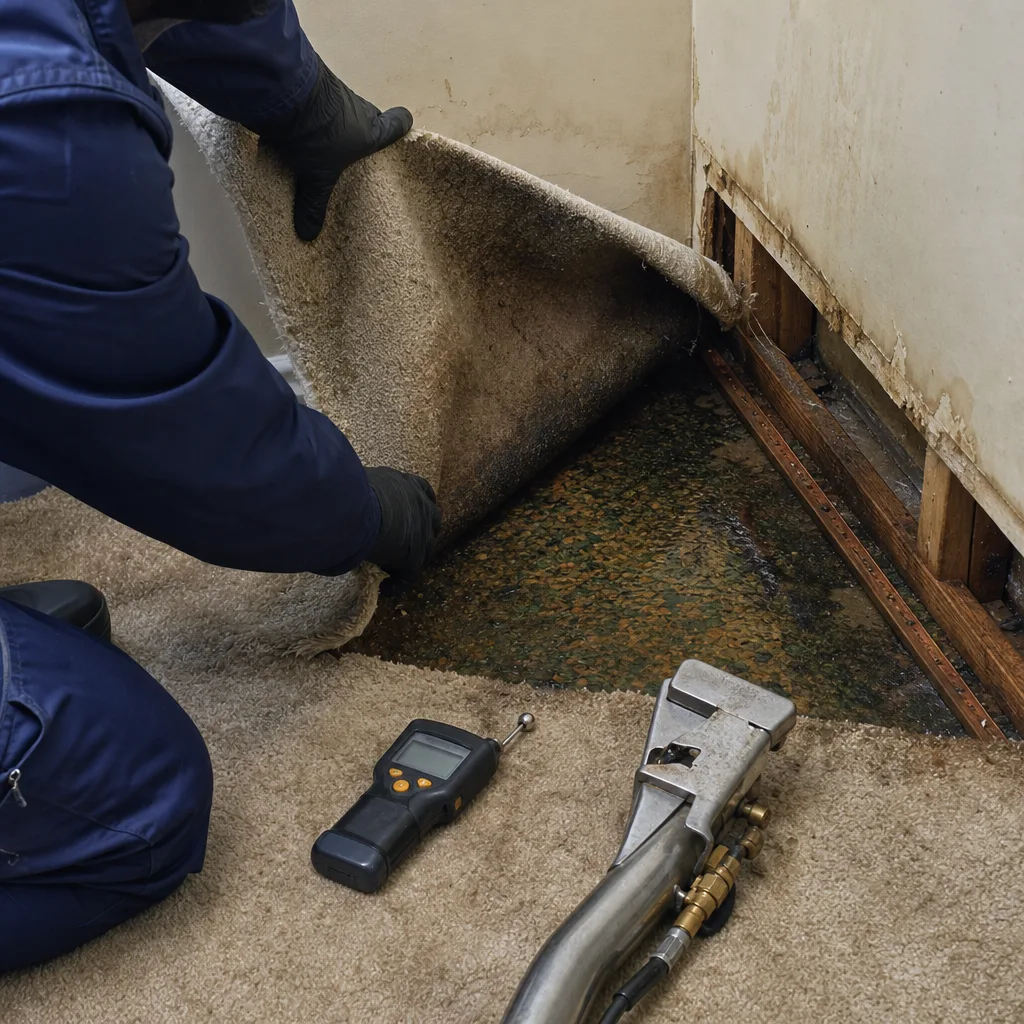
- What a Complete Restoration File Looks Like at Each Phase
- How North Las Vegas’s Desert Climate Affects Drying Timelines
- Mitigation-Only vs. Full-Scope Restoration Contractors
- How to Read a Xactimate Estimate Line by Line
- What ‘Completion’ Legally Means in Nevada
- IICRC, RIA, and IFA Documentation Standards Explained
- Choosing a Restoration Contractor in North Las Vegas
- Common Mistakes to Avoid
- When to Call a Professional
- Frequently Asked Questions
 Before
 After
AfterWhat a Complete Restoration File Looks Like at Each Phase
Most homeowners never see their restoration file until the adjuster questions it. By then, the crew has left, the equipment is gone, and the opportunity to document properly has passed. Here’s what a complete file contains at each phase, and why carriers flag incomplete records.
Phase 1: Mitigation (Hours 0-48)
Mitigation is emergency stabilization: stopping active water flow, boarding openings, or applying antimicrobial agents to prevent secondary damage. The file must include:
- Emergency dispatch record with timestamp, technician names, and license numbers
- Initial moisture inspection report with readings from affected and unaffected materials for baseline comparison
- Photo record of pre-existing conditions in every affected room, timestamped and geotagged
- Written emergency scope with line-item pricing signed by the property owner before work begins
At DryMark Restoration North Las Vegas home, we deliver this as a single packet before any equipment is plugged in. Haven Standard, Clause 1: written price before work begins. No exceptions.
Phase 2: Demolition and Contents Manipulation
When materials cannot be dried in place, demolition is necessary. The file expands to include:
- Pre-demo photo record showing material condition before removal
- Classification of affected materials by permeability: Class 1 (minimal moisture absorption) through Class 4 (deeply saturated, low-permeance materials like plaster or hardwood)
- Contents inventory with condition assessment and photo documentation
- Disposal receipts with weight tickets for hazardous materials
In North Las Vegas, demolition of materials containing asbestos or lead-based paint triggers NESHAP notification requirements. A contractor who doesn’t document proper abatement procedures creates a liability that carriers will not assume.
Phase 3: Drying and Dehumidification
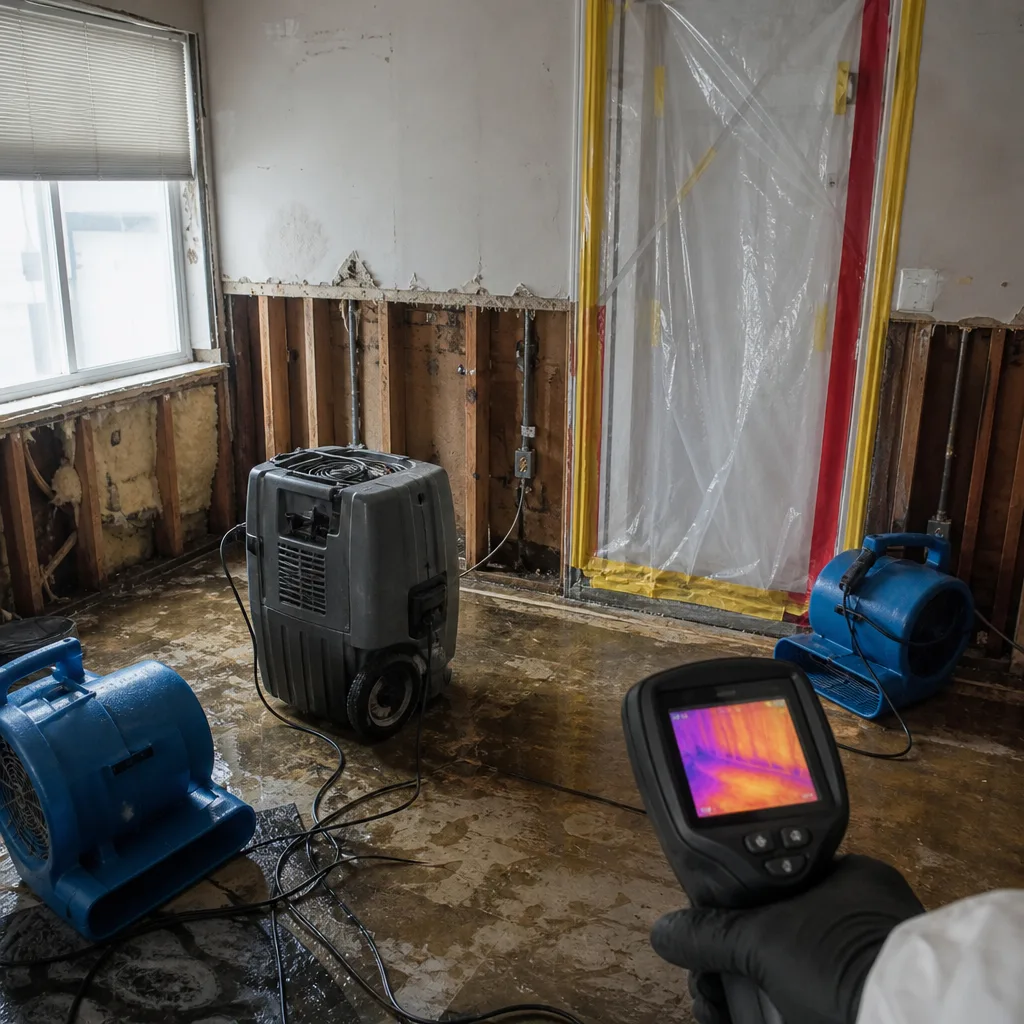
This is where most files fail. Carriers want evidence that drying was monitored and completed, not assumed. The complete file includes:
- Daily drying logs with psychrometric data: temperature, relative humidity, and specific humidity readings from affected and unaffected areas
- Equipment placement maps showing location of each air mover, dehumidifier, and drying mat
- Moisture content readings taken with calibrated pin and pinless meters at specified intervals
- Vapor pressure differential calculations proving that moisture is actively migrating from materials to air
Psychrometric data is the relationship between air temperature, humidity, and moisture capacity. Vapor pressure differential is the force that drives moisture from wet materials into drier air. In North Las Vegas, where outdoor relative humidity regularly falls to 12-15% in July, contractors who don’t calculate these values against desert-climate baselines may declare drying complete while materials still exceed equilibrium moisture content for this region.
Our crews document to IICRC S500 standards using Dri-Eaz and Phoenix dehumidification systems, with daily logs uploaded to the property file. Water Damage Restoration in North Las Vegas requires this level of documentation to prevent the “dry enough” disputes that delay payment.
Phase 4: Rebuild and Restoration
The final phase returns the property to pre-loss condition. The file must show:
- Written reconstruction scope with material specifications and line-item pricing
- Permit applications and approvals from the City of North Las Vegas Building Department
- Progress photo record at rough-in, insulation, and final walkthrough
- Certificate of completion and 365-Day Done Right Promise documentation
Rebuild work is scoped, scheduled, and priced in writing like a remodel. Never promise same-day service for reconstruction; the documentation requirements are too extensive for emergency dispatch timelines.
How North Las Vegas’s Desert Climate Affects Drying Timelines
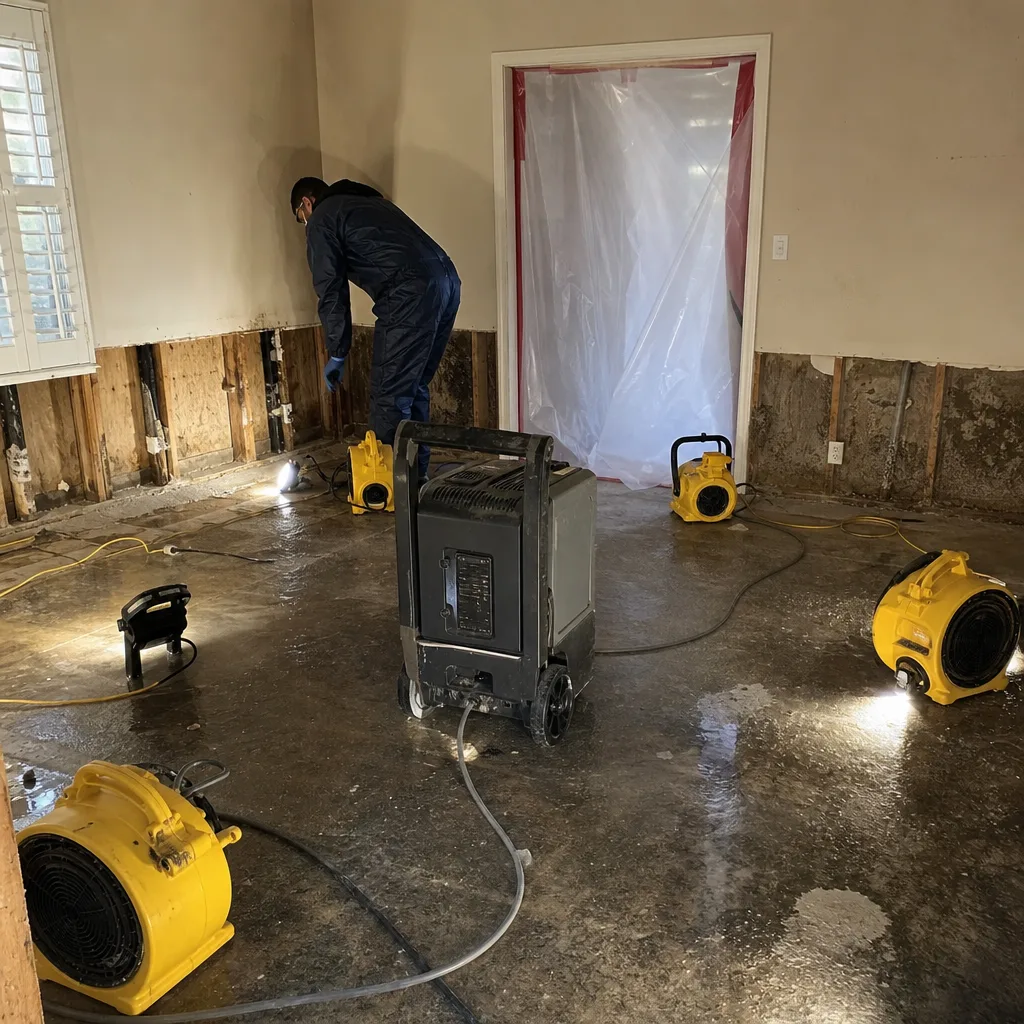
North Las Vegas averages 4.2 inches of annual rainfall and summer relative humidity below 20% RH. This isn’t a footnote. It’s a variable that changes every calculation in a restoration job.
In humid climates, contractors battle outdoor moisture loading. Dehumidifiers work harder, drying takes longer, and secondary mold growth is a constant threat. In North Las Vegas, the problem reverses: materials dry so quickly on the surface that contractors mistake surface dryness for complete moisture removal.
Here’s what desert-climate drying actually requires:
- Equilibrium moisture content (EMC) baselines for Southern Nevada are 6-9% for wood framing, significantly lower than the 12-15% EMC in Gulf Coast regions. A contractor using national averages will leave materials wet by local standards.
- Tertiary drying, the final phase where bound moisture is removed from deep within materials, requires longer monitoring periods in arid climates because surface readings deceive. We extend tertiary drying cycles by 24-48 hours in North Las Vegas jobs and document the extended readings.
- Vapor pressure differential monitoring becomes critical when outdoor vapor pressure drops below indoor levels, potentially reversing the drying direction if not controlled. Our crews calculate this daily using Phoenix and XPOWER equipment with built-in psychrometric sensors.
In the Aliante and Centennial Hills areas, where newer construction features tighter building envelopes, we’ve documented cases where rapid surface drying trapped moisture in wall cavities. Without vapor pressure differential tracking, that moisture migrates to cooler surfaces and causes mold blooms six months later, long after the carrier has closed the claim.
The documentation difference: a contractor who records daily psychrometric data against North Las Vegas-specific EMC targets produces a file that carriers pay without dispute. One who doesn’t produces a file that invites the three most expensive words in restoration: “further investigation required.”
Mitigation-Only vs. Full-Scope Restoration Contractors
This distinction determines whether your claim closes cleanly or drags on for months. Most homeowners don’t learn the difference until they’re managing two contractors, two schedules, and two sets of documentation that don’t align.
Mitigation-only contractors perform emergency services: water extraction, demolition, drying, and initial antimicrobial application. They do not rebuild. Their file ends at “dry and clean.” In North Las Vegas, many mitigation-only operators are franchise-adjacent emergency service networks that deploy quickly but hand off to separate rebuild contractors with no documentation transfer protocol.
Full-scope restoration contractors manage mitigation through final walkthrough, maintaining a single file with continuous documentation chain. This matters because:
- Carriers assign separate claim numbers to mitigation and rebuild when contractors split, creating administrative friction
- Scope gaps emerge at handoff: a mitigation contractor removes drywall to 24 inches; the rebuild contractor discovers 36 inches was necessary; the carrier questions why the initial scope was insufficient
- Moisture readings taken by the mitigation contractor may use different equipment or calibration standards than the rebuild contractor’s baseline, producing conflicting data
- Warranty responsibility fragments: if mold appears post-rebuild, each contractor blames the other
We’ve reviewed competitor files where the mitigation contractor declared drying complete at 14% wood moisture content, using Gulf Coast EMC baselines, while the rebuild contractor’s materials specification required 8% for warranty coverage. The homeowner paid the difference.
Mold Remediation in North Las Vegas is where this gap becomes most expensive. Mold requires both source moisture removal and post-remediation verification. A mitigation-only contractor may achieve the first without documenting the second, leaving the homeowner with no proof that remediation standards were met.
Under The Haven Standard, we maintain single-file documentation from emergency dispatch through final walkthrough. The 365-Day Done Right Promise applies to the complete scope, not a phase. If it’s not done right, we make it right, and the file proves what “right” was.
How to Read a Xactimate Estimate Line by Line
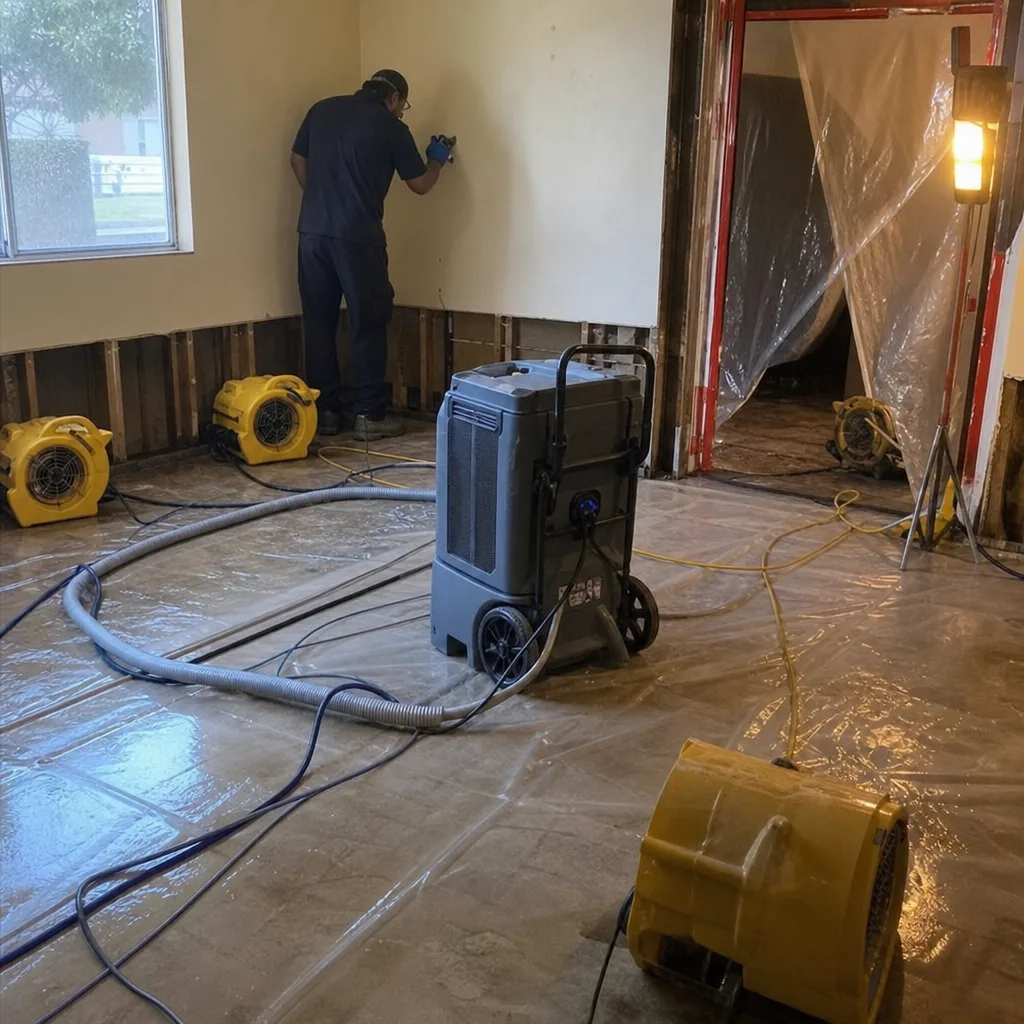
Xactimate is the pricing platform used by most insurance carriers and many restoration contractors. Adjusters in Clark County review these estimates with specific attention to line items that indicate either proper documentation or potential overreach. Understanding what they’re looking for helps you audit your contractor’s file before submission.
Line Items Adjusters Flag in North Las Vegas Claims
| Line Item | What It Covers | Why Adjusters Scrutinize It |
|---|---|---|
| WTR-DEHUM | Dehumidifier rental, per day | Requires daily psychrometric log; without it, carrier prorates or denies |
| WTR-AIRMOV | Air mover rental, per day | Must match equipment placement map; excess units flagged as padding |
| WTR-INJDRY | Injectidry or specialty drying system | Requires photo of installation and moisture readings from affected cavity |
| WTR-DEMOL | Demolition of wet materials | Requires pre-demo photo and classification of material by permeability |
| WTR-ANTIM | Antimicrobial application | Requires EPA registration number of product and application log |
| WTR-MOIST | Moisture monitoring, per visit | Requires dated readings with meter calibration certificate |
| RFG-RES | Residential roofing repair/replacement | Requires permit pull and inspection sign-off in North Las Vegas jurisdiction |
The critical pattern: every line item with WTR prefix requires documentation. Adjusters don’t question the pricing; they question whether the service was performed and documented. A contractor who bills WTR-DEHUM for five days but provides three days of psychrometric data will see that line reduced or removed.
Here’s how to audit your estimate:
- Count the equipment rental days and match to drying logs
- Verify that demolition square footage matches photo documentation
- Check that antimicrobial products are EPA-registered and application is logged
- Confirm moisture monitoring visits align with readings in the file
- Review roofing or structural repairs for permit documentation
At DryMark Restoration North Las Vegas, we provide the complete file with every estimate: drying logs, photo record, equipment maps, and product data sheets. Haven Standard, Clause 1 requires the written price; the documentation package proves the price was earned.
What ‘Completion’ Legally Means in Nevada
Nevada Revised Statutes Chapter 624 governs construction contracts, including restoration work. “Completion” has a specific legal definition that affects your warranty rights, your final payment obligations, and your ability to dispute deficient work.
Under NRS 624.301, substantial completion occurs when the work is sufficiently complete so the owner can use it for its intended purpose. Final completion requires all punch-list items resolved and all documentation delivered, including:
- Certificate of occupancy or final inspection approval where permits were required
- Lien releases from all subcontractors and material suppliers
- Warranty documentation with specific terms and duration
- As-built drawings or photo record showing completed conditions
The gap between substantial and final completion is where most restoration disputes live. A contractor who declares the job “done” and demands final payment while permit sign-offs are pending, or while moisture readings haven’t stabilized, is exploiting this distinction.
The 365-Day Done Right Promise changes the contractor’s incentive structure. Most restoration warranties are verbal assurances or one-year limited warranties with exclusion clauses. Our written guarantee, stamped on every job under The Haven Standard, creates a documented obligation that extends past the typical claim closure timeline. If we don’t document properly, we can’t prove we met our own standard. The documentation requirement protects both parties.
In North Las Vegas, where the Building Department requires specific inspections for electrical, plumbing, and structural work, final completion cannot occur without signed inspection cards. We include these in every file and deliver copies to the property owner before final invoice submission.
IICRC, RIA, and IFA Documentation Standards Explained
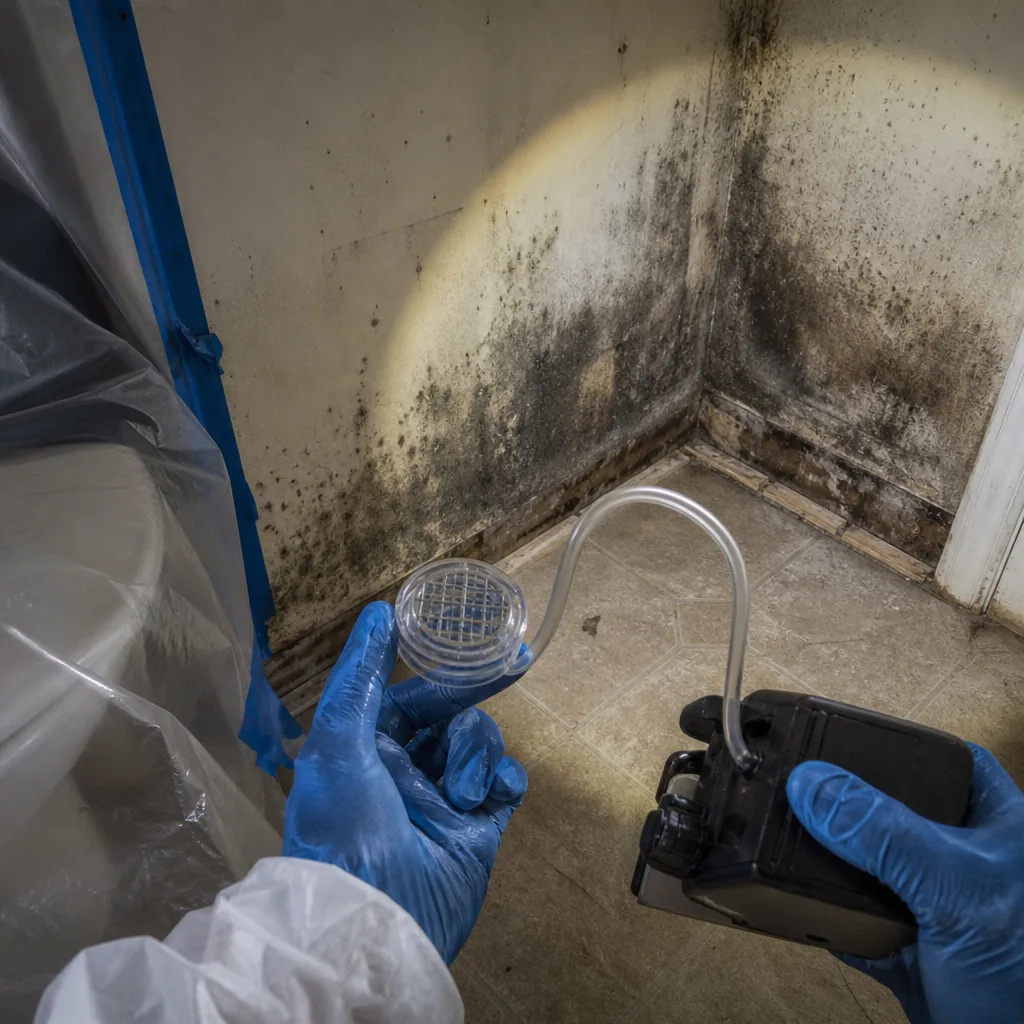
Three organizations publish the standards that govern restoration documentation. Carriers reference these when evaluating claims, and contractors who can’t produce files aligned to them face reduced payments or denials.
IICRC (Institute of Inspection, Cleaning and Restoration Certification) publishes ANSI-approved standards: S500 for water damage, S520 for mold remediation, S550 for trauma and crime scene cleanup. Each specifies documentation requirements:
- S500 requires moisture mapping, daily drying logs, and post-drying verification with specific moisture content targets by material type
- S520 requires pre-remediation assessment, containment air pressure differential logs, and post-remediation verification including air sampling or ERMI dust analysis
- S550 requires chain-of-custody documentation for biohazard materials and decontamination verification
RIA (Restoration Industry Association) publishes guidelines for forensic documentation, including equipment traceability, technician certification records, and quality assurance protocols. RIA standards emphasize the business process of documentation: who collected what, when, with what equipment, and under what quality controls.
IFA (Indoor Air Quality Association) focuses on assessment and verification standards, particularly for mold and microbial contamination. IFA documentation requirements include outdoor control samples, indoor air quality measurements, and comparative analysis protocols.
Our work is documented to all three standards. This isn’t excessive; it’s overlapping coverage. When a carrier questions whether S500 drying targets were met, we produce the IICRC-aligned log. When they question whether mold remediation was verified, we produce the S520-aligned assessment. When they question whether air quality was properly sampled, we produce the IFA-aligned report.
Fire & Smoke Damage Restoration in North Las Vegas requires additional documentation: soot sampling with particle identification, odor counteractant application logs, and thermal fogging or ozone treatment records. Fire claims are among the most heavily scrutinized because smoke damage is invisible and subjective without proper documentation.
Choosing a Restoration Contractor in North Las Vegas
The North Las Vegas market includes national franchise networks, independent operators, and construction companies that added restoration as a revenue line. Here’s how to distinguish documentation-first contractors from the rest.
Ask These Questions Before Signing
- “Will I receive a written price before any work begins, and is that price binding?” Haven Standard, Clause 1 contractors answer yes and show you the form.
- “What documentation will I receive, and when?” Look for: photo record on every visit, daily drying logs, written scope with line items, and warranty documentation. Vague answers indicate vague practices.
- “What equipment do you deploy, and do you calculate vapor pressure differential?” Contractors using Dri-Eaz, Phoenix, XPOWER, or B-Air systems with psychrometric capability can produce the data carriers require.
- “Who answers your phone at 2 a.m.?” Live person, every call, no voicemail trees. Emergency documentation starts with emergency dispatch.
- “Can you provide a free second opinion on a competitor’s estimate?” This reveals whether the contractor competes on documentation quality or on undercutting scope.
Red Flags Specific to North Las Vegas
Be cautious of contractors who:
- Quote “per square foot” pricing without inspecting moisture penetration depth
- Promise drying completion in 24-48 hours without documenting tertiary drying phases
- Cannot produce license numbers for technicians who will enter your property
- Request assignment of benefits (AOB) before delivering written scope
- Use out-of-state EMC baselines that don’t account for Southern Nevada’s arid climate
In the Craig Ranch and Kyle Canyon areas, we’ve encountered contractors who deployed equipment without calculating the vapor pressure differential between indoor and outdoor environments. In desert conditions, this can actually drive moisture into wall cavities rather than out of them, creating damage that manifests months later.
Background-checked, uniformed technicians with named license numbers are standard, not premium. Documentation begins with accountability.
Common Mistakes to Avoid
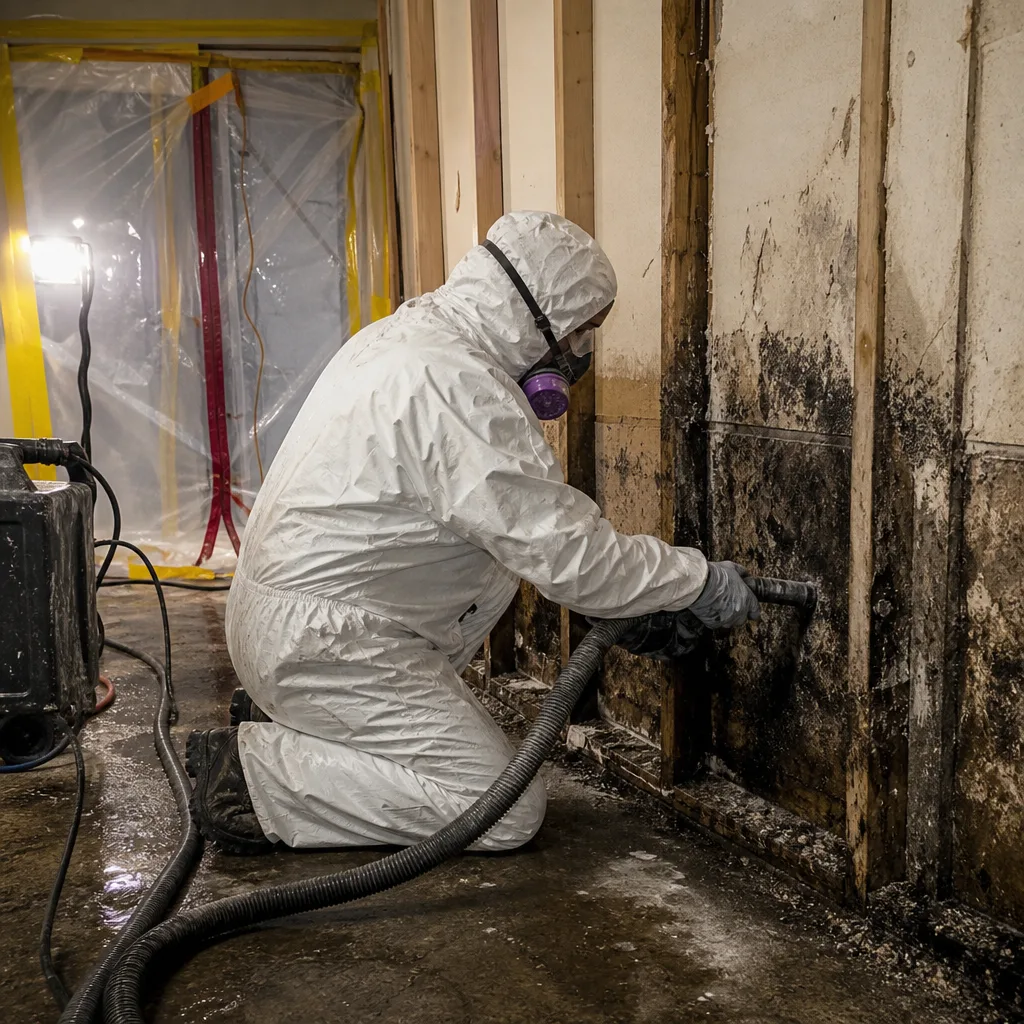
- Waiting for the adjuster before calling a contractor. In North Las Vegas, summer temperatures above 110°F accelerate mold growth in water-damaged materials. Documentation must begin within hours, not days, to establish pre-loss condition and prevent secondary damage.
- Accepting verbal estimates or “ballpark” pricing. Without a written scope signed before work begins, you have no baseline to dispute scope creep or carrier reductions. Haven Standard, Clause 1 exists because we’ve seen what happens when it’s ignored.
- Not photographing pre-existing conditions. Carriers routinely attribute pre-loss wear to the current event. A documented photo record of unaffected areas establishes the baseline that protects your claim.
- Using a mitigation-only contractor without confirming rebuild handoff protocol. The documentation gap between mitigation and rebuild is where claims fracture. Confirm how files transfer, or choose a full-scope contractor.
- Ignoring permit requirements for “minor” rebuild work. North Las Vegas requires permits for electrical, plumbing, and structural work beyond cosmetic repair. Unpermitted work voids warranties and creates resale disclosure problems.
- Accepting “dry enough” without documented moisture readings. Surface dryness in desert climates is deceptive. Require readings against local EMC baselines, not national averages.
- Signing assignment of benefits without understanding the scope. AOB transfers your claim rights to the contractor. In Nevada, this limits your ability to dispute deficient work or documentation gaps.
When to Call a Professional
Call immediately when: water has penetrated beyond surface flooring, fire has produced smoke residue on multiple surfaces, mold is visible on more than 10 square feet, sewage has entered living spaces, or structural elements show displacement or cracking. These conditions require documented assessment before conditions worsen or health risks escalate.
DryMark Restoration North Las Vegas offers free estimates in North Las Vegas. Our live dispatch answers every call, 24 hours a day, 7 days a week, at (725) 726-3239. Every estimate includes a written price before work begins, a documented photo record on every visit, and the 365-Day Done Right Promise under The Haven Standard. We also provide a Free Second Opinion on any competitor’s written estimate at no charge. Explore more guides & resources to protect your property and your claim.
Frequently Asked Questions
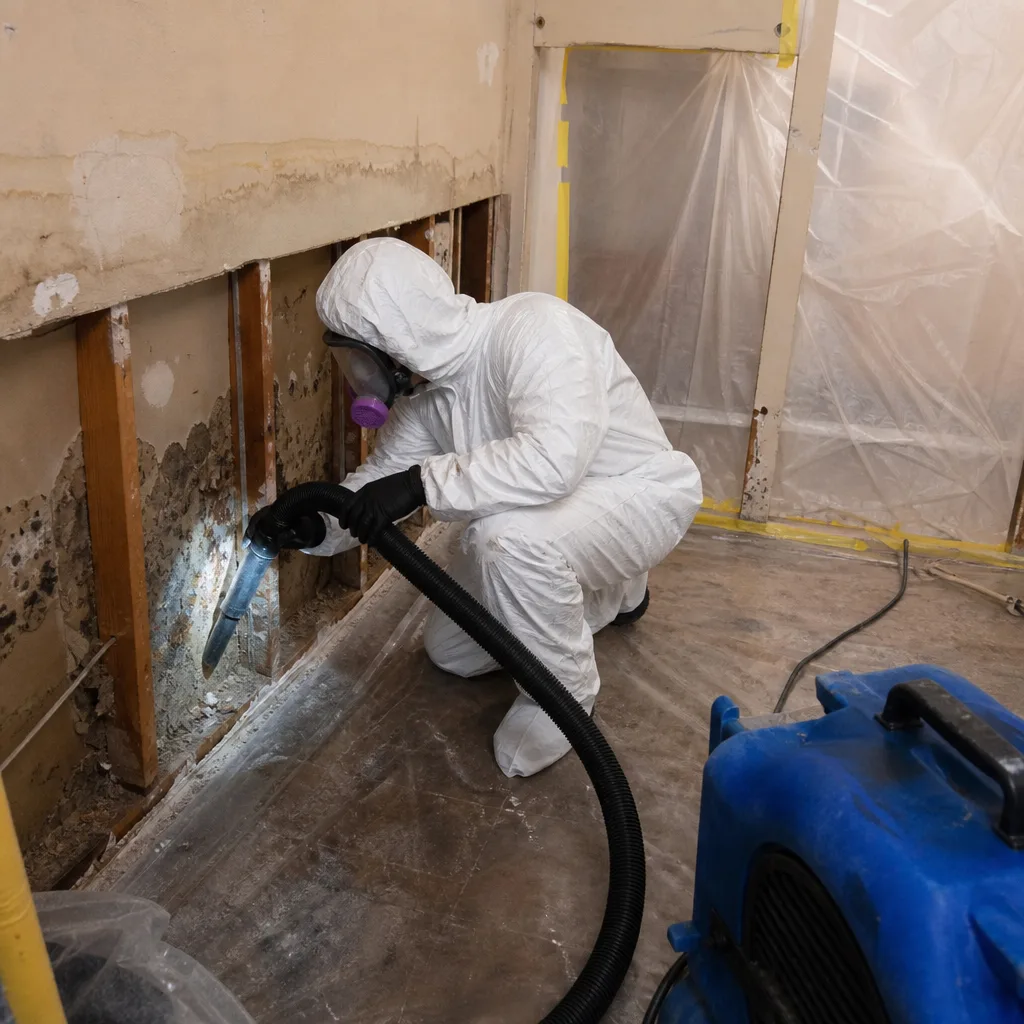
Water damage mitigation typically ranges from $1,200 for limited Category 1 extraction to $8,500+ for Category 3 flooding with extensive demolition, while fire and smoke restoration averages $4,500-$15,000 depending on square footage and soot penetration depth. For a deeper breakdown, see our Damage Restoration Cost Breakdown: The North Las Vegas Homeowner’s Reference for 2026. Mold remediation runs $15-$30 per square foot for contained growth, escalating significantly for HVAC contamination or hidden cavity colonization. Every job is quoted in writing before work begins under Haven Standard, Clause 1. Call (725) 726-3239 for an exact quote, estimates are free.
Most homeowner policies cover sudden and accidental water damage, fire, and storm events, but exclude gradual leaks, maintenance neglect, and flood damage without separate NFIP coverage. Coverage determination depends on documentation quality: carriers pay claims with complete files and dispute those without moisture logs, pre-demo photos, and written scopes. We photo-document every visit and coordinate directly with adjusters to align our file with carrier requirements. Call (725) 726-3239 to review your policy specifics.
Emergency dispatch for active water, fire, or biohazard events is available 24 hours a day, 7 days a week with live person answering, no voicemail trees. Response time varies by location: 30-45 minutes for properties between Craig Road and Centennial Parkway, 45-60 minutes for Aliante and Kyle Canyon areas. Rebuild and non-emergency reconstruction is scheduled, not dispatched, with written scope and pricing completed before scheduling. Call (725) 726-3239 for current emergency availability.
Category 1 water damage under 10 square feet on hard surfaces may be manageable with proper drying equipment, but any water penetrating wall cavities, Category 2 or 3 contamination, fire smoke residue, or mold growth exceeding 10 square feet requires professional assessment and documented remediation. DIY cleaning of these conditions leaves no documentation for potential future claims, risks incomplete moisture removal that causes secondary damage, and may violate IICRC standards that carriers use to evaluate coverage. The Free Second Opinion on any written estimate lets you compare professional scope against DIY assumptions at no charge.
We coordinate directly with adjusters as part of standard service, providing the documented photo record, drying logs, written scope, and equipment placement maps that carriers require for claim processing. Our files are formatted to Xactimate standards used by most major insurers. You remain the policyholder and retain all claim rights; we do not require assignment of benefits. Direct adjuster coordination reduces claim processing time and prevents the documentation gaps that cause disputes.
A moisture reading is a single measurement of water content in a specific material at a specific time, expressed as a percentage of dry weight for wood or relative readings for other materials. A drying log is the chronological record of multiple readings across multiple materials and locations, combined with psychrometric data (temperature, humidity, vapor pressure) that proves the drying environment was controlled and effective. Carriers require drying logs, not isolated readings, to verify that equipment was justified and drying was completed to standard.
The Bottom Line
Damage restoration in North Las Vegas succeeds or fails on documentation, not dramatics. The contractor who arrives fastest matters less than the contractor whose file proves what was done, when, and to what standard. In a desert climate where surface dryness deceives, where permit requirements are strict, and where carriers scrutinize every line item, the complete restoration file is your protection against denied claims and deficient work.
At DryMark Restoration North Las Vegas, we’ve built every process around this principle since 2011. Written price before work begins. Photo record on every visit. Daily drying logs with psychrometric data. Equipment from Dri-Eaz, Phoenix, XPOWER, and B-Air documented to IICRC, RIA, and IFA standards. And the 365-Day Done Right Promise, a written warranty under The Haven Standard, not a marketing line.
Call (725) 726-3239 for a free estimate or Free Second Opinion on any competitor’s written estimate.
Written by Alicia Brennan, Owner at DryMark Restoration North Las Vegas, serving North Las Vegas since 2011.